
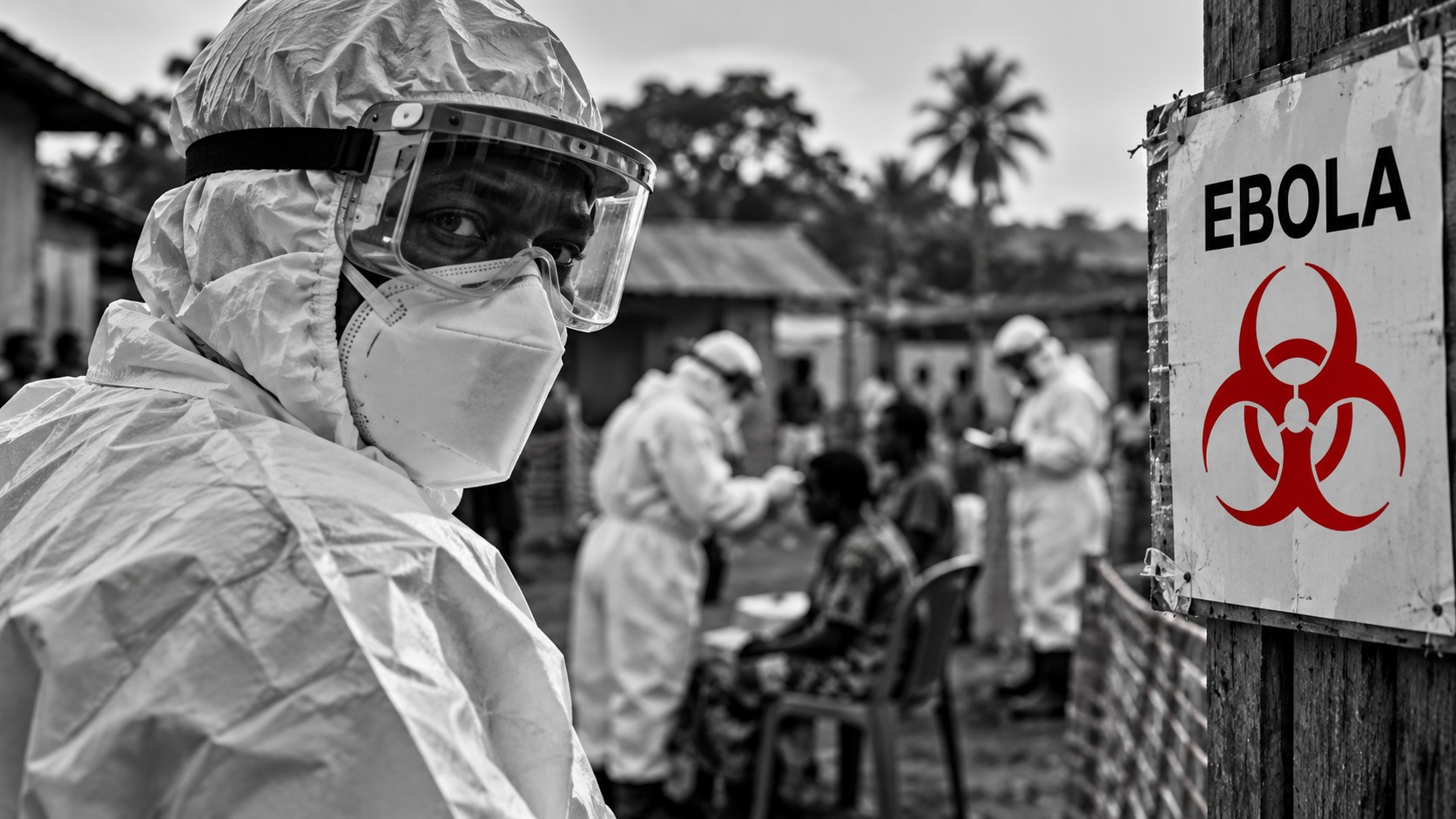
Africa is facing an escalating Ebola emergency as the deadly virus spreads beyond the Democratic Republic of the Congo into neighbouring and more distant countries. Nearly 10,000 confirmed infections and more than 4,800 deaths have been recorded in Congo alone, while cases in Kenya and Nigeria have intensified fears that delayed detection, cross-border travel and fragile healthcare systems could allow the outbreak to expand further.
Congo remains the epicentre
The outbreak, first detected in May 2026, has become the second-largest Ebola epidemic on record.
According to the European Centre for Disease Prevention and Control, Congo had registered 9,964 confirmed cases and 4,851 deaths by 24 October.


Transmission has reached eight provinces, with Ituri and North Kivu suffering particularly severe consequences.
Health authorities face enormous challenges in identifying infected individuals, tracing contacts and providing treatment in communities affected by insecurity and limited medical infrastructure.
Virus reaches Kenya and Nigeria
Kenya has confirmed nine infections and two deaths, all linked to an imported case identified earlier this month.
Nigeria reported its first Ebola infection in more than a decade on 20 October, involving a woman who had travelled from Uganda.
The patient developed symptoms several days after arriving in Abuja but was not diagnosed immediately, raising concerns about possible exposure among healthcare workers and other contacts.
Uganda experienced infections earlier this year, although its outbreak was subsequently declared over.
A particularly dangerous Ebola strain
The epidemic involves the Bundibugyo virus, one of the pathogens responsible for Ebola disease.
Unlike the better-known Zaire Ebola virus, Bundibugyo currently has no specifically licensed vaccine or antiviral treatment.
A clinical vaccine trial began in Congo on 23 October, offering potential hope for future protection.
Ebola spreads through direct contact with infected bodily fluids rather than ordinary airborne transmission.
Symptoms include fever, weakness, vomiting and diarrhoea, with severe cases developing organ failure and internal bleeding.
International response intensifies
African health authorities and international organisations are strengthening surveillance, laboratory testing and contact tracing.
In Kenya, 20 contacts were released from quarantine on Monday after completing observation without developing symptoms.
Nevertheless, nearly 100 additional contacts remained under monitoring.
The World Health Organization continues to emphasise early diagnosis, protective equipment and coordinated cross-border responses.
The danger of further expansion
The geographic spread illustrates the vulnerability of regional healthcare systems when infectious diseases cross national borders.
However, imported cases do not necessarily indicate sustained community transmission in every affected country.
For Africa, the immediate challenge is containing transmission before additional outbreaks become established.
The coming weeks will be critical in determining whether intensified surveillance and treatment can bring the epidemic under control.
NewsHub Finance | Health | 27 October 2026
Africa is facing an escalating Ebola emergency as the deadly virus spreads beyond the Democratic Republic of the Congo into neighbouring and more distant countries. Nearly 10,000 confirmed infections and more than 4,800 deaths have been recorded in Congo alone, while cases in Kenya and Nigeria have intensified fears that delayed detection, cross-border travel and fragile healthcare systems could allow the outbreak to expand further.
Recent Comments