
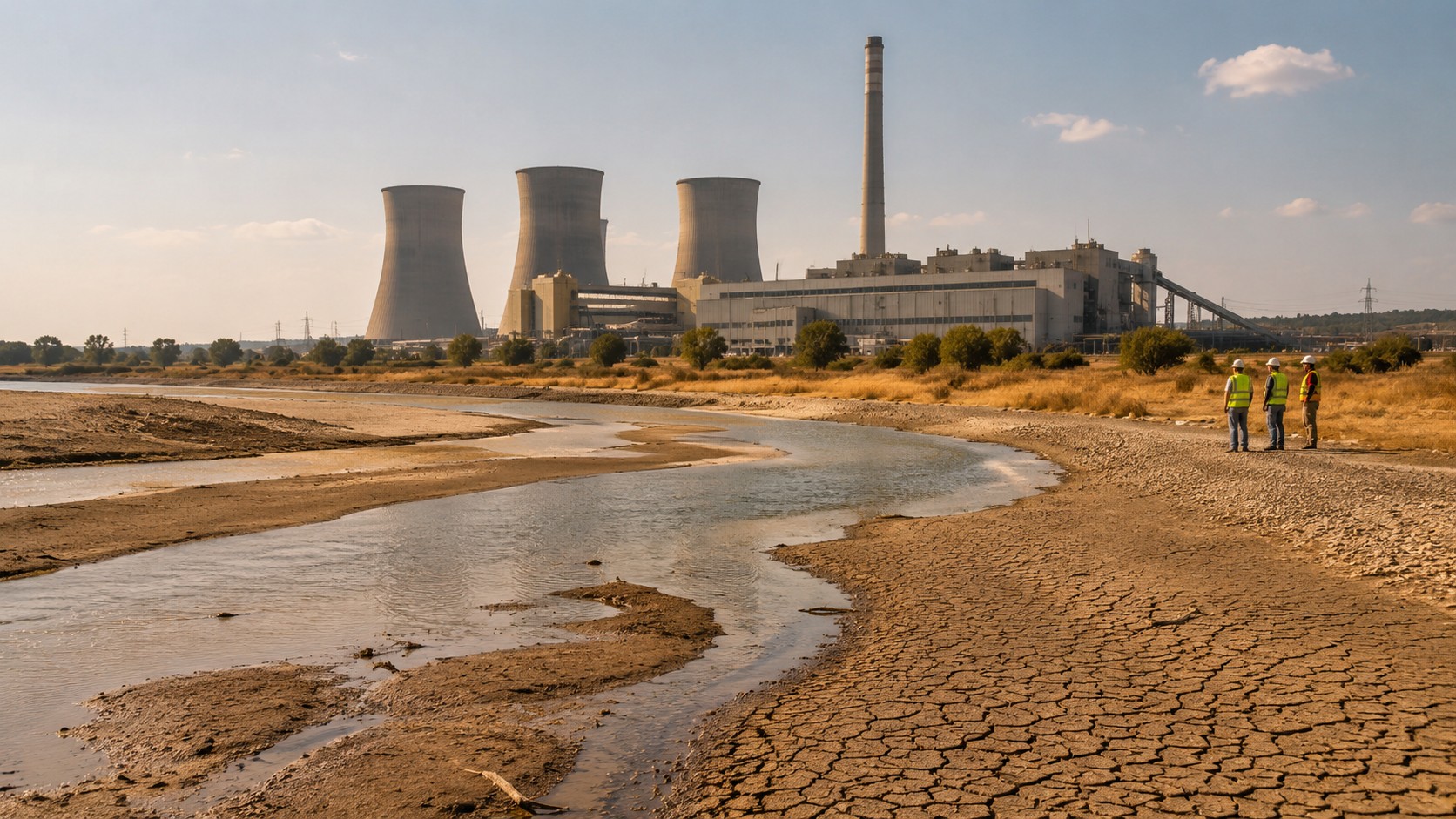
Central and eastern Europe is facing an escalating heat emergency after Slovakia recorded an unprecedented 42.2C and critically low river levels forced Poland to shut two major coal-fired power stations, exposing the growing vulnerability of the region’s energy infrastructure.
Slovakia breaks national temperature record
The new Slovak record was measured at Dolné Plachtince in the south of the country on Thursday, surpassing a series of previous highs set during an exceptionally hot and dry summer.
Austria had recorded its own national high of 41.2C in Bad Deutsch-Altenburg one day earlier. Hungary, Czechia and Poland have also broken long-standing temperature records during successive heatwaves this summer.


The extreme conditions have raised serious public-health concerns, particularly for older people, outdoor workers and those with existing medical conditions. Persistently warm nights are preventing buildings and human bodies from cooling, increasing the cumulative effect of the heat.
Polish power stations lose cooling water
Polish authorities were forced to suspend operations at the coal-fired Kozienice and Połaniec power stations after water levels in the Vistula River fell too low to provide sufficient cooling.
The shutdowns removed approximately 1.3 gigawatts of generating capacity from Poland’s electricity system at a time when demand for air conditioning and refrigeration was increasing.
Thermal power stations require large quantities of water to control operating temperatures. When rivers become too shallow or too warm, operators may be forced to reduce production or shut units completely to prevent equipment damage and avoid releasing overheated water into vulnerable ecosystems.
The disruption illustrates how prolonged drought can affect fossil-fuel electricity generation even when coal supplies remain available.
Danube drought spreads energy crisis
Slovakia’s largest hydroelectric station at Gabčíkovo has shut seven of its eight turbines because of unusually low water levels in the Danube. The plant has generated approximately 15% less electricity this year than during the same period of 2025.
In neighbouring Hungary, the Paks nuclear power station was largely taken offline because the Danube could no longer provide adequate cooling. One turbine has since resumed operation after the river recovered slightly, but authorities continue to request voluntary reductions in electricity consumption.
Decorative lighting has been switched off at Budapest’s parliament, Buda Castle and Chain Bridge. Major manufacturers, including carmakers and industrial companies, have also agreed to reduce power use during peak evening hours.
Romania is preparing an emergency operation involving rock-filled barges to redirect Danube water towards its remaining nuclear reactor. Bucharest has reduced street lighting, while Moldova has warned that rolling blackouts may be necessary if regional electricity shortages worsen.
Rivers, transport and wildlife under pressure
Low water levels are also disrupting commercial transport on Germany’s Rhine. Cargo vessels are being forced to sail with reduced loads, increasing the cost of moving grain, minerals, coal and petroleum products.
Hot, dry and windy conditions have produced record levels of wildfire danger in Austria, Czechia and Slovakia. Approximately half a million hectares have burned across the European Union since the beginning of the year, while a further 292,000 hectares have been affected in Ukraine.
Germany has recorded an estimated 11,900 heat-related deaths this summer, underlining that the crisis extends far beyond damaged infrastructure and lost electricity production.
Climate adaptation becomes an economic necessity
Scientists say human-driven climate change is making severe European heatwaves more frequent, intense and persistent. Europe has warmed approximately twice as quickly as the global average since the 1980s.
The power disruptions are increasing pressure on governments to invest in electricity systems that can withstand drought and extreme temperatures. Wind and solar generation require substantially less cooling water than coal, gas or nuclear facilities, but stronger transmission networks and storage capacity will be needed to ensure reliable supply.
The latest heatwave demonstrates that water security, energy security and climate policy can no longer be treated as separate challenges.
Newshub Editorial in Europe – 7 August 2026

Ask NF GPT
If you have an account with ChatGPT you get deeper explanations,
background and context related to what you are reading.
Central and eastern Europe is facing an escalating heat emergency after Slovakia recorded an unprecedented 42.2C and critically low river levels forced Poland to shut two major coal-fired power stations, exposing the growing vulnerability of the region’s energy infrastructure.
Recent Comments