
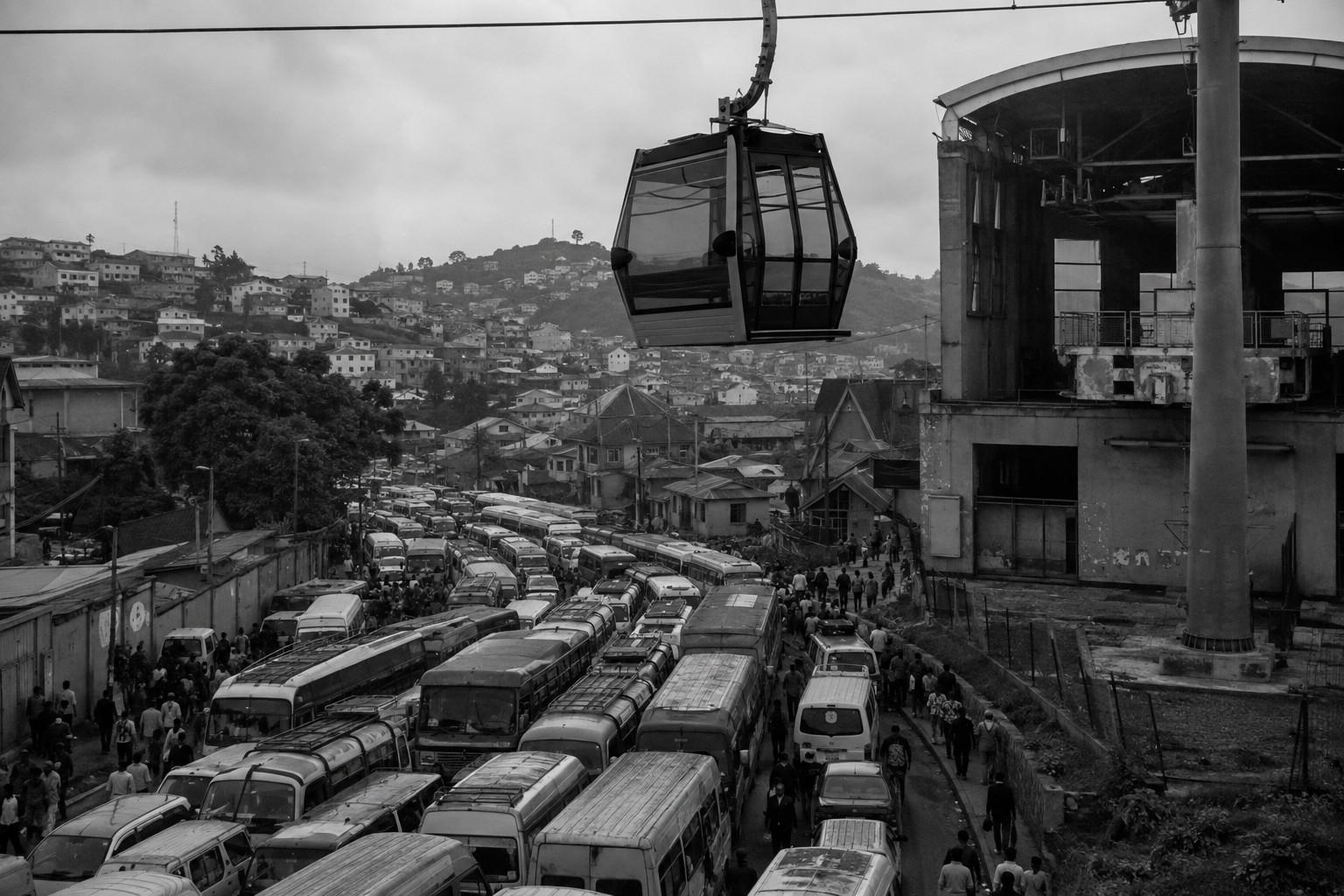
A troubled cable car project in Antananarivo has become a symbol of Madagascar’s difficulties in modernising its transport system, exposing weaknesses in planning, affordability, electricity supply and the management of major public infrastructure.
The 8.7-kilometre Orange Line was promoted as an innovative answer to the chronic congestion affecting Madagascar’s capital. Its cabins were expected to carry as many as 40,000 passengers a day above Antananarivo’s crowded streets and difficult hilly terrain.
When paying passengers began using the system in August 2025, officials presented it as the first stage of a wider overhead transport network. Less than two months later, however, the cable car had stopped operating.


Several stations and parts of the infrastructure were damaged during the political unrest that contributed to the removal of President Andry Rajoelina. Protesters regarded the project as an expensive symbol of a government that prioritised prestige investments while many households continued to experience power cuts, water shortages and rising living costs.
High fares and limited operation
Although cable transport can provide a practical solution in a densely built and mountainous city, the Antananarivo project struggled to meet the everyday needs of most commuters.
Tickets reportedly cost between $0.60 and $1.10 for a single journey, around six times the price of a typical journey in one of the capital’s minibuses. For many low-income residents, using the cable car regularly was therefore unaffordable.
Electricity presented another fundamental difficulty. During its brief period of normal operation, the system reportedly ran for only two hours in the morning and two hours in the evening because generators had to be used to keep the cabins moving.
This dependence on costly temporary power highlighted the contradiction of introducing an electricity-intensive transport system in a city already suffering persistent energy shortages.
The cable car was built by the French Colas–POMA consortium and supported by French financing. Its backers argued that it could reduce journey times, lower congestion and offer a cleaner form of public transport with a relatively small footprint at street level.
Critics, however, questioned whether the project had been sufficiently integrated with Antananarivo’s existing transport network and whether its financial model could survive without substantial government subsidies.
Minibuses remain essential
The city continues to depend heavily on approximately 7,000 privately operated taxi-be minibuses, which carry more than 1.5 million passengers each day. Although often overcrowded and poorly regulated, they remain the most widely used form of motorised public transport.
Transport specialists have argued that modernising the minibus network could deliver broader benefits at a much lower cost. Proposals include professional driver training, newer vehicles, improved routes and clearer responsibility for managing public transport across Greater Antananarivo.
The new government has indicated that it hopes to restart the cable car before the end of 2026, but no firm timetable has been announced. The extent of the damage and the cost of repairs also remain uncertain.
Railways and roads need investment
Madagascar’s transport difficulties extend far beyond the capital. Much of the country’s road and railway infrastructure has deteriorated because of limited maintenance, unclear institutional responsibility and shortages of long-term financing.
The World Bank has announced a $200 million transport programme that includes rehabilitating sections of the 372-kilometre railway connecting Antananarivo with the port of Toamasina. Restoring freight services could reduce pressure on the congested RN2 highway and improve road safety.
The cable car’s uncertain future demonstrates that ambitious infrastructure cannot succeed through construction alone. Affordable fares, dependable energy, maintenance funding and integration with existing services are equally important if Madagascar is to create a transport system that genuinely serves its population.
Newshub Editorial in Africa – 5 August 2026

Ask NF GPT
If you have an account with ChatGPT you get deeper explanations,
background and context related to what you are reading.
A troubled cable car project in Antananarivo has become a symbol of Madagascar’s difficulties in modernising its transport system, exposing weaknesses in planning, affordability, electricity supply and the management of major public infrastructure.
Recent Comments