
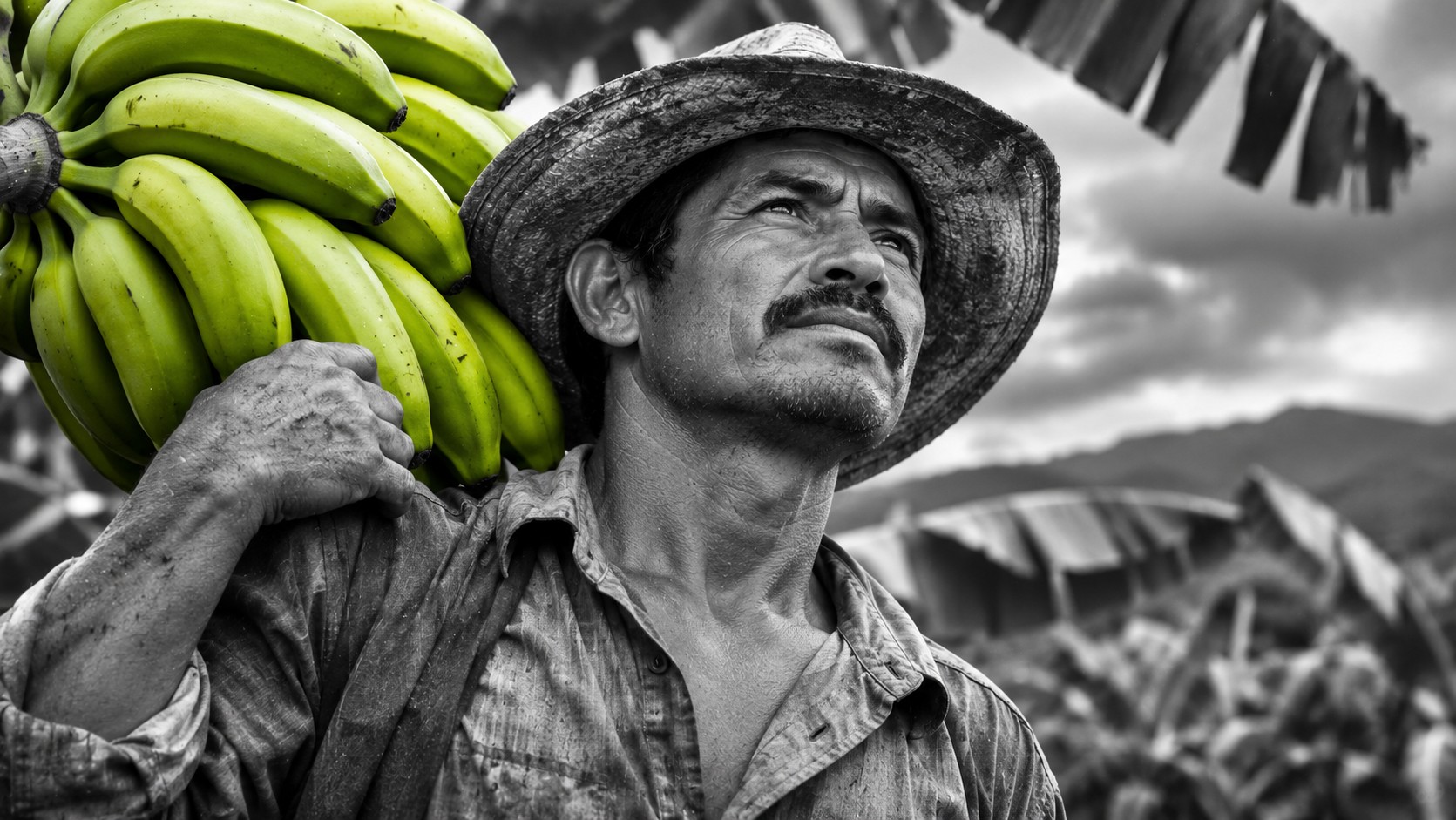
Banana producers across Latin America are calling for higher prices and fairer trading conditions as extreme weather associated with a powerful El Niño threatens agricultural production. Farmers in Colombia, Ecuador, Peru and the Dominican Republic face increasingly unpredictable growing conditions, rising production costs and the prospect of substantial crop losses. Industry representatives warn that without greater financial support from international retailers, thousands of agricultural jobs and the long-term sustainability of banana exports could be at risk.
Extreme weather threatens major producing countries
According to the Fairtrade Foundation, strong winds and flooding have already damaged banana plantations in Colombia, a major supplier to European markets.


Heavy rainfall is creating difficulties for producers in Ecuador and Peru, while farmers in the Dominican Republic face the prospect of prolonged drought and higher temperatures.
The effects could become more severe as the 2026–2027 El Niño intensifies.
Research into the previous El Niño event found that banana productivity declined by 22% in Ecuador, 13% in the Dominican Republic and 6% in Peru.
Farmers struggle with rising costs
The banana industry faces increasing expenses for fertilisers, transportation, labour and measures designed to protect plantations against extreme weather and disease.
However, supermarket banana prices have remained relatively stable for decades, placing financial pressure on producers.
Research published by the Ethical Trading Initiative found that prices received by 66.7% of surveyed suppliers in 2026 failed to cover basic production costs.
Farmers argue that low purchasing prices and unpredictable contracts make it difficult to invest in irrigation, improved drainage and more resilient agricultural practices.
Fairtrade calls for stronger protection
The Fairtrade Foundation is urging the British government to introduce legislation addressing unfair trading practices, including delayed payments, last-minute order cancellations and contracts transferring excessive financial risks to producers.
Fairtrade International has already announced increases to its minimum banana prices, averaging 5.6% at farm level for contracts beginning in January 2027.
The organisation argues that sustainable purchasing arrangements are essential to protecting workers’ incomes and maintaining agricultural production.
Climate change threatens future production
The longer-term outlook presents additional challenges.
Research commissioned by the Inter-American Development Bank suggests that suitable banana-growing land across Latin America and the Caribbean could decline substantially by 2050 as climatic conditions change.
Higher temperatures, flooding and agricultural diseases could accelerate these pressures.
European consumers may face consequences
Latin America supplies a significant proportion of the bananas consumed in Europe, making the region’s agricultural stability important to international food markets.
Reduced production could eventually lead to supply disruptions and higher retail prices.
Producers argue that fairer compensation is necessary not only to protect farmers and workers but also to secure the future of one of the world’s most widely traded fruits.
The central challenge is ensuring that the financial costs of climate adaptation are shared throughout the supply chain rather than carried primarily by vulnerable agricultural communities.
NewsHub Finance | Agriculture | 8 November 2026
Banana producers across Latin America are calling for higher prices and fairer trading conditions as extreme weather associated with a powerful El Niño threatens agricultural production. Farmers in Colombia, Ecuador, Peru and the Dominican Republic face increasingly unpredictable growing conditions, rising production costs and the prospect of substantial crop losses. Industry representatives warn that without greater financial support from international retailers, thousands of agricultural jobs and the long-term sustainability of banana exports could be at risk.

Recent Comments