
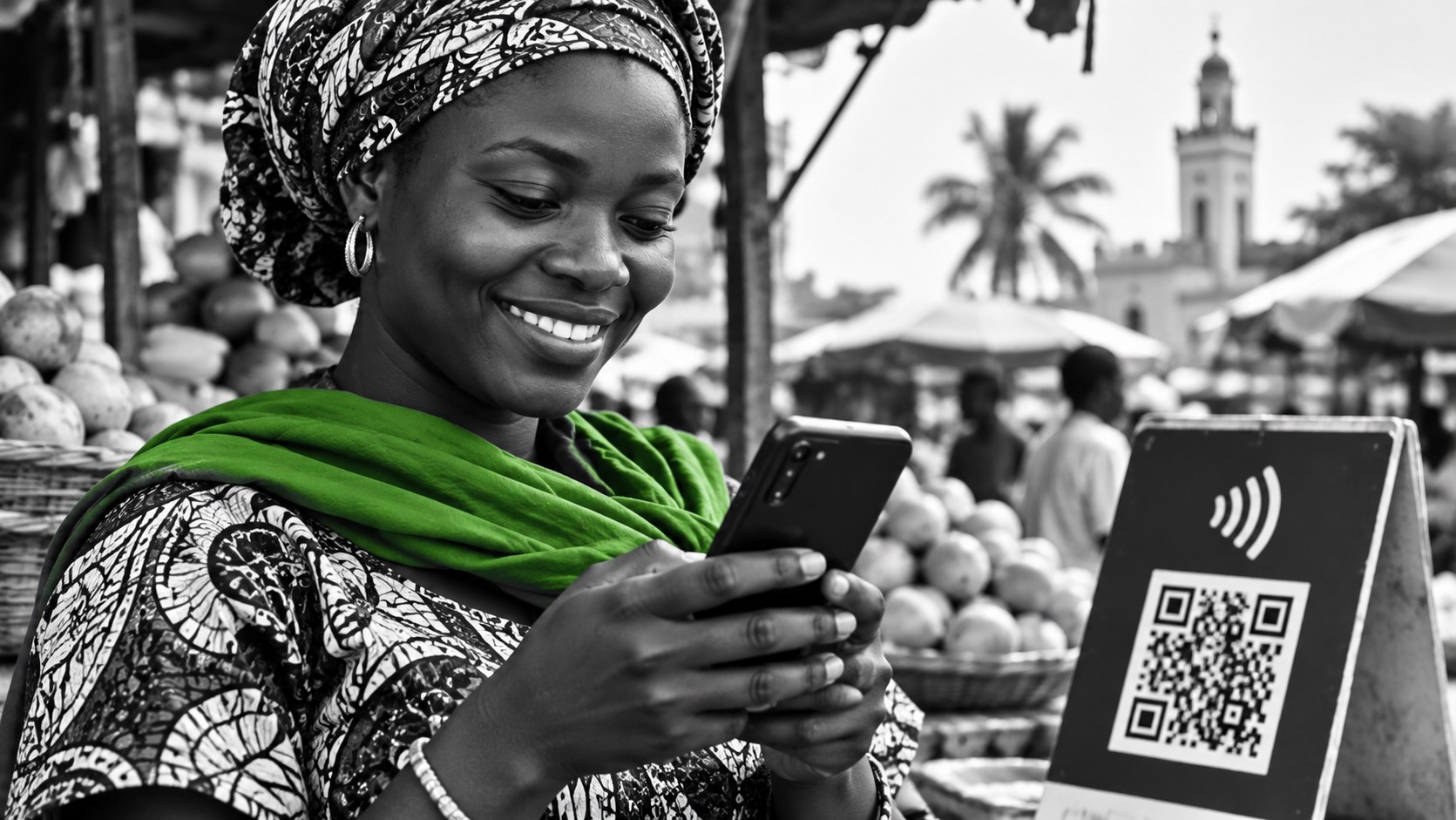
West Africa is experiencing a significant transformation in financial inclusion as mobile money, microfinance institutions and digital payment infrastructure expand access to banking services. New figures released by the Central Bank of West African States (BCEAO) show that financial inclusion across the eight-member West African Economic and Monetary Union reached 76.1% in 2025, while a new regional instant-payment system is creating opportunities for millions of previously underserved consumers and businesses.
Benin leads regional financial inclusion
According to the BCEAO’s latest annual financial inclusion report, published in October 2026, Benin recorded the region’s highest rate of financial-services usage at 92.8% of adults.


Togo followed with 90.7%, Côte d’Ivoire reached 88.7% and Senegal recorded 88.0%.
However, substantial differences remain. Mali reported 61.9%, while Niger reached only 26.2%, illustrating the continuing challenges facing lower-income and geographically isolated communities.
Across the monetary union, conventional banking services remain less accessible, with only 26.9% of adults holding accounts within the traditional banking system.
New payment infrastructure connects eight countries
A major development is the introduction of the BCEAO’s Interoperable Instant Payment System, known as PI-SPI.
The platform enables customers to transfer funds between participating banks, mobile money providers, payment institutions and microfinance organisations.
From 2 November 2026, new regulations require interoperable electronic-money transfers to use the regional infrastructure.
The system has expanded to 175 participating institutions, potentially providing more than 38 million people with access to instant payments.
Domestic person-to-person transfers totalling up to CFA 8,000 daily are free, while larger transfers may attract fees of up to 0.8%.
Microfinance remains essential for underserved communities
Despite rapid technological development, traditional banks frequently struggle to reach rural households, agricultural workers and small businesses.
Microfinance institutions continue to play an important role by offering savings accounts, small loans and financial services adapted to lower-income customers.
Connecting these institutions to digital payment networks could reduce operational costs, expand geographical coverage and improve access to regulated financial services.
Mobile money creates new economic opportunities
Mobile financial services are increasingly allowing consumers to receive salaries, transfer funds, pay merchants and manage savings without visiting conventional bank branches.
For women entrepreneurs, informal traders and agricultural communities, these services can reduce dependence on cash and improve financial independence.
However, challenges remain concerning digital literacy, fraud prevention, telecommunications coverage and consumer protection.
Regional integration offers further potential
The BCEAO’s payment infrastructure represents an important step towards greater economic integration across West Africa.
Lower transaction costs and improved interoperability could strengthen regional trade, support small businesses and encourage investment in financial technology.
As digital services continue expanding, the region’s next challenge will be ensuring that access translates into meaningful financial participation through affordable credit, secure savings and reliable everyday payment services.
NewsHub Finance | Financial Inclusion | 8 November 2026
West Africa is experiencing a significant transformation in financial inclusion as mobile money, microfinance institutions and digital payment infrastructure expand access to banking services. New figures released by the Central Bank of West African States (BCEAO) show that financial inclusion across the eight-member West African Economic and Monetary Union reached 76.1% in 2025, while a new regional instant-payment system is creating opportunities for millions of previously underserved consumers and businesses.

Recent Comments