
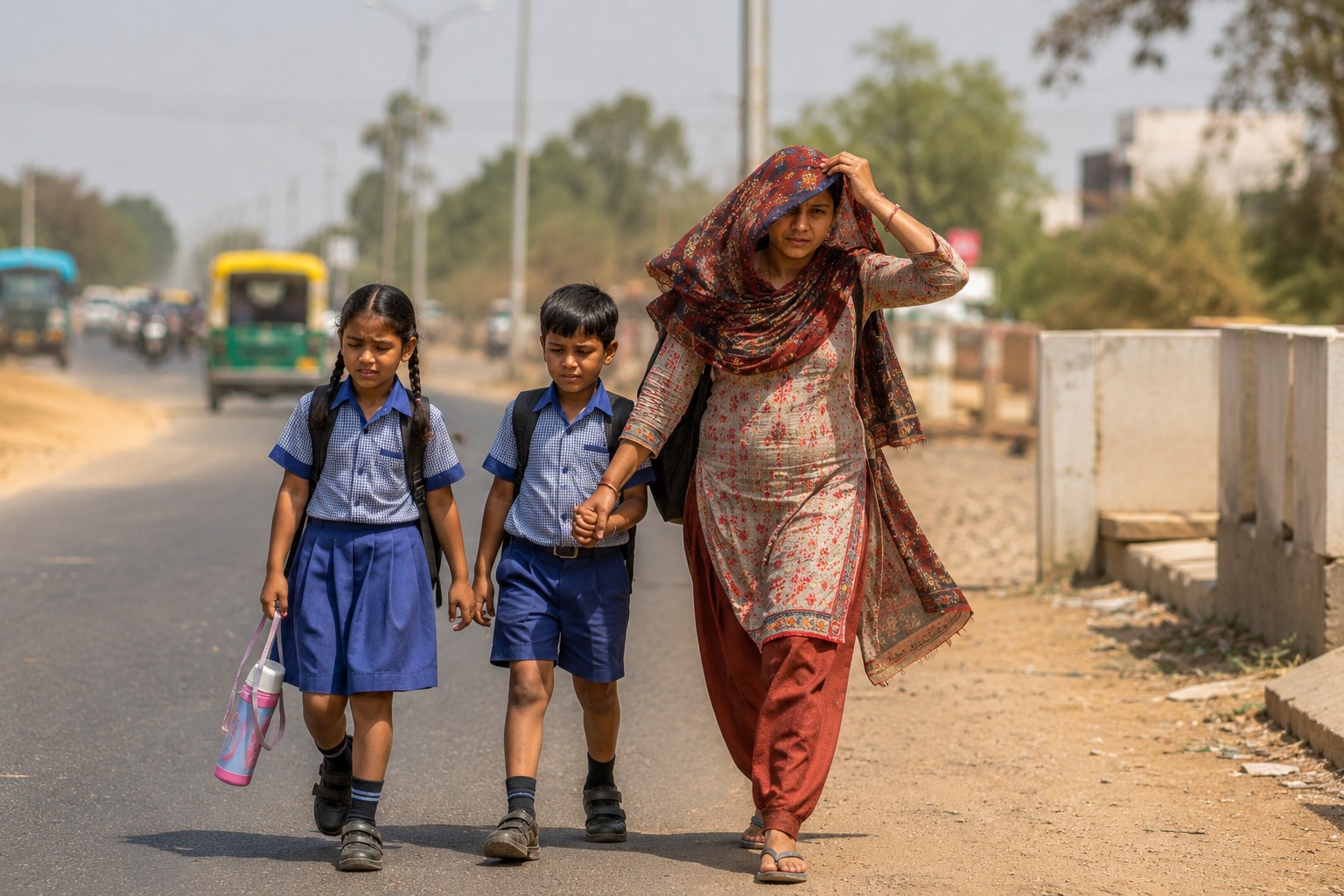
India’s increasingly severe heatwaves are creating a growing social and economic crisis, with prolonged school closures forcing thousands of working mothers to leave their jobs or reduce their working hours. As classrooms shift online for weeks—and in some cases months—women are bearing a disproportionate share of the burden, highlighting the far-reaching consequences of climate change beyond its immediate environmental impacts.
Extreme heat disrupts education
Record-breaking temperatures have become increasingly common across large parts of India, prompting state governments to suspend in-person teaching in an effort to protect children from dangerous heat conditions. Schools have increasingly adopted remote learning during periods of extreme weather, but the transition has created significant challenges for families.
Many parents, particularly those with younger children, must now supervise online lessons at home while attempting to maintain full-time employment. For households without reliable internet access or adequate digital devices, the disruption has become even more severe.

Women shoulder the greatest burden
Labour experts report that women are disproportionately affected by the closures. In many households, mothers are expected to remain at home to care for children, supervise online education and manage household responsibilities during prolonged periods of extreme heat.
As a result, many women have reduced their working hours, shifted to lower-paying flexible employment or left the workforce altogether. Those employed in informal sectors face particularly difficult choices, as staying home often means losing daily income without compensation.
Researchers warn that repeated climate-related disruptions risk reversing years of progress in female labour-force participation, which remains relatively low compared with many other major economies.
Economic costs extend beyond households
The consequences extend well beyond individual families. Reduced workforce participation places additional pressure on businesses already facing productivity losses caused by extreme temperatures, disrupted transport and higher energy demand.
Economists increasingly recognise climate change as both an environmental and labour-market issue. Lost working hours, reduced productivity and declining female employment collectively impose growing costs on India’s rapidly expanding economy.
At the same time, education experts caution that prolonged online learning may widen existing educational inequalities, particularly among lower-income families lacking digital resources.
Climate adaptation becomes increasingly urgent
The situation has intensified calls for greater investment in climate-resilient schools, improved cooling infrastructure and childcare support that enables parents—particularly women—to remain economically active during periods of extreme weather.
As heatwaves become more frequent and intense across South Asia, policymakers face growing pressure to develop long-term adaptation strategies that protect both public health and economic opportunity. The experience of India’s working mothers demonstrates that climate change is not only reshaping weather patterns but also altering labour markets, family life and educational systems in profound ways.
Newshub Editorial in Asia – 22 June 2026

If you have an account with ChatGPT you get deeper explanations,
background and context related to what you are reading.
Open an account:
Open an account
Recent Comments