
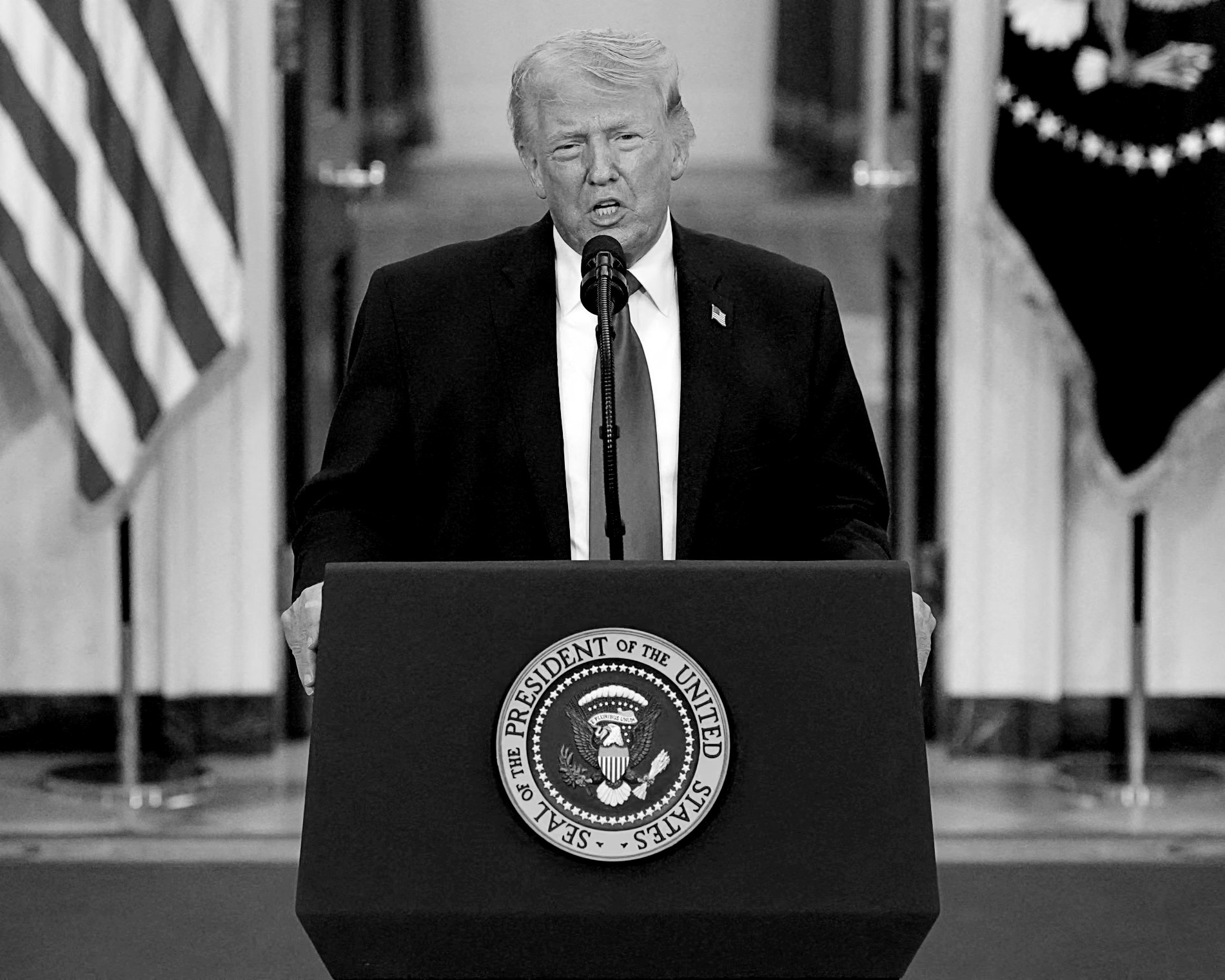
US president Donald Trump declared that the war with Iran is “nearing completion” in a prime-time address, but offered limited detail on how the conflict will be brought to an end, prompting renewed volatility across global markets.
A confident message with limited clarity
In his televised address, Trump sought to frame the conflict as strategically successful and approaching its final phase. He indicated that the coming two to three weeks would be decisive, suggesting that US objectives were close to being achieved. However, the absence of a clear roadmap for de-escalation left analysts and investors uncertain about the trajectory of the war.
The president also reiterated calls for international cooperation in securing the Strait of Hormuz, a critical artery for global energy flows. His remarks, including the statement that nations should “grab it and cherish it,” underscored the administration’s expectation that allies take a more active role in safeguarding maritime routes.

Immediate market reaction reflects uncertainty
Financial markets reacted negatively in the immediate aftermath of the address. Asian equity markets traded lower, reflecting concerns that the conflict may extend beyond the suggested timeframe. Oil prices, meanwhile, moved higher, driven by fears of prolonged disruption to supply routes through the Gulf.
The Strait of Hormuz remains central to market anxiety. Any sustained closure or threat to shipping lanes could significantly impact global oil supply, with ripple effects across inflation, trade balances, and monetary policy. The lack of operational detail in Trump’s remarks did little to reassure investors that these risks are being contained.
Energy markets remain highly sensitive
Energy traders are closely monitoring developments around the Gulf region, particularly naval movements and any indication of further escalation. The current price reaction reflects a risk premium tied not only to physical supply constraints but also to geopolitical uncertainty.
A prolonged conflict or an unclear exit strategy could sustain elevated energy prices, complicating economic recovery efforts in multiple regions. Emerging markets, in particular, remain vulnerable to higher import costs and currency pressures linked to oil price volatility.
Strategic positioning and global implications
Trump’s address also highlighted a broader strategic shift, emphasising shared responsibility among allied nations for maintaining global energy security. This approach signals a potential recalibration of US foreign policy, with greater reliance on multilateral involvement in key geopolitical flashpoints.
However, the gap between rhetoric and operational clarity continues to shape market sentiment. Investors are seeking concrete indicators of de-escalation, including diplomatic engagement, defined military objectives, and timelines for withdrawal.
Outlook: cautious markets and fragile confidence
As the conflict enters what the administration describes as its final stage, markets remain cautious. The coming weeks will be critical in determining whether the war can indeed be concluded within the suggested timeframe or whether further escalation risks prolonging uncertainty.
Until clearer signals emerge, volatility across energy and equity markets is likely to persist, with the Strait of Hormuz remaining a focal point for global economic stability.
Newshub Editorial in North America – April 2, 2026

If you have an account with ChatGPT you get deeper explanations,
background and context related to what you are reading.
Open an account:
Open an account
Recent Comments