
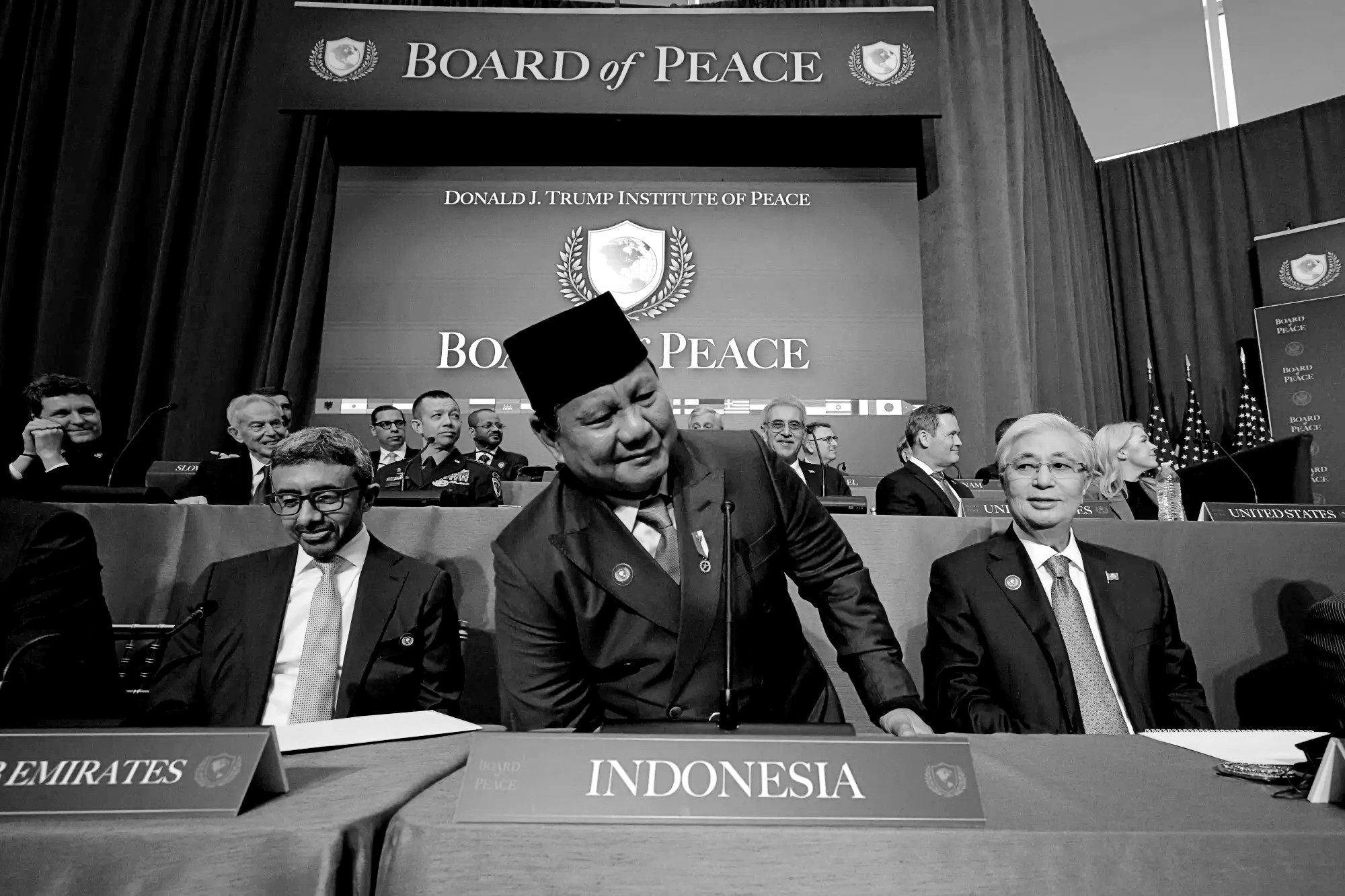
A new survey indicates that 50.9% of Indonesians oppose the country’s participation in the proposed “Board of Peace”, highlighting a notable level of public scepticism toward the initiative despite ongoing diplomatic engagement by the government. The findings point to a divided domestic landscape as policymakers weigh international commitments against internal sentiment.
Majority signals opposition in latest survey
The survey results show that a slim but clear majority of respondents are against Indonesia joining the international framework. While support remains present among a significant minority, the data suggests that public backing is not yet strong enough to provide a clear mandate for participation.
This level of opposition reflects broader concerns about the implications of involvement in global governance structures, particularly those perceived as carrying political or strategic obligations.

Concerns over neutrality and national interest
A central issue raised by respondents relates to Indonesia’s long-standing foreign policy principle of neutrality. Many citizens appear cautious about initiatives that could be interpreted as aligning the country with specific geopolitical blocs or conflicts.
Indonesia has traditionally positioned itself as a non-aligned actor, balancing relationships across major powers while maintaining an independent diplomatic stance. Participation in new international bodies may therefore be viewed through the lens of potential risks to that positioning.
Government faces balancing act
Policymakers in Indonesia are now faced with the challenge of reconciling external diplomatic ambitions with domestic opinion. Engagement in international initiatives can enhance global influence and visibility, but may also carry political costs if public support is limited.
The survey underscores the importance of communication and transparency in explaining the purpose, scope, and expected benefits of participation. Without this, scepticism may persist or deepen.
Implications for regional diplomacy
Indonesia plays a key role in regional affairs as Southeast Asia’s largest economy and a leading voice within ASEAN. Its decisions regarding international participation often carry broader implications for regional dynamics.
A cautious or delayed approach to the “Board of Peace” could influence how other countries in the region assess similar initiatives, particularly in a period marked by heightened geopolitical tension.
Outlook remains uncertain
The survey results suggest that Indonesia’s path forward will depend on how effectively the government can address public concerns while maintaining its international engagement strategy. Shifts in opinion may occur as more information becomes available or as geopolitical conditions evolve.
For now, the data reflects a country weighing its global role carefully, with public sentiment acting as a key constraint on policy direction.
Newshub Editorial in Asia – April 16, 2026

If you have an account with ChatGPT you get deeper explanations,
background and context related to what you are reading.
Open an account:
Open an account
Recent Comments