
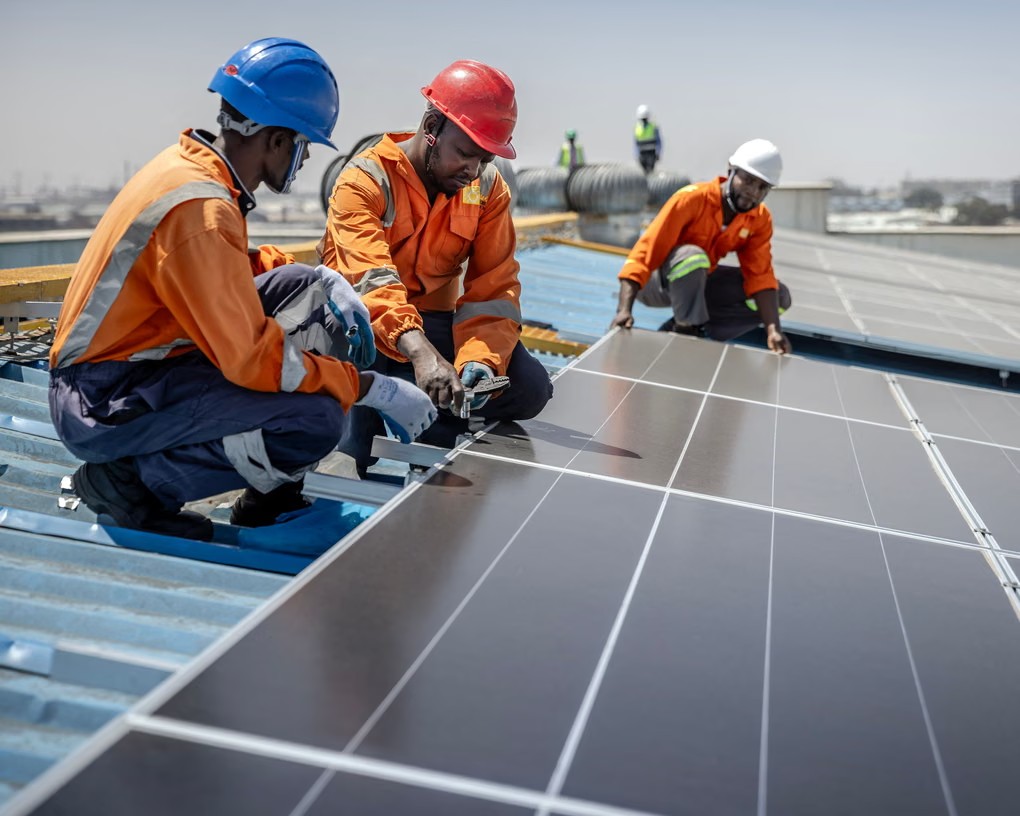
African leaders and international delegates at the Africa Climate Summit have voiced optimism that the continent could lead the next global green economy boom. While Africa is already breaking records in solar energy deployment, participants stressed that urgent action is needed to close a significant financing gap that threatens to slow momentum.
Renewables drive Africa’s green surge
Across the continent, renewable energy has moved from ambition to reality. Solar power installations reached record levels in 2024, with new projects in South Africa, Kenya, Morocco and Nigeria leading the way. Wind and geothermal energy are also expanding, positioning Africa as a potential renewable powerhouse.
The summit underscored how abundant natural resources — sunshine, wind corridors and geothermal basins — give Africa a comparative advantage in clean energy. If fully leveraged, these resources could help the continent meet its rapidly growing energy demand while contributing to global decarbonisation efforts.

The financing challenge
Despite strong progress, African policymakers and industry leaders warned that the continent faces a critical financing shortfall. Current renewable investments meet only a fraction of what is required. Estimates suggest Africa needs over $200 billion annually to align with climate and development goals, yet actual flows remain below one-quarter of that figure.
Delegates called for innovative financing mechanisms, blended public-private investment, and a greater role for development banks to de-risk projects. Several speakers urged developed nations to deliver on long-promised climate finance commitments, arguing that Africa’s energy transition cannot proceed without equitable support.
Economic opportunity and job creation
Beyond environmental benefits, the summit highlighted the economic promise of the green economy. Investment in renewables, electric mobility, and sustainable agriculture could generate millions of jobs, enhance energy security, and reduce reliance on fossil fuel imports.
Experts noted that scaling local manufacturing capacity — from solar panels to battery storage — would not only create employment but also build resilience in global supply chains. The summit’s discussions frequently returned to the theme of “African solutions to global problems.”
A decisive decade ahead
With the global energy transition accelerating, Africa’s ability to harness its green potential could redefine its economic future. The summit closed with a renewed call for urgency: Africa can become a cornerstone of the world’s clean energy system, but only if financing gaps are addressed and partnerships deepened.
REFH – Newshub, 9 September 2025
Recent Comments