
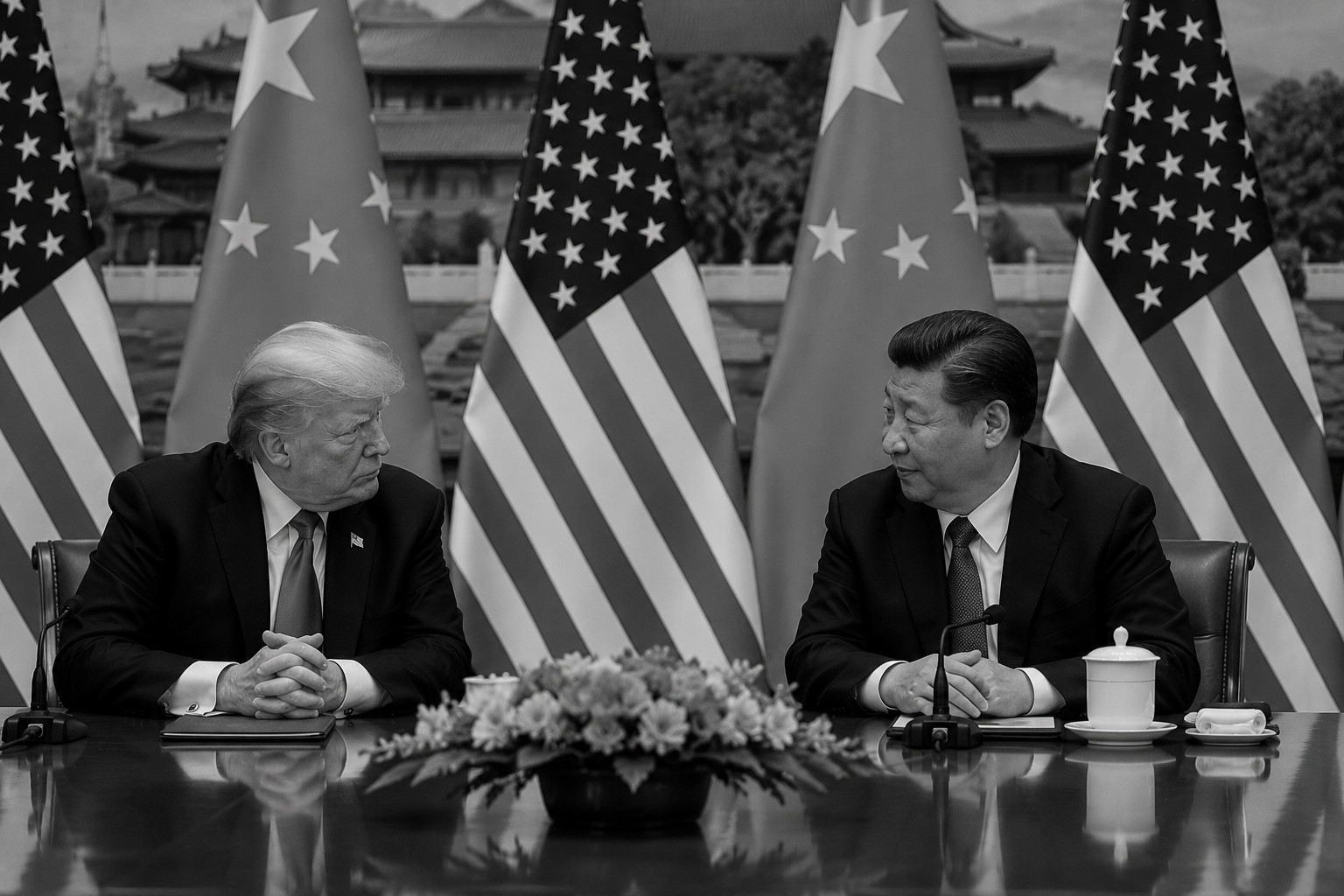
Donald Trump and Xi Jinping focused primarily on trade relations, economic stability and geopolitical risk management during their recent summit in Beijing, while discussions surrounding Iran and the Strait of Hormuz played a secondary role linked mainly to global energy security. The meeting highlighted growing efforts by both the United States and China to stabilise relations at a time of rising geopolitical fragmentation, slowing global growth and increasing market volatility.
Trade tensions remained central topic
According to officials and reports following the summit, the main agenda focused on tariffs, industrial competition, supply chains and market access. Both sides discussed ways to reduce economic friction after years of tension involving semiconductors, advanced manufacturing and export restrictions.
China reportedly pushed for greater predictability regarding US trade policy and technology sanctions, while the Trump administration continued pressing Beijing on trade imbalances and industrial subsidies.

Agricultural exports and broader commercial cooperation were also discussed as both countries attempt to limit further disruption to global trade flows already affected by conflicts and inflationary pressure.
Taiwan and regional security still sensitive
Regional security issues, particularly Taiwan and military positioning in the Asia-Pacific region, remained highly sensitive during the talks. Beijing continues opposing deeper US military support for Taiwan, while Washington maintains its strategic partnerships and regional deterrence policies.
Analysts described the summit as an effort to manage strategic rivalry rather than fundamentally resolve disputes between the world’s two largest economies. Both governments appeared focused on preventing uncontrolled escalation while preserving economic and diplomatic communication.
The broader objective appeared to be stabilisation rather than reconciliation.
Iran discussed mainly through energy security lens
Iran and the Strait of Hormuz were discussed largely in the context of energy markets and global shipping stability rather than as the summit’s main focus. Rising tensions in the Gulf have increased concerns regarding oil prices, inflation and maritime security, issues affecting both Western and Asian economies.
The Strait of Hormuz remains one of the world’s most strategically important energy corridors, with a substantial share of global oil exports passing through the narrow waterway each day.
China, as a major energy importer, remains highly dependent on stable Gulf supply routes, while the United States continues viewing regional stability as critical to broader global economic security.
However, no major joint initiative or dedicated Iran-focused agreement emerged from the summit discussions.
Markets monitor diplomatic signals closely
Financial markets followed the Beijing summit carefully amid concerns surrounding trade, commodity prices and geopolitical uncertainty. Investors remain highly sensitive to any deterioration in US-China relations due to the importance of both economies within global manufacturing, finance and technology sectors.
Although no major breakthrough agreements were announced, analysts viewed the meeting as important for maintaining dialogue during a period of heightened international instability.
The summit also reflected how interconnected global issues — including trade, technology, energy security and regional conflicts — increasingly shape diplomatic relations between major powers.
Strategic competition continues despite dialogue
Despite the relatively constructive tone of the summit, long-term competition between the United States and China remains unresolved. Technology leadership, military influence, supply chains and industrial dominance continue defining the relationship between Washington and Beijing.
Still, the willingness of both leaders to maintain direct discussions may help reduce immediate market anxiety during a period marked by conflict, inflation pressure and global economic uncertainty.
For investors and policymakers alike, the summit reinforced that economic stability and geopolitical management remain deeply interconnected in the modern global economy.
Newshub Editorial in Asia – 17 May 2026

If you have an account with ChatGPT you get deeper explanations,
background and context related to what you are reading.
Open an account:
Open an account
Recent Comments