
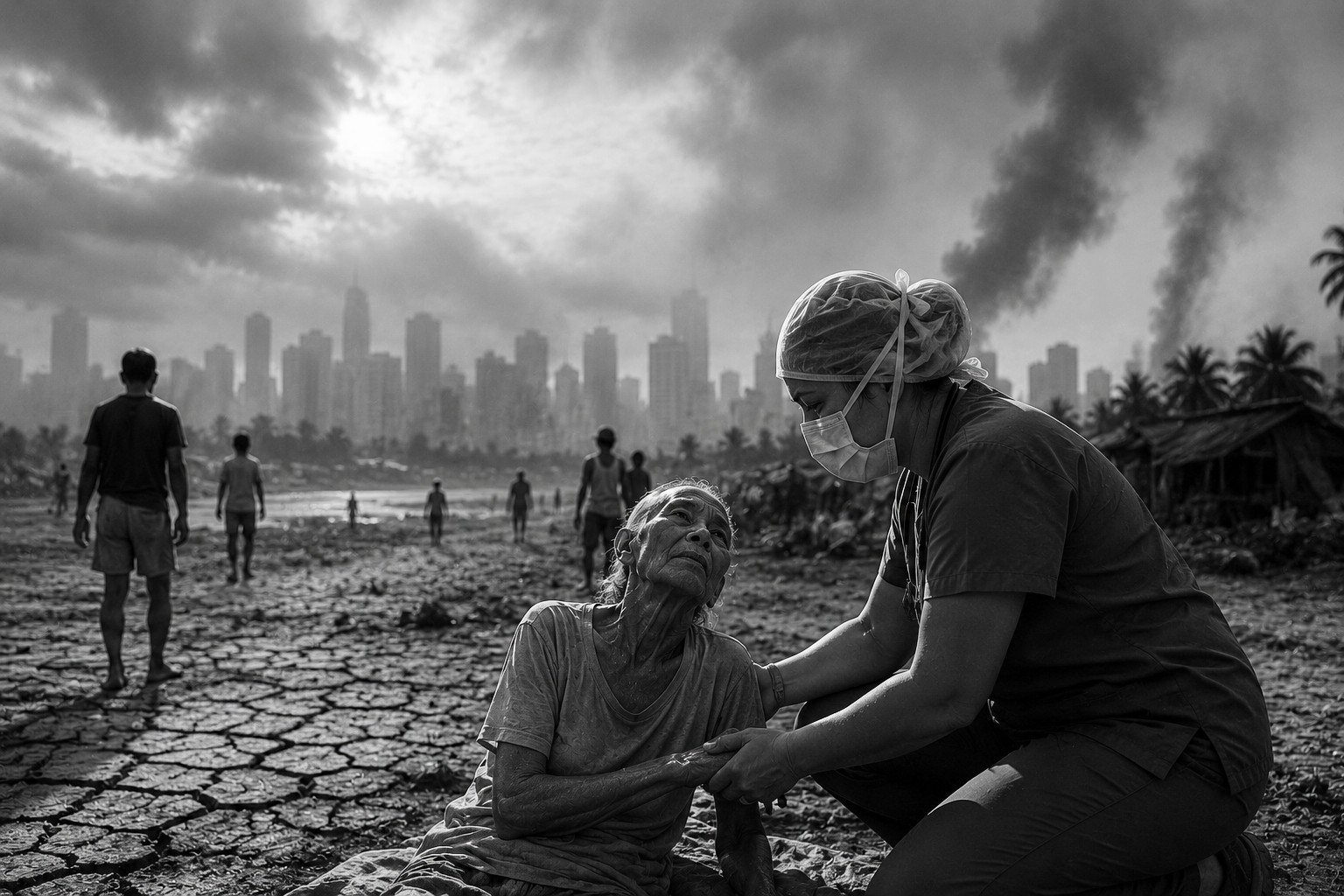
Leading international health experts are calling on the World Health Organization to formally declare the climate crisis a global public health emergency, warning that millions of preventable deaths could occur without a stronger coordinated international response. The appeal comes amid growing evidence linking rising temperatures, extreme weather events, food insecurity and pollution to worsening global health outcomes across both developed and emerging economies.
Climate increasingly viewed as health threat
A commission of public health specialists and climate researchers argues that climate change should now be treated not only as an environmental challenge but also as a direct and escalating health emergency. The experts believe a formal WHO declaration would help accelerate international coordination, funding, emergency preparedness and public-health planning.
According to the commission, climate-related health risks are already contributing to rising mortality linked to heatwaves, respiratory disease, infectious disease spread, malnutrition and water insecurity.

The warning reflects growing concern that healthcare systems worldwide are becoming increasingly exposed to climate-driven disruptions while many governments continue responding too slowly to long-term environmental risks.
Extreme weather affecting healthcare systems
Heatwaves, floods, droughts and wildfires are placing growing pressure on hospitals, emergency services and healthcare infrastructure across multiple continents. Public health officials warn that vulnerable populations — including elderly people, children and low-income communities — face disproportionately high risks during extreme climate events.
In many emerging economies, healthcare systems already struggling with limited resources are particularly exposed to rising temperatures, food insecurity and climate-sensitive diseases such as malaria and dengue fever.
Scientists also warn that air pollution linked to fossil fuel consumption continues contributing to cardiovascular and respiratory illnesses affecting millions globally each year.
Call for coordinated international response
Supporters of a WHO emergency declaration argue that the designation could trigger stronger international cooperation similar to responses used during pandemics and other global health threats.
The commission believes such a move could improve coordination between governments, research institutions and healthcare providers while increasing political urgency surrounding climate adaptation and public-health resilience.
Analysts note that climate change increasingly affects sectors far beyond environmental policy, including agriculture, insurance, migration, infrastructure and labour productivity.
A formal public health framing could therefore reshape how governments prioritise climate-related spending and emergency planning.
Economic consequences becoming harder to ignore
The health implications of climate change are also creating growing economic costs. Rising healthcare expenditure, declining labour productivity during extreme heat events and increasing disaster recovery expenses are placing additional strain on public finances worldwide.
Insurance markets, infrastructure systems and food supply chains are all experiencing increasing pressure linked to climate volatility. Economists warn that failure to adapt could significantly increase long-term economic instability, particularly in developing regions already vulnerable to climate disruption.
At the same time, critics of emergency declarations caution that governments must balance public-health priorities with economic realities, energy security and industrial competitiveness.
Pressure growing on global institutions
The debate places additional pressure on international institutions to expand climate policy beyond emissions targets and environmental diplomacy. Public-health experts increasingly argue that climate adaptation should be treated as a core component of global healthcare strategy.
Several governments and international organisations have already increased investment into heat preparedness, disease surveillance and climate-resilient infrastructure. However, researchers warn that current efforts remain insufficient relative to the scale of projected risks.
For the WHO, the growing calls for action reflect how climate change is increasingly being viewed not simply as an ecological issue, but as one of the defining public health challenges of the twenty-first century.
Newshub Editorial in Europe – 17 May 2026

If you have an account with ChatGPT you get deeper explanations,
background and context related to what you are reading.
Open an account:
Open an account
Recent Comments