
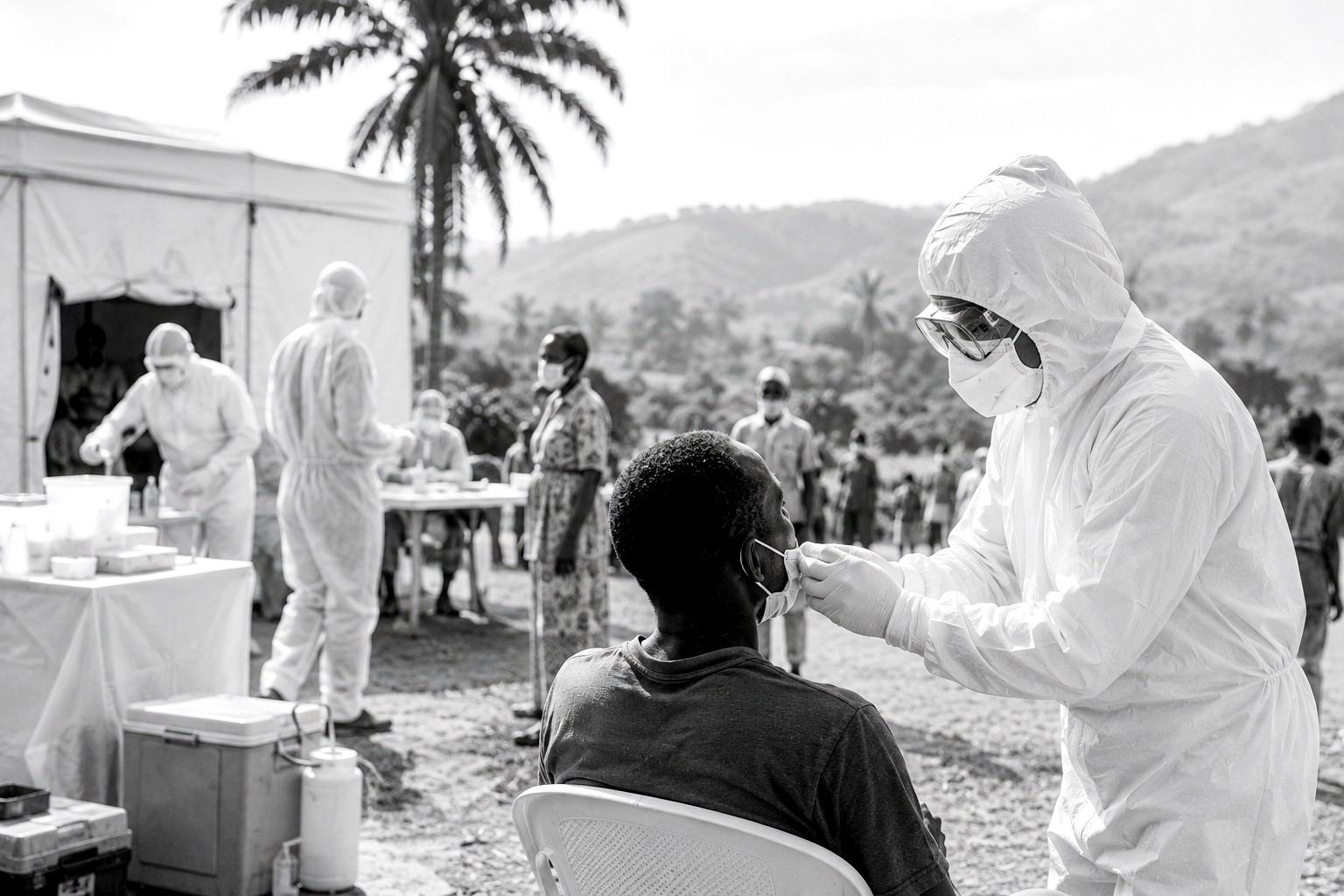
The World Health Organization has declared the ongoing Ebola outbreak affecting Democratic Republic of the Congo and Uganda a “global public health emergency”, triggering an expanded international response aimed at preventing wider regional and international spread. The decision reflects growing concern over rising infections, cross-border transmission risks and the vulnerability of healthcare systems across parts of Central and East Africa.
International response now intensifying
The WHO’s emergency classification is intended to accelerate global coordination, emergency funding and medical deployment as health authorities attempt to contain the outbreak. International agencies are expected to increase logistical support, vaccine distribution, surveillance operations and healthcare staffing in affected regions.
Health officials stated that rapid intervention remains essential to preventing further spread, particularly in areas where healthcare infrastructure is already under severe pressure.

The declaration also enables stronger coordination between neighbouring countries, humanitarian organisations and international public-health institutions.
Cross-border transmission raises concern
The outbreak has affected both Congo-Kinshasa and Uganda, increasing fears that population movement and regional trade routes could contribute to additional transmission if containment efforts fail.
Authorities in neighbouring countries have already strengthened border health screenings, emergency preparedness systems and surveillance procedures. Airports, clinics and regional healthcare networks are also increasing monitoring of potential Ebola-related symptoms.
The WHO warned that urban transmission or major transport-related spread could significantly complicate containment efforts.
Ebola remains highly dangerous virus
Ebola is one of the world’s deadliest infectious diseases, with fatality rates historically ranging from 25% to 90% depending on the outbreak and medical response conditions. The virus spreads primarily through direct contact with infected bodily fluids and causes symptoms including fever, internal bleeding, severe weakness and organ failure.
Although vaccines and treatment protocols have improved substantially in recent years, rapid containment remains critical. Health experts emphasise that early diagnosis, isolation and contact tracing are essential to preventing exponential spread.
Medical teams are now working in difficult operational environments where infrastructure limitations, conflict and displacement complicate response efforts.
Conflict and healthcare limitations complicate containment
Parts of eastern Congo continue facing instability linked to armed groups, population displacement and weak healthcare access. Humanitarian organisations warn that insecurity makes it significantly harder for medical personnel to reach vulnerable communities quickly.
Uganda’s healthcare system is also under pressure as authorities attempt to strengthen outbreak surveillance while maintaining broader public-health operations.
International experts note that mistrust towards authorities and misinformation campaigns can further complicate vaccination and containment efforts during infectious disease outbreaks.
Global health concerns growing again
The WHO declaration comes at a time when global public-health systems are already facing increasing strain from climate-related illnesses, pandemic preparedness challenges and healthcare funding pressures.
Analysts believe the outbreak highlights how rapidly infectious diseases can evolve into international security and economic concerns, particularly in regions with fragile infrastructure and limited medical resources.
The emergency classification is therefore not only a medical measure but also a warning regarding the growing interconnectedness of health, security, migration and economic stability.
Focus now shifts to containment success
The coming weeks are expected to be critical in determining whether the outbreak can be stabilised before wider international spread occurs. Health officials continue emphasising that Ebola outbreaks can be controlled if rapid coordination, vaccination and surveillance systems function effectively.
For both Congo-Kinshasa and Uganda, the WHO declaration marks a significant escalation in international attention and emergency mobilisation as authorities attempt to prevent another major global health crisis.
Newshub Editorial in Africa – 17 May 2026

If you have an account with ChatGPT you get deeper explanations,
background and context related to what you are reading.
Open an account:
Open an account
Recent Comments