
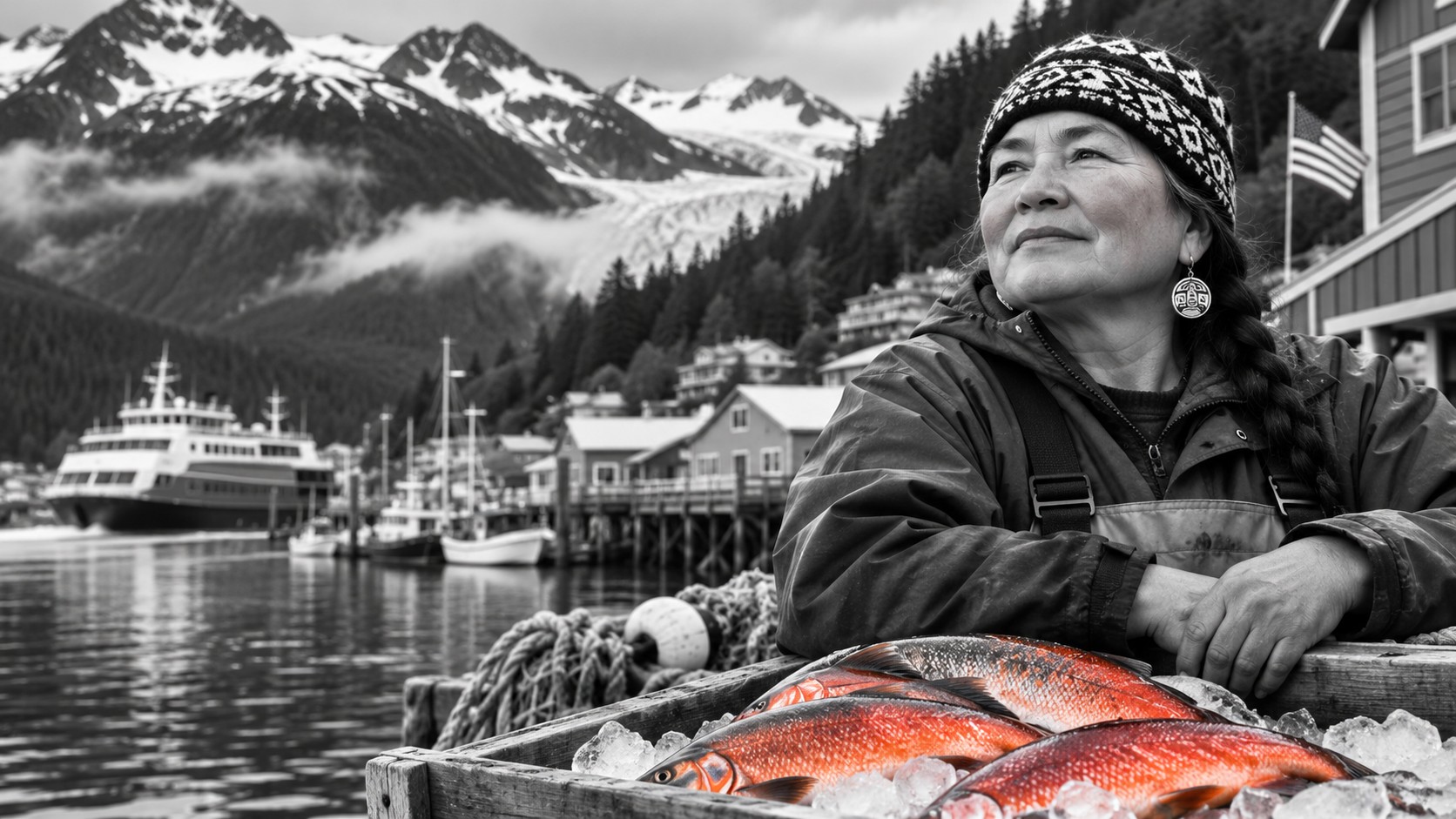
In Juneau, Alaska’s remote capital, food security depends on far more than supermarkets and commercial agriculture. With no road connection to the rest of North America, limited farmland and a growing season lasting only a few months, the city’s approximately 35,000 residents rely on deliveries by sea and air, small-scale food production and generations-old traditions of harvesting and sharing food within their communities.
A capital disconnected from the road network
Juneau occupies an unusual position among American state capitals. Although roads connect neighbourhoods and nearby communities, they eventually end in the surrounding wilderness, leaving the city dependent on ferries, barges and aircraft for most commercial supplies.


This geographical isolation creates significant logistical challenges. Rising transportation costs, severe weather and interruptions to ferry services can affect food availability and prices.
Alaska is frequently described as importing 95% of its food. However, the figure is disputed and fails to account for substantial quantities of fish, game and other wild foods harvested locally and distributed outside commercial markets.
Indigenous traditions strengthen food security
For the Indigenous Tlingit people and other communities throughout south-east Alaska, food sharing remains an essential part of everyday life.
Families harvest salmon, halibut and other traditional foods, preserving and distributing them among relatives, neighbours and elders.
These arrangements form an important informal food economy that cannot easily be measured through conventional retail statistics.
According to Alaska’s most recent comprehensive statewide estimate, residents harvested approximately 46 million pounds of wild food in 2014.
Local farmers overcome difficult conditions
Commercial agriculture faces considerable obstacles in Juneau. Mountainous terrain, acidic soils and a short growing season restrict the availability of productive farmland.
Nevertheless, local producers are developing alternative approaches.
Farmer Joe Orsi cultivates vegetables and garlic on terraced land, while Juneau Greens operates a hydroponic growing business supplying locally produced vegetables.
The company’s subscription programme serves approximately 425 customers, demonstrating how predictable local demand can help smaller agricultural businesses remain viable.
Community initiatives expand access
Non-profit organisation Ecotrust operates Salt and Soil, a regional food marketplace connecting farmers, processors and consumers through coordinated deliveries.
Other initiatives include traditional food-processing facilities, school gardens and mobile greenhouses designed to strengthen agricultural knowledge and local production.
These programmes also help preserve Indigenous food traditions while encouraging younger generations to participate in growing and preparing food.
A different model of economic resilience
Juneau demonstrates that food security cannot always be measured through commercial supply chains alone.
Its combination of traditional harvesting, community cooperation, technological innovation and small-scale agriculture offers lessons for remote communities worldwide.
As climate change and transportation uncertainties place increasing pressure on food systems, Alaska’s capital illustrates how local knowledge and collective responsibility can strengthen resilience where conventional infrastructure remains limited.
NewsHub Finance | Environment | 7 November 2026
In Juneau, Alaska’s remote capital, food security depends on far more than supermarkets and commercial agriculture. With no road connection to the rest of North America, limited farmland and a growing season lasting only a few months, the city’s approximately 35,000 residents rely on deliveries by sea and air, small-scale food production and generations-old traditions of harvesting and sharing food within their communities.

Recent Comments