
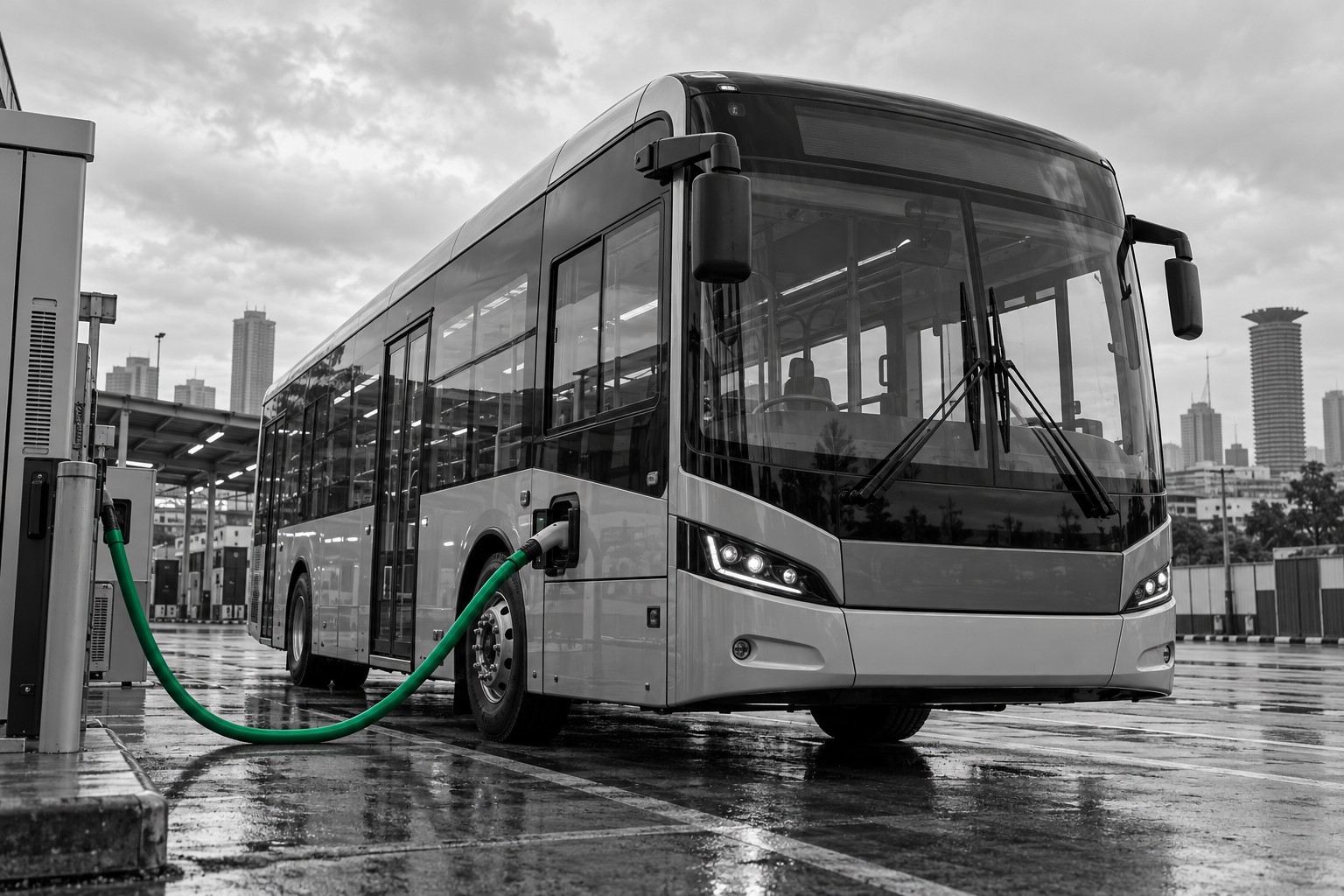
A Nairobi start-up is showing how cleaner public transport can become a practical business proposition. By combining electric buses with financing, local assembly and charging infrastructure, BasiGo is helping East African operators make a transition that once looked financially out of reach.
Founded in 2021, BasiGo has developed operations in Kenya and Rwanda. Its website reports 114 buses in operation, more than seven million electric kilometres travelled and over 9.6 million passenger journeys. These company-reported figures demonstrate a business already carrying commuters, with expansion ambitions grounded in operating experience.
Solving the ownership problem
For a transport operator, an electric bus must make commercial sense. The purchase price, charging arrangements and maintenance requirements all influence whether a cleaner vehicle becomes a viable investment.


BasiGo addresses those barriers through its Pay-As-You-Drive financing model, alongside access to charging and servicing. The approach reduces the upfront financial obstacle and brings several essential parts of electric bus ownership into one offering.
That combination is the company’s strongest business idea: making new technology easier for existing transport businesses to adopt. Its potential lies in aligning environmental progress with the everyday economics of keeping vehicles on the road.
Local operations attract international backing
BasiGo also assembles buses locally and works with established public transport operators. This gives its expansion a connection to existing routes, customers and operating knowledge.
In November 2025, development finance institution Proparco announced an investment in the company. The announcement reported that 29 transport savings and credit co-operatives were benefiting from its buses, with annual operating cost savings of approximately 40%. Those reported savings help explain the commercial appeal, although individual operators’ results will vary.
A model worth watching
BasiGo’s next challenge is turning an established foothold into a larger, dependable transport network. More vehicles require financing, charging capacity and consistent service.
Its achievement already offers a compelling emerging-market business story. The company has identified a familiar urban necessity and built a business around making it work better. For passengers, operators and local industry, the opportunity extends well beyond the bus itself.
A Nairobi start-up is showing how cleaner public transport can become a practical business proposition. By combining electric buses with financing, local assembly and charging infrastructure, BasiGo is helping East African operators make a transition that once looked financially out of reach.
Recent Comments