
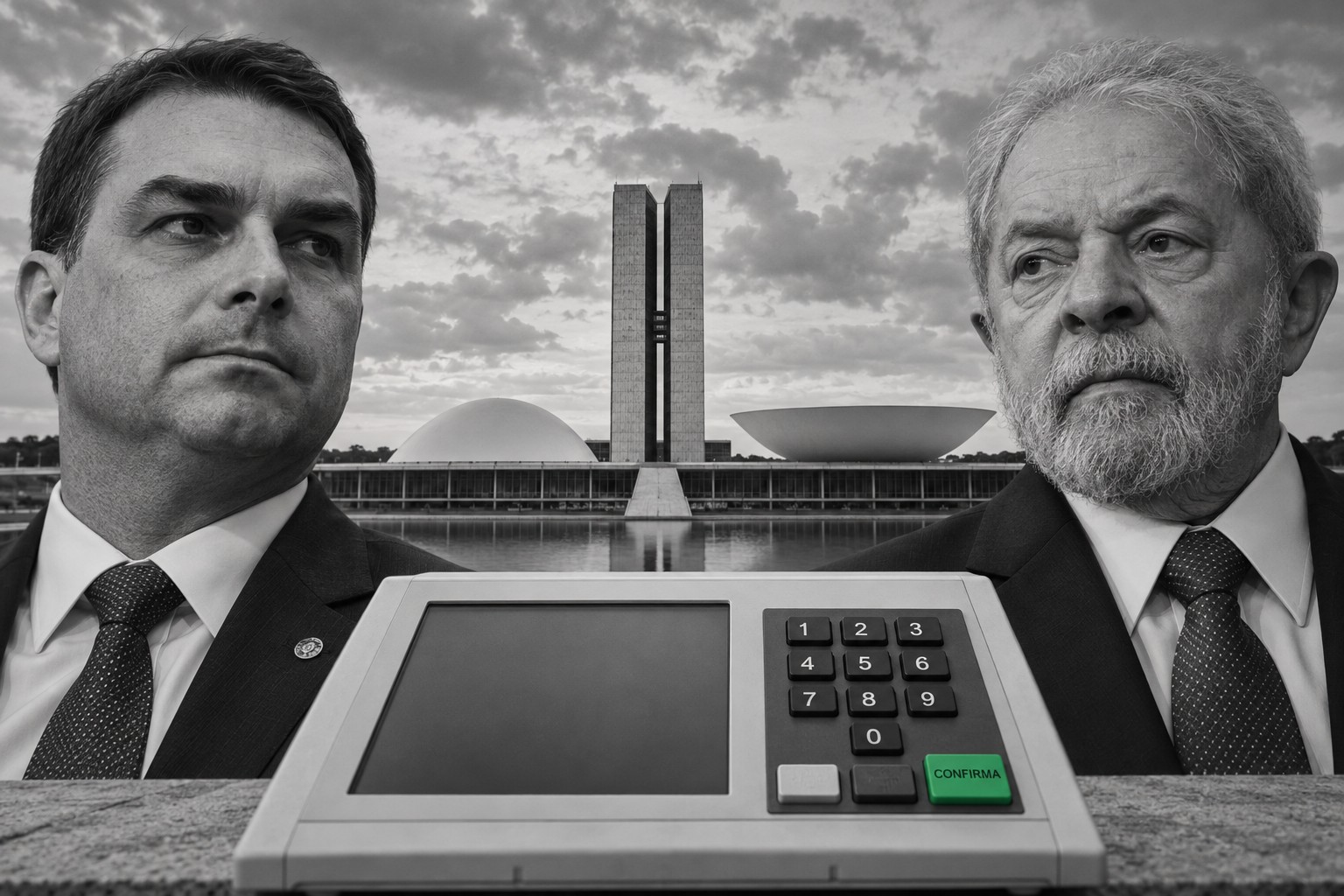
Brazil’s presidential election will go to a second round after far-right challenger Flávio Bolsonaro finished ahead of incumbent Luiz Inácio Lula da Silva in Sunday’s vote. The stronger-than-expected performance leaves the two candidates facing a three-week campaign before the decisive ballot on 25 October.
With almost all ballots counted, Bolsonaro had secured approximately 47% of valid votes, compared with Lula’s 45.2%. Neither reached the outright majority required to win in the first round.
Bolsonaro received about 56.1 million votes, placing him roughly 2.2 million ahead of the president. The result reversed the order suggested by several pre-election polls and delivered a setback to Lula’s hopes of securing another term without a runoff.


Lula acknowledges unexpected result
Speaking to supporters in São Paulo, Lula described the outcome as “unexpected” and acknowledged that he had believed a first-round victory was possible. He nevertheless pledged to begin a renewed campaign, presenting the runoff as an opportunity to compare the candidates’ records and competing visions for Brazil.
Bolsonaro interpreted his lead as evidence of demand for political change. The Liberal Party senator promised a smaller government and reiterated his proposal to end presidential re-election, saying he would seek only one term.
Bolsonaro family returns to the forefront
Flávio Bolsonaro, 45, is the son of former president Jair Bolsonaro, who backed his candidacy after being barred from standing and subsequently convicted over an attempted coup following the 2022 election.
Lula, 80, is seeking a fourth presidential term. He previously governed from 2003 to 2010 and returned to office in January 2023 after defeating Jair Bolsonaro.
The contest therefore extends a longstanding rivalry between Lula’s Workers’ Party and the political movement built around the Bolsonaro family.
Economy and undecided voters in focus
High living costs, household financial pressures, corruption and public security have shaped the campaign. Lula has highlighted social programmes and measures intended to ease economic hardship, while Bolsonaro has sought support from voters dissatisfied with the government.
Both candidates must now attract people who backed other contenders or stayed away from Sunday’s vote. Their ability to broaden support beyond established political loyalties will be central to determining who governs Latin America’s largest economy.
Newshub Editorial in South America – 5 October 2026
Brazil’s presidential election will go to a second round after far-right challenger Flávio Bolsonaro finished ahead of incumbent Luiz Inácio Lula da Silva in Sunday’s vote. The stronger-than-expected performance leaves the two candidates facing a three-week campaign before the decisive ballot on 25 October.
Recent Comments