
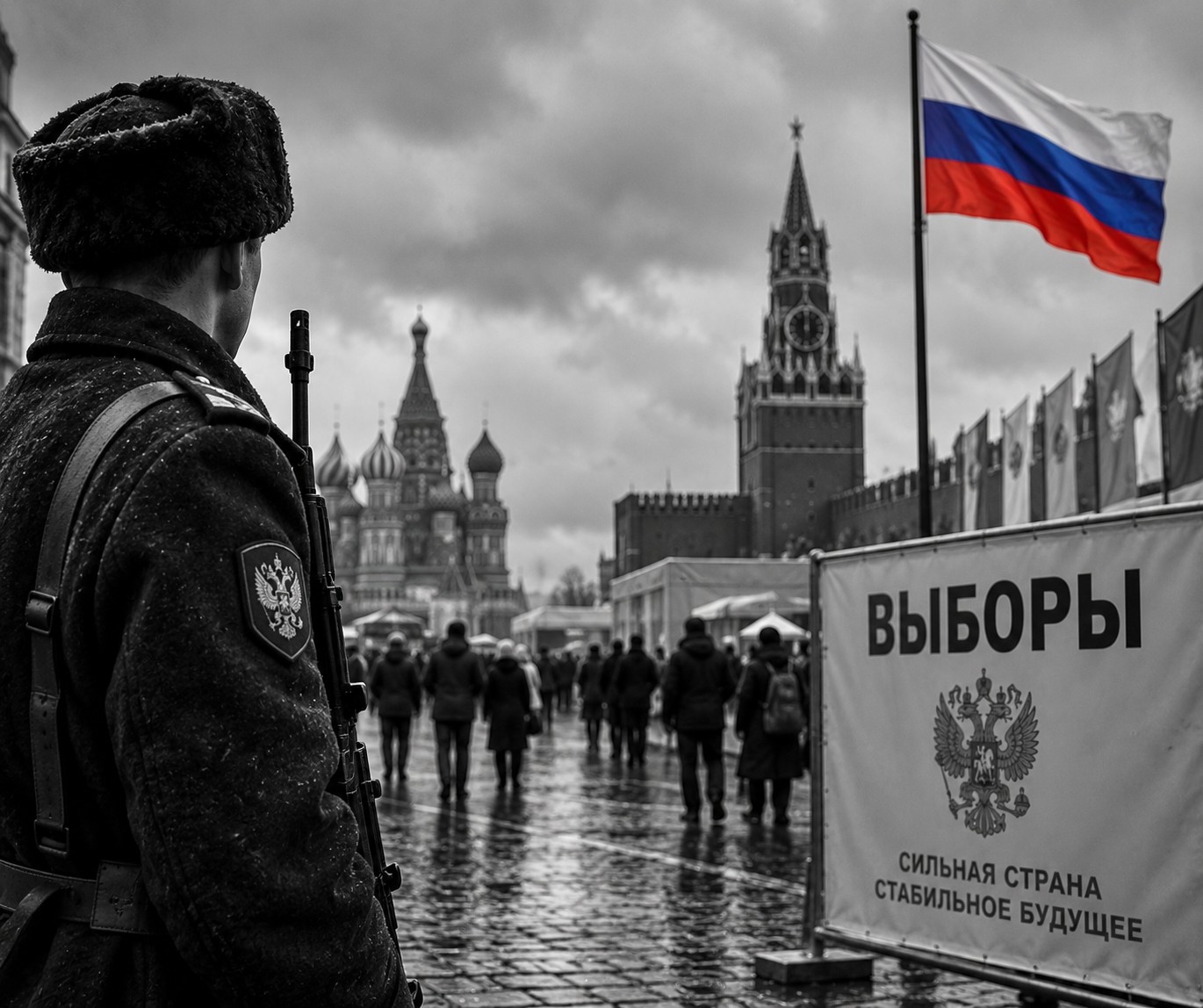
Russia’s ruling United Russia party has taken a commanding lead in the country’s first parliamentary election since the full-scale invasion of Ukraine in 2022. Preliminary results released after voting ended on Sunday showed the Kremlin-aligned party securing around 57–58% of the party-list vote, in an election conducted against the backdrop of war, Ukrainian attacks and sharply restricted political competition.
Three days of voting
More than 111 million people were eligible to vote in elections for the 450-seat State Duma between 18 and 20 September. Half of the seats are allocated through national party lists, while the remaining 225 are decided in individual constituencies.
With more than a third of precinct results processed, Russia’s Central Election Commission reported United Russia at 57.19%, followed by the Communist Party at 13.85%, the Liberal Democratic Party at 9.16%, New People at 8.01% and A Just Russia at 5.23%. United Russia candidates were also leading in 161 of the 225 single-member constituencies at that stage of counting.


Preliminary turnout approached 57%, compared with 51.72% at the previous State Duma election in 2021, according to the election commission.
Opposition heavily restricted
The election took place in a political environment where genuine anti-war opposition had little representation on the ballot. Reuters reported that most anti-war candidates had been barred and that the major parliamentary parties have consistently supported United Russia on important issues connected with the Kremlin and the war.
The liberal Yabloko party, which has opposed the war, was largely excluded from the parliamentary contest. Critics of the Kremlin have also raised concerns over restrictions on independent observers and the use of electronic voting. Russian authorities have rejected accusations that the electoral system is designed to predetermine the result.
War reaches the election
The final day of voting coincided with a major Ukrainian attack on Moscow and the surrounding region. Russian authorities said drones struck the capital region, while Moscow’s mayor described the operation as the largest Ukrainian drone attack on the city since the war began.
Voting was also organised by Russia in Crimea and four Ukrainian regions Moscow claims to have annexed. Ukraine and the European Union reject Russia’s sovereignty over these territories and regard elections conducted there by Moscow as illegitimate.
A parliament shaped by war
The election is significant less because it is expected to transform Russia’s political direction than because it determines the composition of the legislature during a fifth year of full-scale war.
For the Kremlin, the result provides a measure it can present as public backing for its political programme. For government critics, the exclusion of anti-war candidates and restrictions on independent political activity make the official results an unreliable measure of broader Russian opinion.
Final results will determine the exact distribution of the State Duma’s 450 seats, but the preliminary count points towards another parliament dominated by United Russia.
Newshub Editorial in Europe – 21 September 2026

Ask NF GPT
If you have an account with ChatGPT you get deeper explanations,
background and context related to what you are reading.
Russia’s ruling United Russia party has taken a commanding lead in the country’s first parliamentary election since the full-scale invasion of Ukraine in 2022. Preliminary results released after voting ended on Sunday showed the Kremlin-aligned party securing around 57–58% of the party-list vote, in an election conducted against the backdrop of war, Ukrainian attacks and sharply restricted political competition.
Recent Comments