
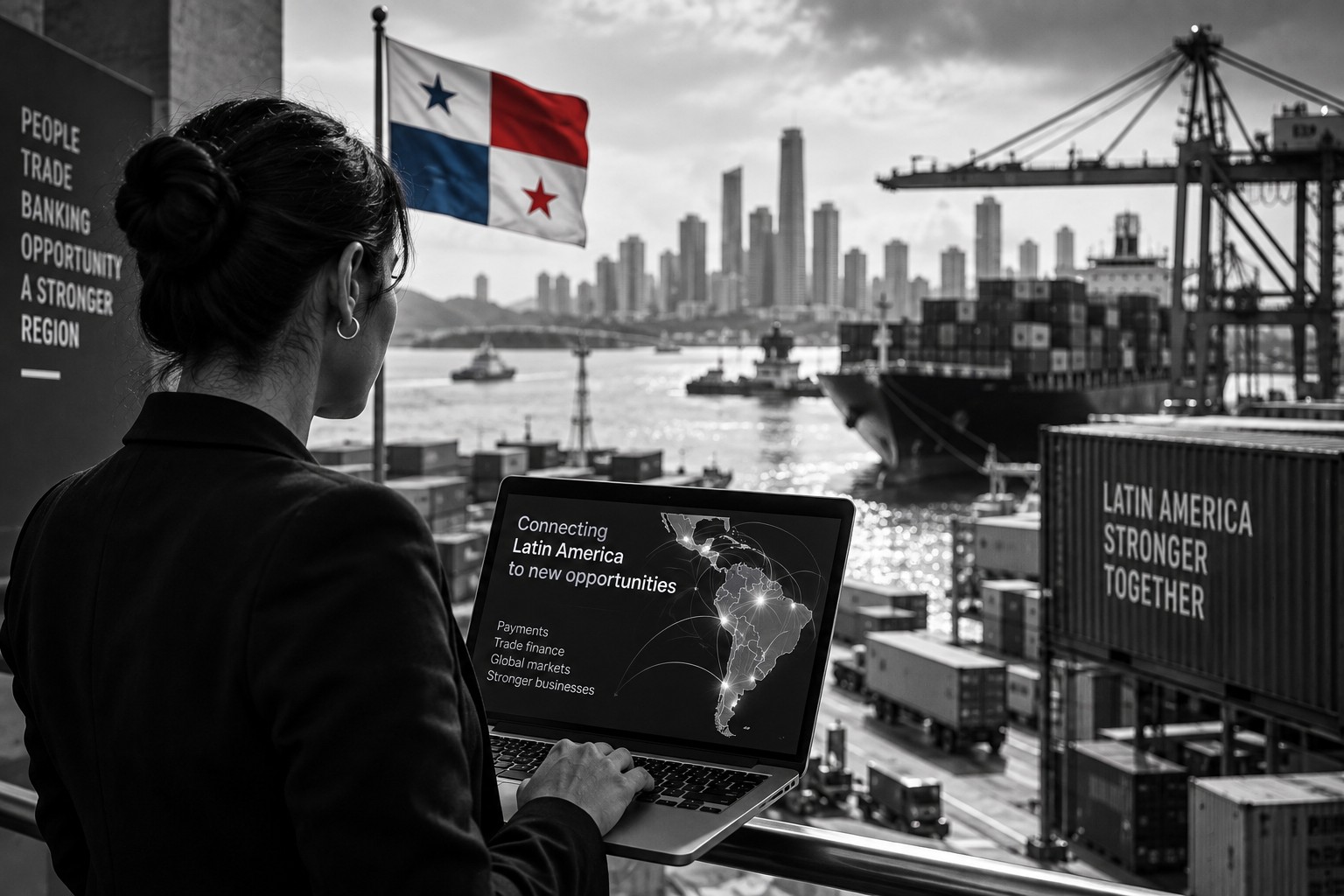
Panama’s UniBank is expanding digital banking beyond domestic accounts, launching a new cross-border payment service aimed at giving small and medium-sized businesses greater control over international transactions.
The bank has introduced Mi Negocio sin Frontera in partnership with Mastercard, adding international payment capabilities to its existing Mi Negocio UniBank proposition for small and medium-sized enterprises.
The service is designed to simplify how Panamanian businesses manage payments across borders, providing greater visibility over transactions and more predictable movement of funds.

The SME banking problem
Cross-border banking can remain surprisingly complicated for smaller companies.
International transfers may involve several financial institutions, different currencies, transaction fees and uncertainty over when money will reach its destination.
Large corporations can build treasury departments to manage that complexity. A small importer, retailer or service company usually cannot.
UniBank’s approach is to bring more of that functionality directly into the banking relationship.
Panama looks beyond its borders
The development is particularly relevant in Panama, where international trade, logistics and financial services form important parts of the economy.
For smaller businesses, the ability to pay international suppliers and manage cross-border financial relationships can determine whether they remain local or expand into regional markets.
Mi Negocio sin Frontera is intended to provide a simpler and more connected payment experience, with increased transparency and predictability over the movement of funds.
Latin American banking is changing
The launch also illustrates a wider transformation taking place across Latin American banking.
Digital banking initially focused heavily on the consumer: mobile accounts, cards, transfers and wallets.
The next stage increasingly involves businesses.
Banks and fintech companies are building digital infrastructure around merchant payments, international transfers, working capital, data and financial management — services that were traditionally more accessible to larger companies.
The bank becomes infrastructure
For Latin America’s SMEs, that change could be significant.
A digital bank is no longer simply an account accessed through a smartphone. It can become the financial infrastructure connecting a business with suppliers, customers and markets beyond its own country.
Panama’s latest move shows how that model is beginning to reach smaller companies.
The border remains on the map.
In banking, it is becoming increasingly less visible.
Newshub Editorial in Latin America – 18 September 2026

Ask NF GPT
If you have an account with ChatGPT you get deeper explanations,
background and context related to what you are reading.
Recent Comments