
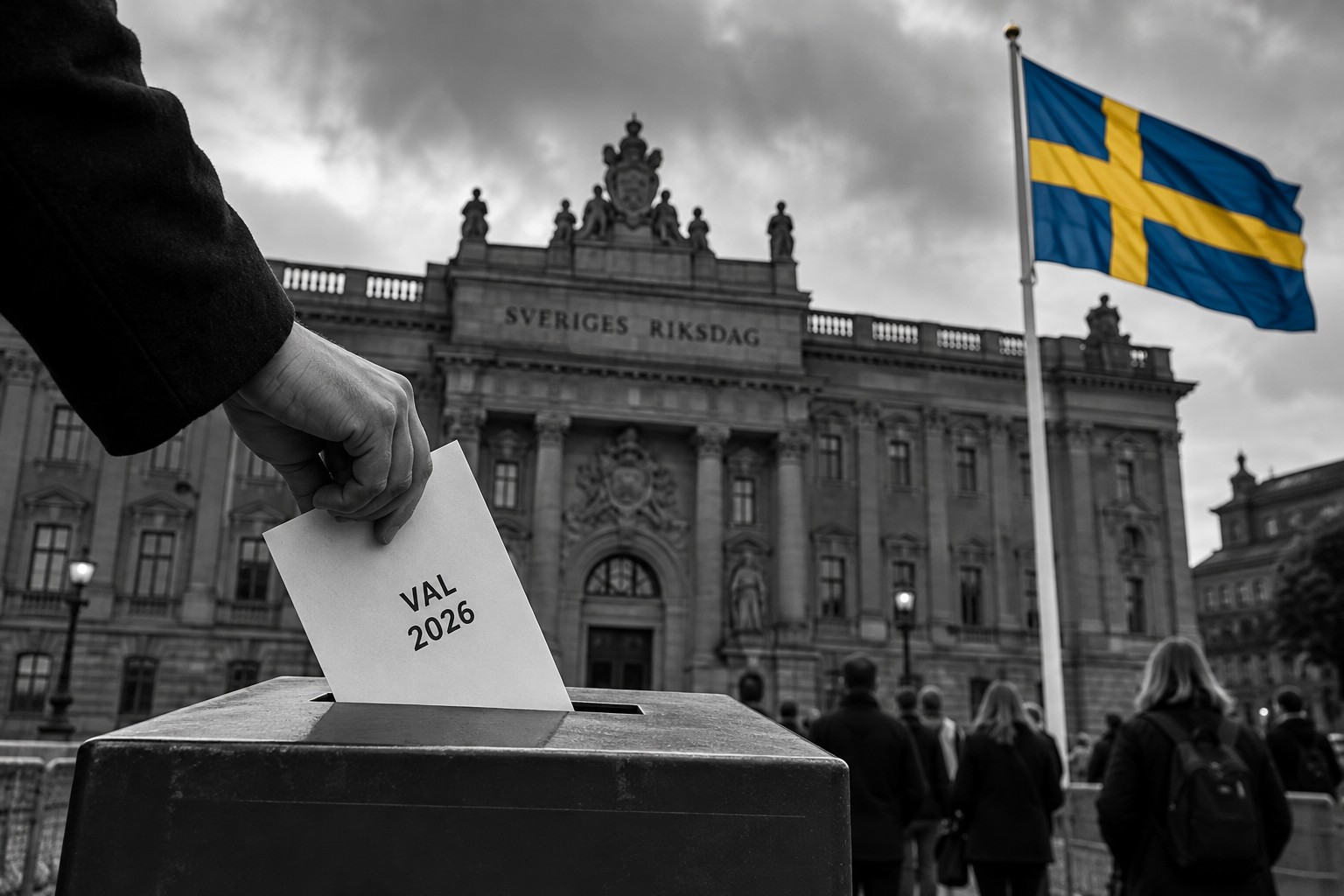
Sweden woke on Monday to one of the closest parliamentary elections in its modern political history, with the centre-left opposition led by Social Democrat Magdalena Andersson holding a narrow advantage over Prime Minister Ulf Kristersson’s governing right-wing bloc.
With votes reported from 6,195 of Sweden’s 6,312 election districts early Monday, the opposition parties were projected to take 176 of the 349 seats in the Riksdag, compared with 173 for the parties supporting Kristersson’s government.
The figures remain preliminary, however, and Sweden does not yet have a final election result.


Social Democrats remain largest party
The Social Democrats emerged as Sweden’s largest political party, with around 28 per cent of the vote in the late stages of the count.
The Moderates were running at approximately 20 per cent, while the Sweden Democrats fell to around 18 per cent, losing ground compared with the 2022 election. The Left Party, Centre Party, Christian Democrats, Greens and Liberals all appeared to clear the four-per-cent threshold required for national parliamentary representation.
The result represents a significant reversal from opinion polls only weeks before the election, when Andersson’s opposition appeared to have a comfortable lead. Instead, election night developed into an exceptionally close contest.
Government formation remains uncertain
Even if the opposition ultimately secures 175 seats or more, forming a government may prove complicated.
The opposition side brings together the Social Democrats, Left Party, Green Party and Centre Party — parties that differ substantially on economic policy, taxation, energy and several other issues.
Kristersson’s side consists of the Moderates, Sweden Democrats, Christian Democrats and Liberals. The Sweden Democrats had hoped that another right-wing victory could give the party ministerial positions for the first time.
That prospect now hangs in the balance.
Final votes could still matter
Sweden’s Election Authority begins the final count on Monday. Late advance votes and overseas ballots are included in a further preliminary count on Wednesday, meaning that a contest this close could still change. The definitive parliamentary result is expected approximately one week after election day.
For now, Sweden has no confirmed winner.
What it does have is a parliament divided almost exactly down the middle — and potentially difficult negotiations over who will govern the country for the next four years.
Newshub Editorial in Europe – 14 September 2026
Sweden woke on Monday to one of the closest parliamentary elections in its modern political history, with the centre-left opposition led by Social Democrat Magdalena Andersson holding a narrow advantage over Prime Minister Ulf Kristersson’s governing right-wing bloc.
Recent Comments