
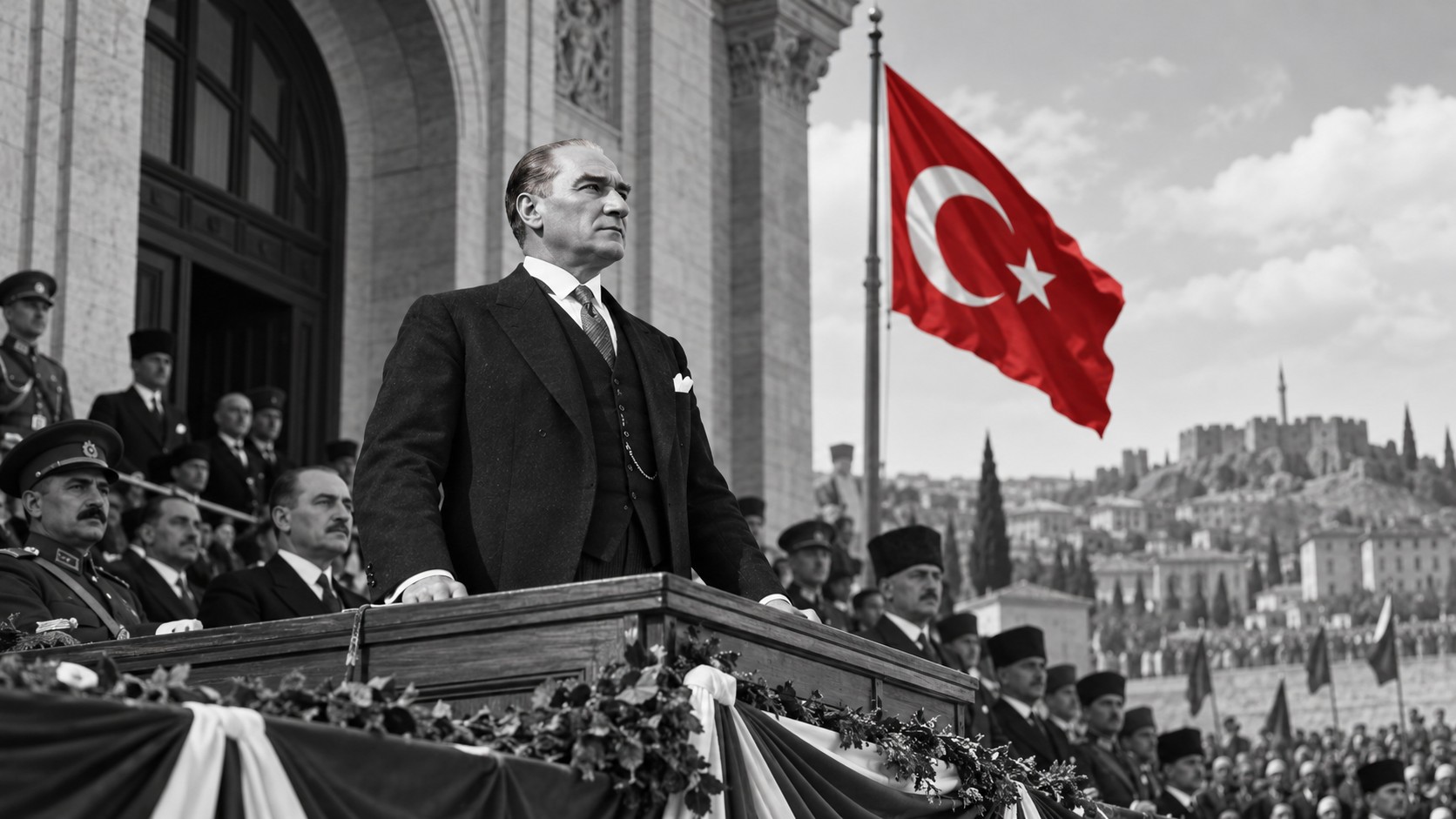
On 29 October 1923, the Republic of Turkey was formally established, marking the beginning of a new political era after centuries of Ottoman rule. Under the leadership of Mustafa Kemal Atatürk, the country embarked on an ambitious transformation that would redefine its government, society and place in the modern world.
From empire to republic
The Ottoman Empire, which had dominated large parts of Europe, the Middle East and North Africa for centuries, emerged from the First World War defeated and severely weakened. Allied occupation and proposals to divide Ottoman territory provoked a nationalist resistance movement led by Mustafa Kemal.
Following the Turkish War of Independence, nationalist forces secured military victories that paved the way for international recognition of a new Turkish state.


The abolition of the Ottoman sultanate in November 1922 ended the monarchy, while the Treaty of Lausanne, signed in July 1923, recognised the sovereignty of modern Turkey.
29 October 1923: A historic declaration
On 29 October 1923, the Grand National Assembly formally proclaimed Turkey a republic and elected Mustafa Kemal as its first president.
Ankara became the capital, replacing Istanbul as the political centre of the country. The decision symbolised a break with the Ottoman imperial past and the emergence of a new national identity.
The republic’s foundation established the framework for sweeping changes in the years that followed.
Atatürk’s vision for a modern nation
Atatürk introduced reforms designed to establish a secular, modern state. The Ottoman caliphate was abolished in 1924, new civil and legal institutions were introduced, and the Latin-based Turkish alphabet replaced the Ottoman script in 1928.
Educational reforms, changes to women’s legal rights and efforts to industrialise the economy became central elements of the government’s modernisation programme.
However, the early republic was also characterised by centralised authority, restrictions on political opposition and policies aimed at creating a more uniform national identity.
A legacy that continues to shape Turkey
More than a century later, the republic’s foundation remains one of Turkey’s most important national milestones.
Republic Day, celebrated annually on 29 October, commemorates the country’s transformation from a multi-ethnic empire into a sovereign republic.
The legacy of Atatürk continues to influence debates over secularism, democracy, national identity and Turkey’s relationship with Europe and the wider world.
NewsHub Finance | History | 29 October 2026
On 29 October 1923, the Republic of Turkey was formally established, marking the beginning of a new political era after centuries of Ottoman rule. Under the leadership of Mustafa Kemal Atatürk, the country embarked on an ambitious transformation that would redefine its government, society and place in the modern world.
Recent Comments