
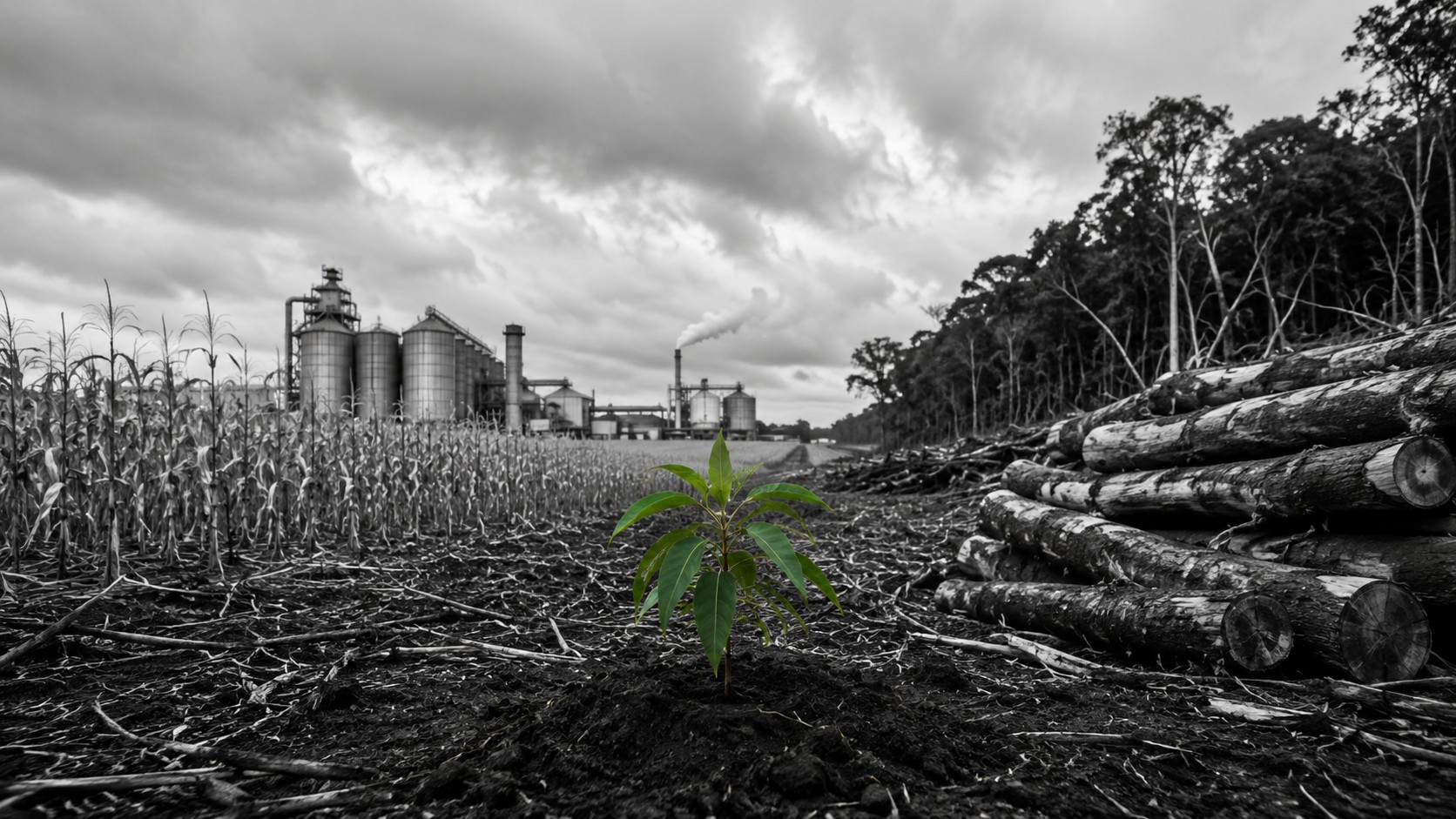
Brazil’s rapidly expanding corn ethanol industry is facing growing environmental scrutiny after plans to end the use of native forest wood at production plants in Mato Grosso were placed on hold.
Biofuel powered by forest wood
Corn ethanol is promoted as a lower-carbon alternative to petrol, but producing it requires considerable heat. Several plants in Mato Grosso burn native wood in industrial boilers, creating concerns that demand from the biofuel industry could encourage illegal deforestation in areas connected to the Amazon rainforest.


An agreement signed in June between Mato Grosso’s government and the state prosecutor’s office was intended to reduce the use of native wood progressively and eliminate it by 2035.
Governor Otaviano Pivetta has postponed the decree needed to establish the phase-out rules. The state has also requested a legal review of a proposal allowing large industrial consumers to continue obtaining up to 5 per cent of their energy from native wood.
Investment placed in doubt
Plantation-grown eucalyptus can provide a renewable source of biomass, but establishing new forests requires substantial investment and several years of growth before the trees can be harvested.
The reforestation industry estimates that approximately 10 billion reais, or $1.94 billion, would be required to supply existing and planned ethanol plants with eucalyptus and other renewable biomass.
This investment could expand Mato Grosso’s eucalyptus plantations from approximately 165,000 hectares today to 400,000 hectares by 2030. Industry representatives warn that uncertainty over the native-wood restrictions could discourage investors from financing those plantations.
Ethanol sector continues expanding
Mato Grosso currently has 14 corn ethanol plants, with more than ten additional facilities planned. The sector’s expansion is increasing demand for industrial fuel at the same time that Brazil is under international pressure to protect its remaining forests.
The dispute highlights a wider climate challenge for emerging markets: renewable fuels cannot deliver their promised environmental benefits if their production contributes to forest loss.
Mato Grosso’s government had not publicly responded to requests for comment on the delayed decree.
Newshub Editorial in South America – 2 September 2026

Ask NF GPT
If you have an account with ChatGPT you get deeper explanations,
background and context related to what you are reading.
Brazil’s rapidly expanding corn ethanol industry is facing growing environmental scrutiny after plans to end the use of native forest wood at production plants in Mato Grosso were placed on hold.
Recent Comments