
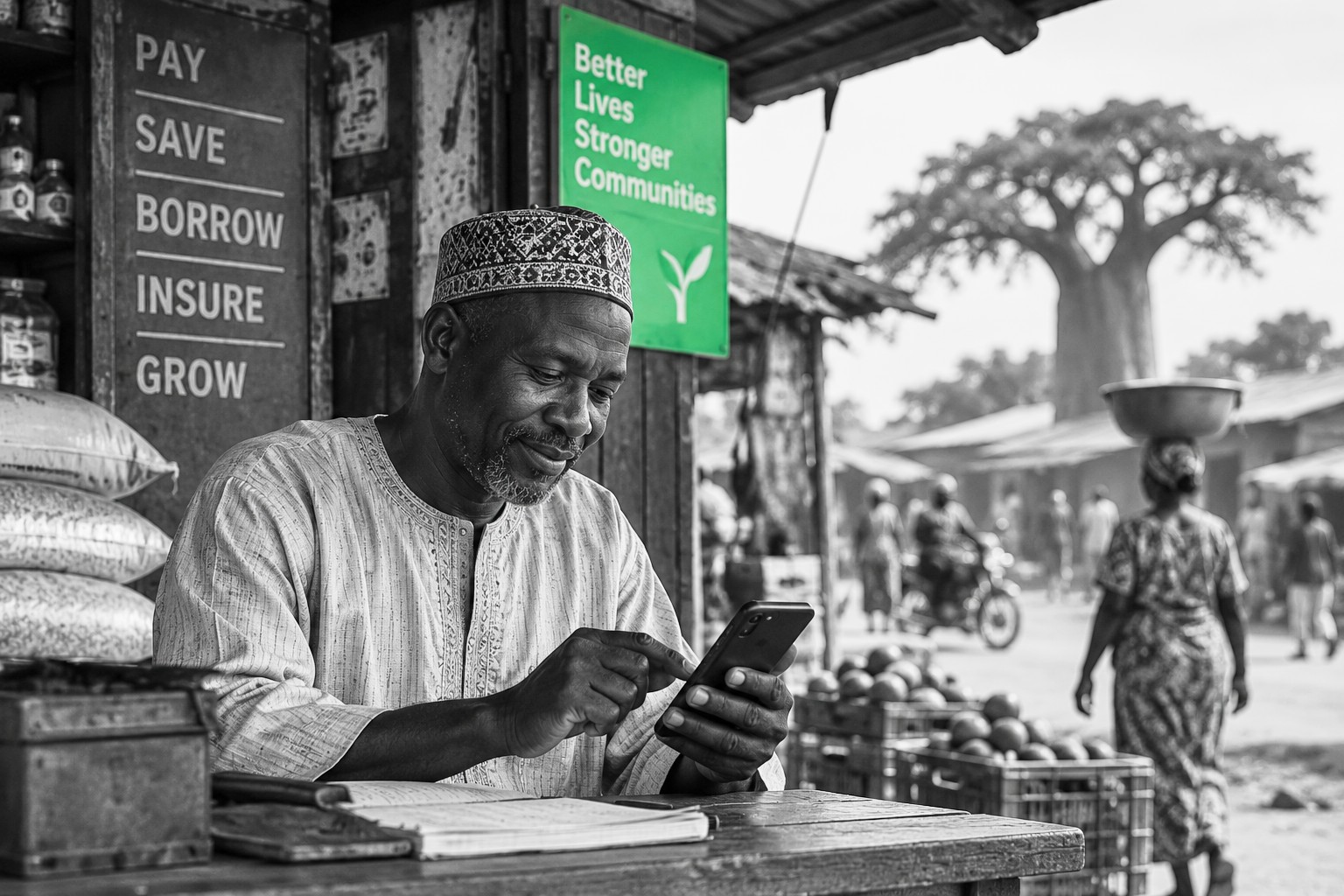
Africa has become one of the world’s most dynamic markets for digital financial services, with mobile money transforming how millions of people receive, transfer and manage their funds. Yet access to a mobile wallet does not necessarily mean financial inclusion. The real challenge is ensuring that individuals and small businesses can save securely, obtain affordable credit, protect themselves against financial risks and participate fully in the formal economy.
The mobile money revolution
Across sub-Saharan Africa, mobile money has brought financial services to communities historically underserved by traditional banks. Countries including Kenya, Ghana, Tanzania and Uganda have developed extensive mobile payment ecosystems, allowing people to conduct transactions without visiting a bank branch.
For rural populations, informal workers and small entrepreneurs, this development has reduced geographical barriers and created new opportunities for economic participation.


However, the ability to send and receive money represents only the first stage of financial inclusion.
Access does not guarantee opportunity
Millions of Africans continue to face difficulties obtaining affordable loans, building credit histories or accessing appropriate insurance products.
Small businesses frequently operate outside formal financial systems, limiting their ability to expand, invest and create employment.
Women, young people and rural communities often face additional obstacles, including limited financial literacy, identification requirements and irregular incomes.
Financial inclusion must therefore be measured not simply by the number of registered accounts, but by whether financial services genuinely improve people’s economic circumstances.
Microfinance and digital banking
Microfinance institutions have an important role in closing this gap. Their local knowledge and established customer relationships can complement digital banking infrastructure, creating more accessible financial services.
Combining mobile technology with responsible lending, savings products and financial education could allow institutions to reach customers more efficiently while reducing administrative costs.
Interoperability between payment systems, transparent pricing and effective consumer protection will be essential to building lasting confidence.
From financial access to financial independence
Africa’s next financial transformation will depend on moving beyond transaction volumes and account registrations.
The objective should be a financial ecosystem in which individuals can accumulate savings, businesses can obtain productive financing and families can manage unexpected economic difficulties without falling into unsustainable debt.
Digital technology provides the infrastructure, but sustainable inclusion requires trust, affordability and services designed around local economic realities.
Ultimately, real financial inclusion is not about how many people have a financial account. It is about how many people can use that account to build a more secure and prosperous future.
Africa has become one of the world's most dynamic markets for digital financial services, with mobile money transforming how millions of people receive, transfer and manage their funds. Yet access to a mobile wallet does not necessarily mean financial inclusion. The real challenge is ensuring that individuals and small businesses can save securely, obtain affordable credit, protect themselves against financial risks and participate fully in the formal economy.
Recent Comments