
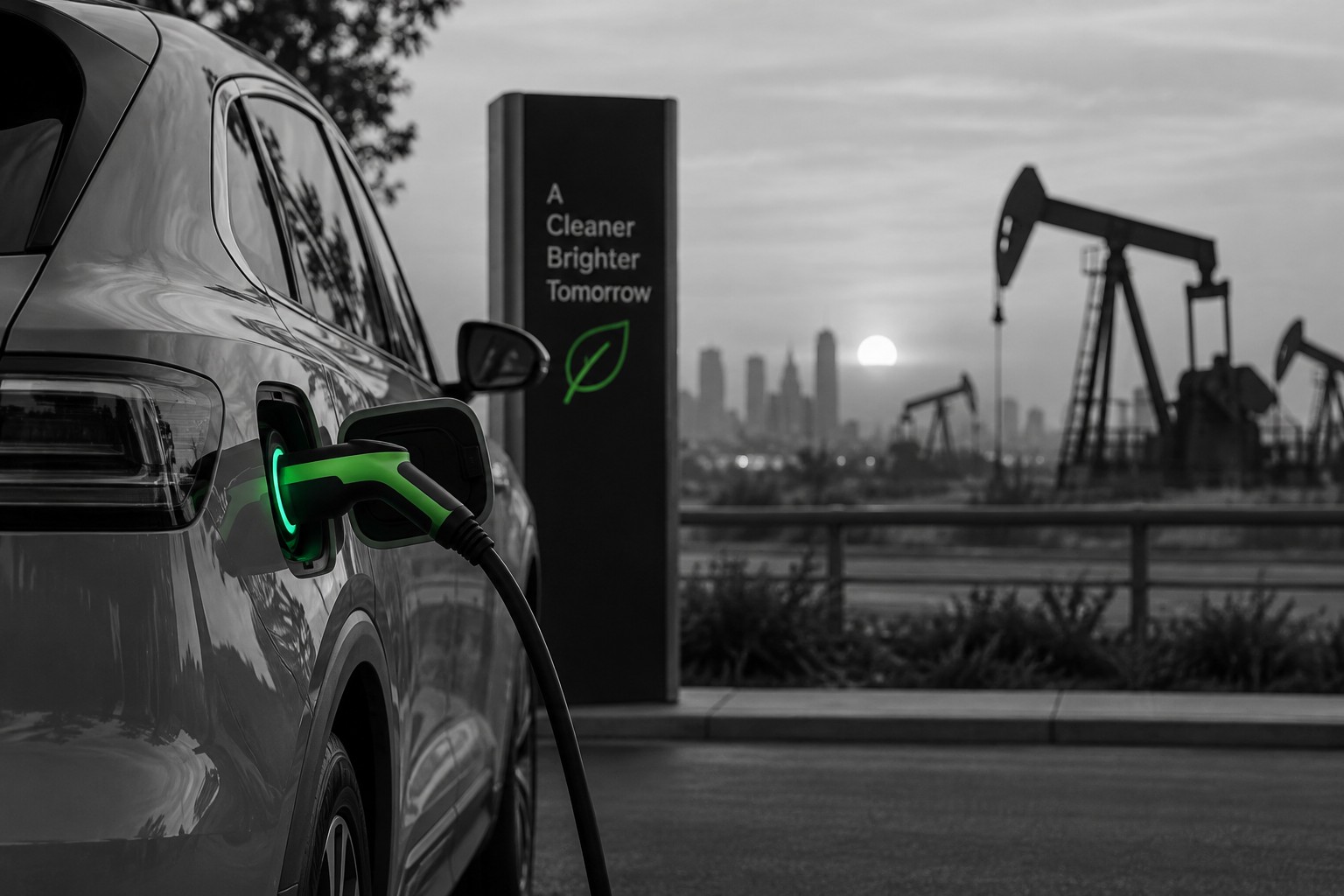
Electric vehicles are beginning to reshape global oil demand, displacing an estimated 1.7 million barrels a day in 2025 and avoiding 190 million tonnes of net greenhouse gas emissions. By 2030, oil displacement could reach five million barrels daily, with significant consequences for energy security, oil producers and the global economy.
Electric vehicles are changing global energy demand
The electric vehicle revolution is moving beyond environmental ambitions and becoming a measurable force in the global energy market.
According to figures attributed to the International Energy Agency (IEA), electric vehicles displaced approximately 1.7 million barrels of oil per day in 2025. The global electric fleet also avoided an estimated 190 million tonnes of net greenhouse gas emissions, accounting for electricity used in charging.


These are emissions prevented rather than carbon dioxide removed from the atmosphere, but the impact is increasingly significant.
A turning point for the automotive industry
More than 20 million electric cars were sold worldwide in 2025, representing approximately one-quarter of new vehicle sales. However, electric cars still account for only around 5% of the global passenger-car fleet.
China remains the largest electric vehicle market, while adoption continues across Europe, Latin America, Asia and the Middle East.
Sweden illustrates the transition, with battery-electric vehicles accounting for 42.6% of new registrations in July 2026.
Five million barrels of oil a day
The IEA projects that electric vehicles could displace approximately five million barrels of oil daily by 2030 under its policy-based scenarios.
Such a development would substantially reduce expected demand for petrol and diesel, although aviation, shipping, industry and petrochemicals will continue to require petroleum products.
For oil-importing economies, electrification could strengthen energy security and reduce exposure to international supply disruptions.
Implications for oil prices and the dollar
Declining transport-related oil demand could create long-term pressure on petroleum markets. Nevertheless, oil prices will remain influenced by production decisions, geopolitical conflicts and global economic growth.
The implications for the US dollar are more indirect. Although international oil transactions are predominantly denominated in dollars, the currency’s global position also depends on financial markets, international trade and central-bank reserves.
Electrification alone is therefore unlikely to threaten dollar dominance.
A structural transformation gathers momentum
The IEA estimates that electric vehicles could avoid approximately seven billion tonnes of cumulative CO₂-equivalent emissions between 2025 and 2035 under its current-policy scenario.
The environmental benefits will increase further as electricity generation becomes cleaner.
Electric vehicles will not eliminate global dependence on oil overnight. However, their expanding presence is already altering transport economics, investment decisions and long-term energy expectations.
The transition is no longer simply a forecast. It is becoming an increasingly important factor in the future of global oil demand.
Electric vehicles are beginning to reshape global oil demand, displacing an estimated 1.7 million barrels a day in 2025 and avoiding 190 million tonnes of net greenhouse gas emissions. By 2030, oil displacement could reach five million barrels daily, with significant consequences for energy security, oil producers and the global economy.
Recent Comments