
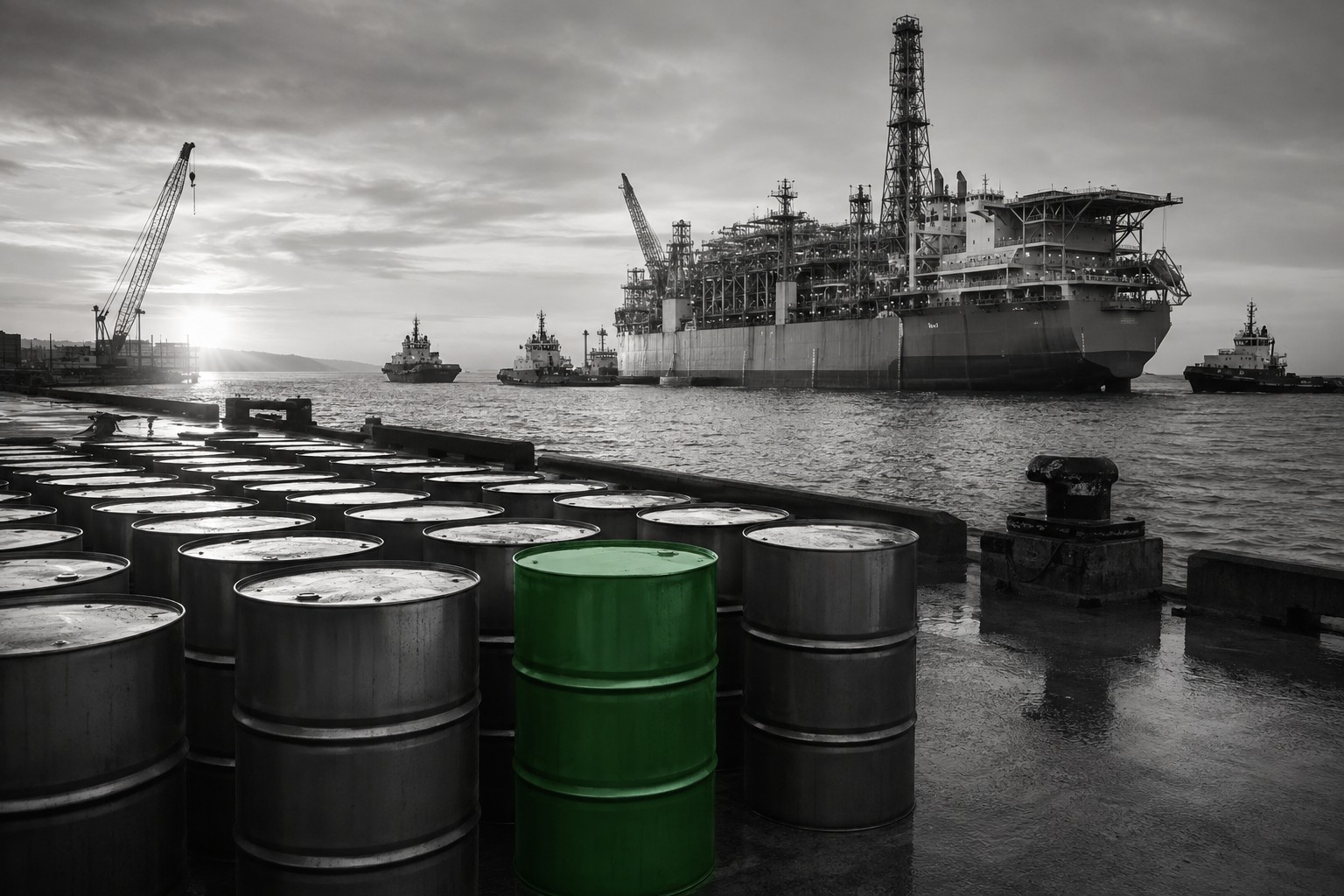
Guyana is entering a more lucrative phase of its oil boom after its entitlement to crude production from the ExxonMobil-led Stabroek Block increased from an initial 12.5% to 39.8%. The change is expected to deliver a substantial increase in government revenue and further strengthen one of the world’s fastest-growing economies.
Investment costs recovered ahead of schedule
The higher share became available after the Exxon-led consortium recovered approximately $55 billion invested in exploration, infrastructure and offshore production since 2014. Exxon’s chief financial officer said the costs were recouped around two years earlier than expected because projects were developed quickly and production expanded rapidly.
How the production agreement works
Under the Stabroek production-sharing agreement, the companies can use up to 75% of production to recover eligible investment and operating costs. The remaining crude is treated as profit oil and divided equally between Guyana and the consortium. Guyana also receives a 2% royalty. As recoverable costs decline, more barrels move into the profit category and the government’s effective share of total production rises.


A major increase in public revenue
The Stabroek Block has been producing close to 900,000 barrels per day from four offshore vessels. At that level, an entitlement approaching 40% represents a significant expansion in the amount of crude available to the state. The financial effect will continue to depend on production volumes, international oil prices and any new recoverable costs submitted by the consortium.
Production is still expanding
Guyana is preparing for the arrival of additional offshore capacity that could lift output beyond one million barrels per day. A fifth production vessel is expected to begin operating during the fourth quarter of 2026. Continued expansion would increase both government revenue and Guyana’s importance as a supplier to international energy markets.
Oil drives exceptional economic growth
The government expects Guyana’s economy to grow by 16.2% in 2026 following an estimated expansion of 19.3% in 2025. The oil and gas sector is forecast to grow by 17.9%, while agriculture, construction, mining and services are also benefiting from higher public and private investment. Guyana has recorded several consecutive years of double-digit growth since offshore production began in 2019.
Managing the windfall becomes the priority
The increase in revenue gives the government greater capacity to finance roads, housing, healthcare, education and energy infrastructure. However, rapidly expanding oil income also creates risks. Large public spending programmes can increase inflation, overwhelm limited administrative capacity and make the economy more dependent on a volatile commodity.
Strong auditing of recoverable costs and transparent management of the Natural Resource Fund will therefore remain essential. The government must demonstrate that higher national revenue produces lasting improvements in living standards rather than temporary increases in expenditure.
A wider lesson for the Caribbean
Guyana’s oil wealth is transforming the economic profile of the Caribbean. Its rapid expansion has lifted regional growth figures at a time when several tourism-dependent economies face high debt, expensive borrowing and exposure to extreme weather.
The Inter-American Development Bank has stressed that oil-producing countries require credible fiscal rules and strong sovereign wealth funds to protect public finances from price fluctuations. Guyana’s larger production share represents a major financial opportunity, but its long-term value will depend on how effectively the proceeds are invested, monitored and preserved for future generations.
Newshub Editorial in the Caribbean – 24 August 2026

Ask NF GPT
If you have an account with ChatGPT you get deeper explanations,
background and context related to what you are reading.
Guyana is entering a more lucrative phase of its oil boom after its entitlement to crude production from the ExxonMobil-led Stabroek Block increased from an initial 12.5% to 39.8%. The change is expected to deliver a substantial increase in government revenue and further strengthen one of the world’s fastest-growing economies.
Recent Comments