
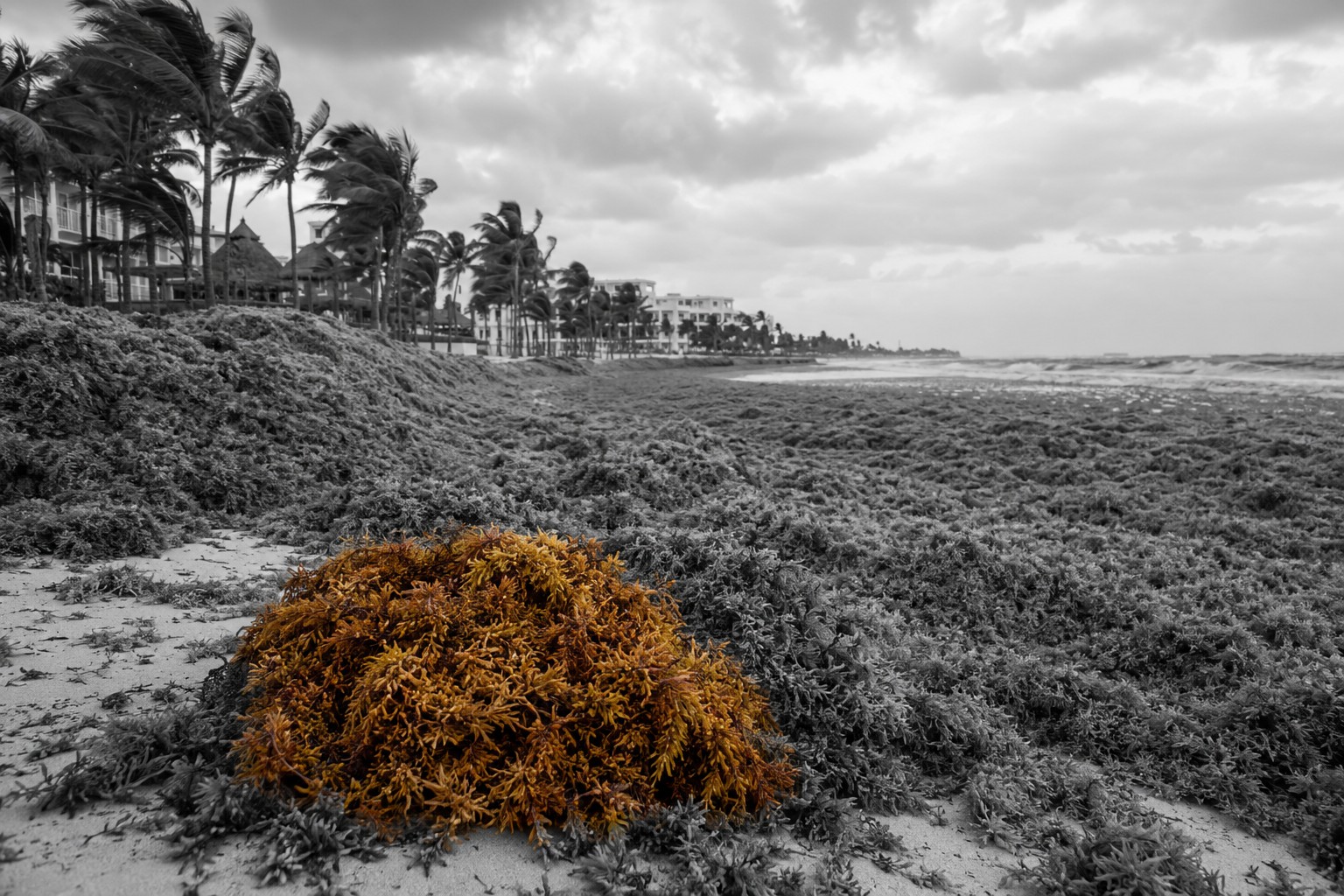
Approximately 33.5 million tonnes of sargassum have spread across the tropical Atlantic, Caribbean and Gulf of Mexico this summer, overwhelming beaches, threatening marine ecosystems and creating an increasingly expensive crisis for tourism-dependent coastal economies.
Regional waters reach record levels
The total mass recorded across the Great Atlantic Sargassum Belt during 2026 is the second-highest observed by satellite, narrowly behind 2025. However, the concentrations measured within the Caribbean Sea and Gulf of Mexico reached regional records.
In June, researchers estimated nine million tonnes in the eastern Caribbean, 3.6 million tonnes in the western Caribbean and five million tonnes in the Gulf of Mexico. The Gulf figure was almost twice its previous record.


Ocean currents and winds have pushed substantial quantities towards Florida, Mexico, Puerto Rico and numerous Caribbean islands. Local conditions can change rapidly, with previously clear beaches becoming covered within a matter of days.
A valuable habitat becomes a coastal hazard
Sargassum is not inherently toxic or environmentally destructive. Floating mats in the open ocean provide shelter, feeding grounds and breeding habitat for fish, turtles, birds and marine invertebrates.
The problem begins when excessive quantities enter shallow coastal waters and accumulate on beaches.
Thick mats block sunlight from reaching seagrass and other underwater plant life. As the algae die and decompose, bacteria consume oxygen from the surrounding water, creating low-oxygen conditions capable of suffocating fish and damaging coral reefs, seagrass beds and mangroves.
The heavy deposits can also obstruct nesting sea turtles and prevent newly hatched turtles from reaching the ocean.
Rotting algae creates health risks
Decomposing sargassum releases hydrogen sulphide, producing the distinctive smell of rotten eggs surrounding affected beaches.
Exposure can irritate the eyes, nose and throat and may worsen asthma or other respiratory conditions. Cleanup workers handling large deposits can also experience nausea, headaches and skin irritation.
Researchers have warned that sargassum can accumulate arsenic, pesticides and other contaminants while floating through the ocean. Recent studies found that arsenic may leach from decomposing algae into beach sand and coastal water, increasing concerns about prolonged exposure and complicating plans to reuse the material.
Tourism economies absorb the cost
The Mexican state of Quintana Roo, home to Cancún, Tulum and Playa del Carmen, expects approximately 119,000 tonnes of sargassum to reach its coastline during 2026. More than 105,000 tonnes had already been removed by mid-August.
The wider economic cost to the state has been estimated at as much as $2 billion annually, while hotels across the Riviera Maya face approximately $150 million in cleanup expenditure and lost business.
Miami-Dade collected a record 9,000 tonnes during July alone and spends millions of dollars each year clearing 17 miles of beaches.
For smaller Caribbean islands with limited equipment and municipal budgets, continuous removal can become financially impossible.
No simple solution
Authorities are deploying offshore barriers, specialist collection vessels and expanded beach-cleaning operations. Researchers and companies are also exploring whether sargassum can be converted into biogas, construction materials, fertiliser or bioplastics.
However, salt, plastics, heavy metals and arsenic must be removed before the biomass can be processed safely.
Scientists increasingly describe the annual influx as a new normal. Without better forecasting, regional cooperation and investment in offshore collection, Caribbean communities will continue paying the environmental and financial price of an algae belt extending thousands of miles across the Atlantic.
Newshub Editorial in the Caribbean – 23 August 2026

Ask NF GPT
If you have an account with ChatGPT you get deeper explanations,
background and context related to what you are reading.
Approximately 33.5 million tonnes of sargassum have spread across the tropical Atlantic, Caribbean and Gulf of Mexico this summer, overwhelming beaches, threatening marine ecosystems and creating an increasingly expensive crisis for tourism-dependent coastal economies.
Recent Comments