
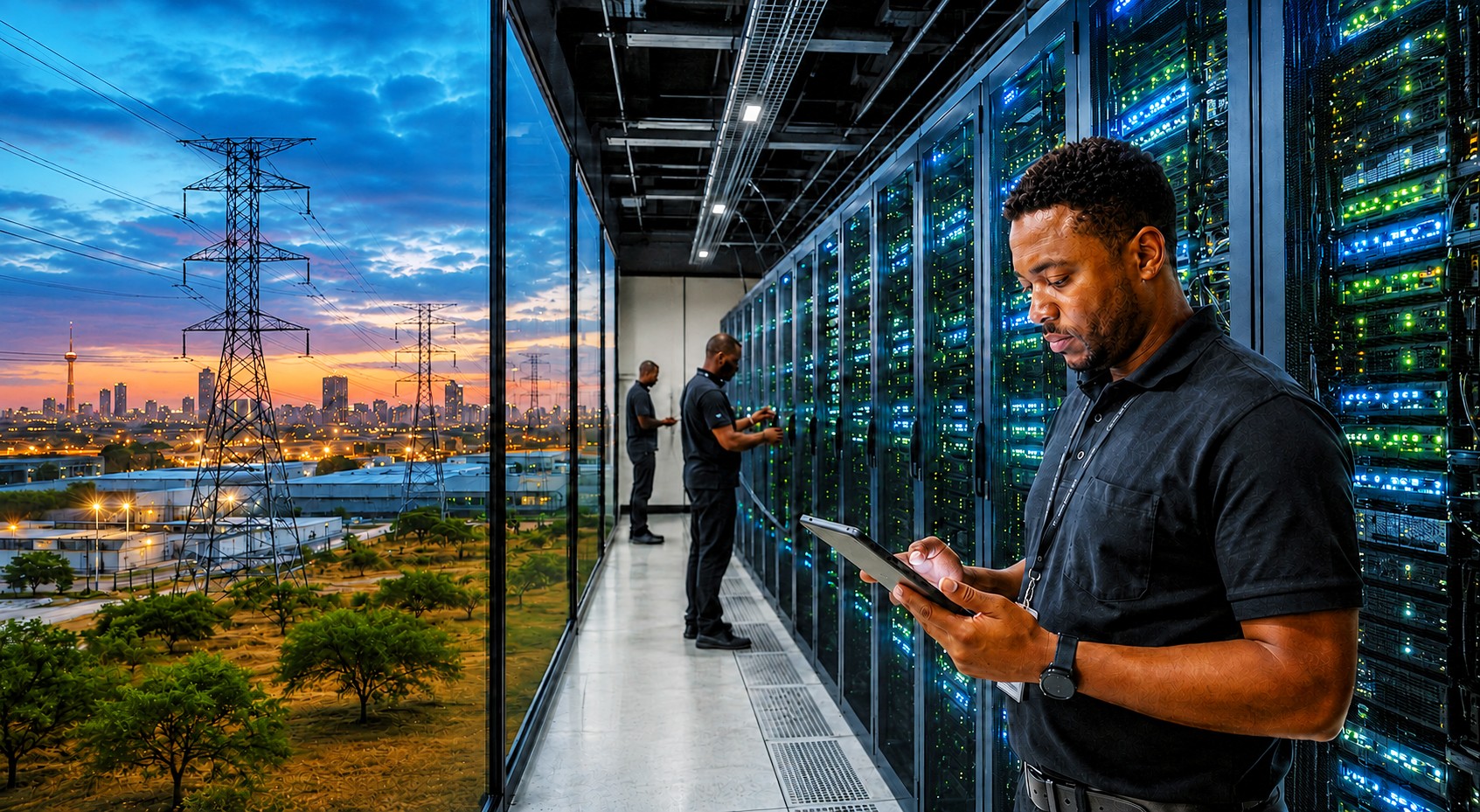
South Africa’s state-owned electricity utility Eskom is courting some of the world’s largest technology companies as it seeks to transform surplus power into a new source of economic growth. The strategy aims to attract energy-intensive AI and cloud data centres, potentially strengthening the country’s position as Africa’s leading digital infrastructure hub.
From electricity shortages to surplus power
The initiative represents a remarkable shift for Eskom, which spent years struggling with breakdowns, ageing coal plants and nationwide power cuts known as load-shedding. Following an extensive generation recovery programme, the company entered the South African winter with approximately six gigawatts of surplus peak capacity.
Lower industrial demand and the rapid adoption of private solar power have also reduced pressure on the national grid. Eskom is therefore moving from managing electricity shortages to searching for large and reliable new customers.

Global technology groups enter discussions
Eskom has confirmed discussions with Amazon, Microsoft and Google about supplying electricity to their data-centre operations. No final agreements have been announced, but the talks demonstrate how rapidly artificial intelligence is changing the relationship between technology investment and national energy systems.
AI computing requires enormous processing capacity, cooling systems and continuous electricity. Large data centres can consume as much power as industrial facilities or smaller cities, making access to reliable and competitively priced energy a decisive factor when technology companies select locations.
South Africa strengthens its digital lead
South Africa already hosts an estimated 70% of Africa’s data-centre capacity. Johannesburg and Cape Town have emerged as the continent’s principal digital hubs, supported by international telecommunications links, financial services, technical expertise and relatively developed infrastructure.
The South African data-centre market was valued at approximately $2.55 billion in 2025 and is projected to exceed $5.2 billion by 2031. Companies including Microsoft, Equinix, Huawei and Oracle have expanded their presence, while demand for AI processing and locally hosted cloud services continues to increase.
A wider opportunity for emerging markets
The development has implications far beyond South Africa. Emerging economies with available electricity, renewable-energy resources, international fibre connections and growing digital populations are increasingly competing for AI infrastructure investment.
Countries across Africa, Asia, the Middle East and Latin America could use data centres to attract foreign capital, create specialised technical employment and improve access to cloud computing. Local infrastructure may also help companies and public authorities process sensitive information within national borders rather than relying entirely on overseas facilities.
Power and water remain critical risks
The opportunity comes with considerable challenges. Data centres require uninterrupted electricity and, depending on their cooling systems, substantial quantities of water. South African communities and environmental groups have questioned whether new facilities could place additional strain on resources previously affected by shortages.
Many operators are also developing their own solar, battery and gas-powered systems to avoid dependence on Eskom. The utility must therefore offer reliability and competitive contracts if it is to become more than an emergency backup supplier.
Eskom’s financial position remains another concern, with municipalities owing the company more than R100 billion in unpaid electricity bills.
A test for Africa’s AI ambitions
If Eskom converts its electricity surplus into long-term agreements with global technology groups, South Africa could become a model for emerging markets seeking to participate in the AI economy. Success, however, will depend on maintaining grid stability while ensuring that investment benefits the wider economy and does not recreate pressure on essential resources.
Newshub Editorial in Africa – 12 August 2026

Ask NF GPT
If you have an account with ChatGPT you get deeper explanations,
background and context related to what you are reading.
Recent Comments