
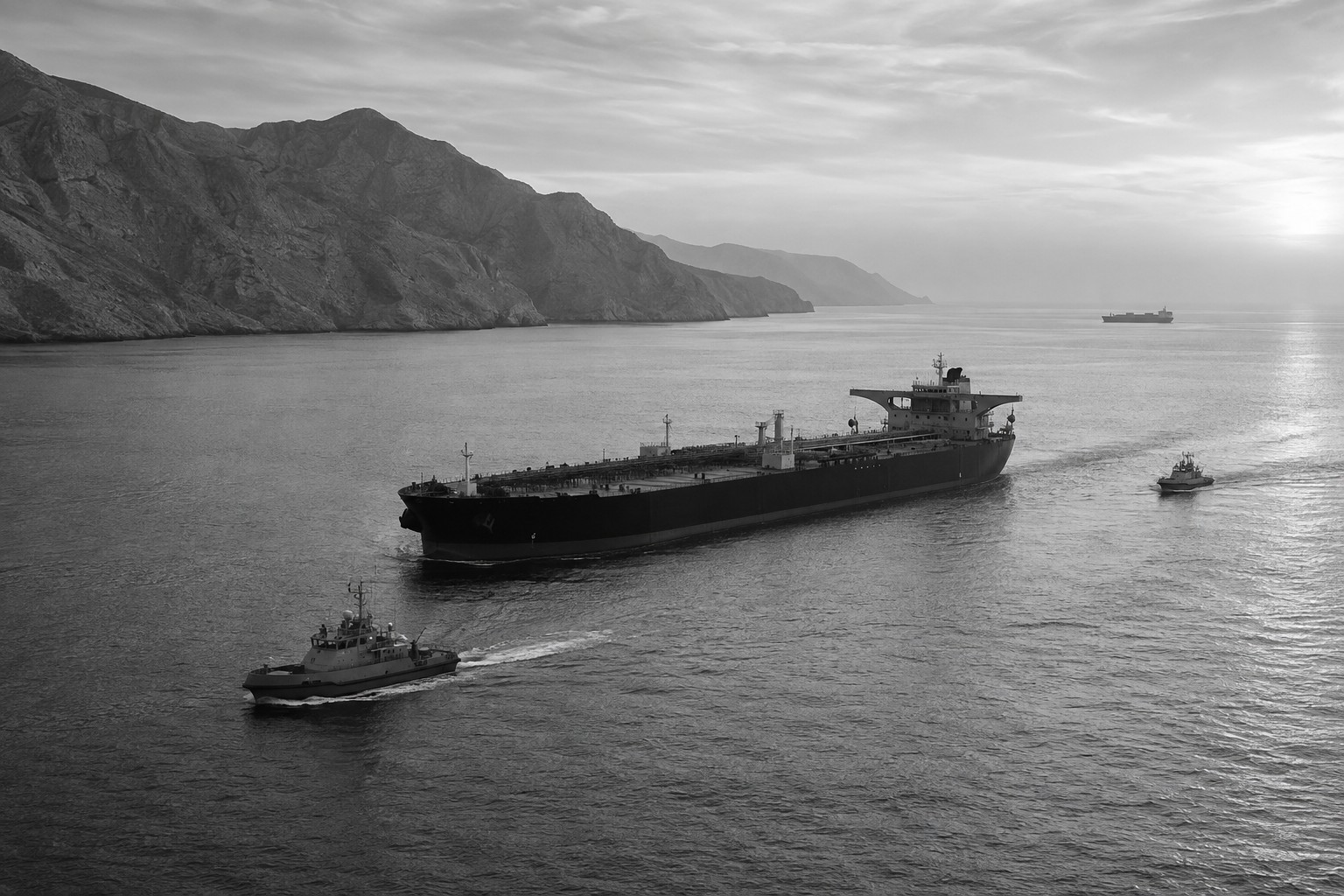
US Secretary of State Marco Rubio has expressed hope that an agreement allowing more commercial vessels to pass safely through the Strait of Hormuz can be reached “very shortly”, as American, Iranian and Omani officials report progress in negotiations over the strategically vital waterway.
Rubio said the United States was participating in discussions between Iran and Oman concerning a short-term arrangement to increase shipping traffic through the strait. However, he cautioned that the negotiations had not yet produced a final agreement.
The immediate objective is to establish safe and predictable passage for commercial vessels while broader negotiations continue over Iran’s nuclear programme and regional security.

US Treasury Secretary Scott Bessent has also suggested that an agreement could be concluded within days. President Donald Trump said the talks were progressing positively but warned that serious differences remained between Washington and Tehran.
Proposed division of shipping lanes
The emerging proposal would reportedly divide responsibility for traffic passing through the strait. Ships entering the Persian Gulf could use a route monitored by Iran, while vessels leaving the region would travel through a lane controlled or administered by Oman.
Iran has reportedly demanded advance notification of outbound shipping and the ability to intervene when it believes its security is threatened. Tehran has also proposed charging vessels for security and environmental services connected to the passage.
The United States has objected to any arrangement that could give Iran permanent control over an international shipping route or allow Tehran to impose compulsory transit fees. Washington maintains that commercial vessels must retain the right to pass through the strait without political interference.
Oman, which controls territory on the southern side of the waterway, has played a central role as an intermediary. The country has frequently acted as a diplomatic channel between Iran and Western governments when formal relations have been strained or suspended.
Critical route for global energy supplies
The Strait of Hormuz connects the Persian Gulf with the Gulf of Oman and the Arabian Sea. Approximately one-fifth of the world’s oil supply normally passes through the narrow waterway, making it one of the most important maritime routes for the global economy.
Restrictions, attacks and uncertainty surrounding shipping have reduced commercial traffic and contributed to higher energy prices. Insurance costs for vessels operating in the region have also increased sharply as shipping companies assess the risk of further military escalation.
Oil prices fell and international stock markets rose after American officials suggested that an agreement could be close. Investors hope that reopening the strait would allow Gulf exporters to restore more reliable deliveries and reduce pressure on global fuel prices.
However, several major questions remain unresolved, including the extent of Iranian oversight, the legal status of any transit charges and whether the agreement would be temporary or form part of a longer-term security framework.
Hormuz talks could open wider negotiations
Rubio said Washington regarded the shipping talks as an immediate practical measure rather than a substitute for a broader agreement with Iran. The United States continues to seek restrictions on Iran’s nuclear activities as part of any lasting diplomatic settlement.
Iranian officials have publicly described their discussions with Oman as constructive but have remained cautious about claims that a final agreement is imminent.
Even a limited Hormuz arrangement could provide an important opportunity for de-escalation. Its success, however, would depend on compliance by all sides and their ability to prevent new attacks on commercial shipping from disrupting the diplomatic process.
Newshub Editorial in the Middle East – 5 August 2026

Ask NF GPT
If you have an account with ChatGPT you get deeper explanations,
background and context related to what you are reading.
US Secretary of State Marco Rubio has expressed hope that an agreement allowing more commercial vessels to pass safely through the Strait of Hormuz can be reached “very shortly”, as American, Iranian and Omani officials report progress in negotiations over the strategically vital waterway.
Recent Comments