
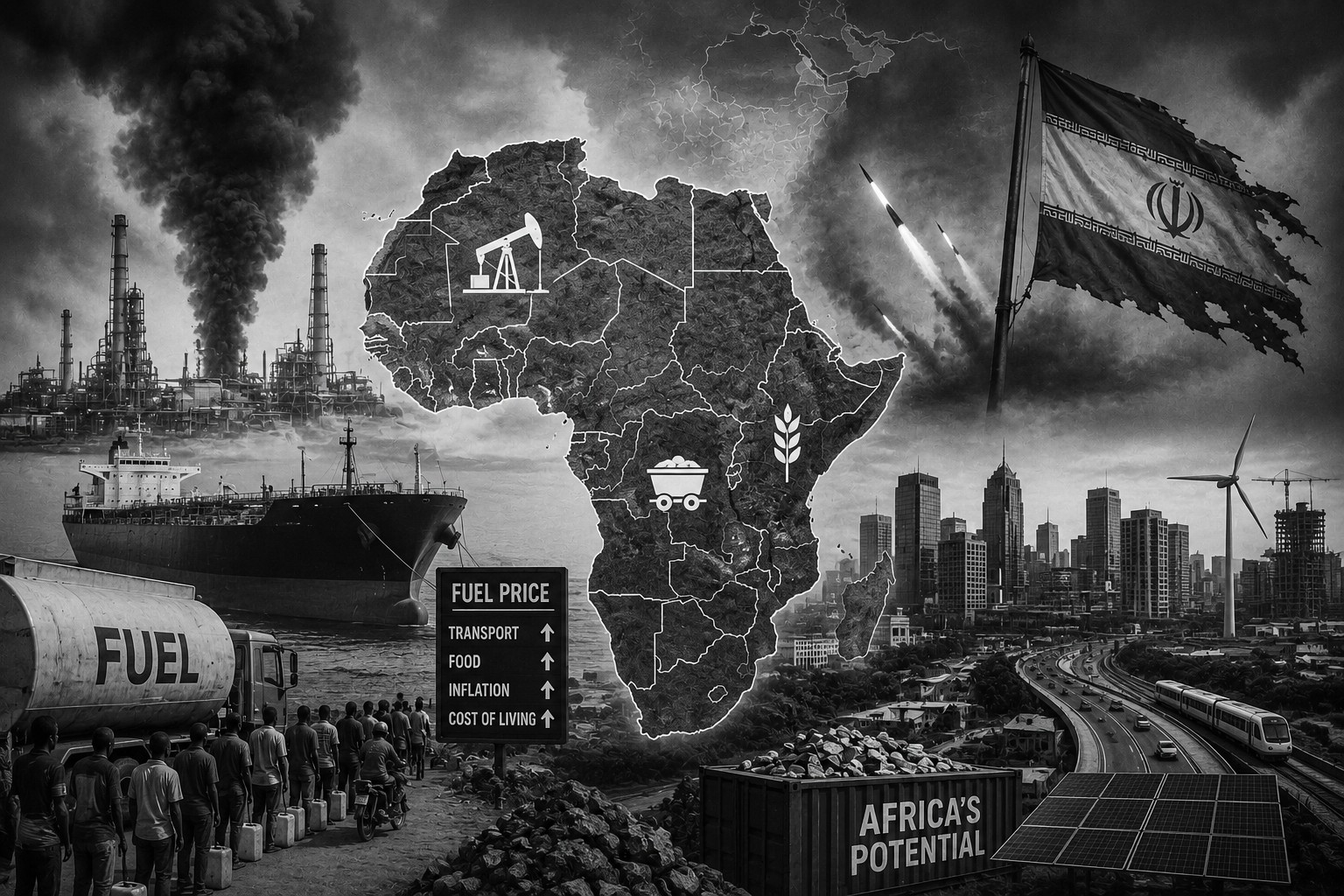
The ongoing war involving Iran has triggered fresh concerns across African economies as oil prices, shipping costs and food inflation continue rising. Yet while global headlines increasingly focus on crisis, shortages and economic vulnerability, the full picture across Africa is far more complex. Although several import-dependent nations face mounting pressure, parts of the continent could also emerge stronger through energy exports, commodity demand, logistics diversification and renewed geopolitical relevance.
Energy shock hits vulnerable economies hardest
Many African economies remain highly exposed to global fuel markets, particularly countries dependent on imported petroleum products. Higher oil prices linked to disruptions surrounding the Strait of Hormuz are already increasing transportation, electricity and food distribution costs across several regions.
East African economies including Kenya and Ethiopia have experienced rising fuel prices and supply-chain pressure linked to shipping disruptions and elevated freight costs. Food inflation has also accelerated as fertiliser shipments and agricultural logistics become more expensive.

The broader concern is not only the price of oil itself but the uncertainty surrounding future supply conditions. Businesses across emerging markets often struggle more with volatility than with stable high prices because planning, financing and investment decisions become increasingly difficult.
But Africa is not a single economic story
Despite these risks, the narrative of universal African decline overlooks major differences between countries and sectors. Oil-exporting economies including Nigeria, Angola and Algeria may benefit from higher global energy prices through increased export revenues and improved fiscal balances.
North African energy producers could also gain strategic importance as Europe seeks alternatives to unstable Gulf supply chains. Analysts increasingly view African gas infrastructure, refining capacity and shipping corridors as part of a broader long-term energy diversification strategy.
Meanwhile, African commodity exporters linked to gold, copper, cobalt and agricultural production could attract renewed investor interest as global markets seek inflation hedges and supply diversification outside conflict-sensitive regions.
Infrastructure and logistics may become strategic advantages
The crisis may also accelerate investment into African ports, logistics hubs and regional trade infrastructure. Shipping disruptions through the Middle East are forcing businesses and governments to reconsider global supply-chain concentration risks.
Countries positioned along Atlantic and Indian Ocean trade routes could benefit from new transport flows and warehousing demand if global companies increasingly seek alternative logistics strategies.
At the same time, the African Continental Free Trade Area continues creating opportunities for stronger regional trade integration, potentially reducing long-term dependence on imported finished goods and vulnerable external supply chains.
The real risk is uneven resilience
The greatest challenge for Africa may not be the Iran conflict itself but the uneven ability of countries to absorb external shocks. Nations with stronger fiscal reserves, domestic production capacity and export earnings are likely to weather the crisis more effectively than heavily import-dependent economies with limited foreign currency reserves.
Food security remains a particular concern because fertiliser prices, transport costs and currency pressure directly affect agricultural production and household purchasing power.
Still, the assumption that Africa can only emerge weaker from global crises increasingly fails to reflect the continent’s growing strategic role within energy, commodities, infrastructure and demographic expansion.
A continent facing both danger and opportunity
The Iran war undoubtedly creates economic pressure across many African markets. Inflation, currency volatility and fuel costs remain serious risks. Yet the crisis is also exposing how rapidly Africa’s geopolitical and economic importance is evolving within the global system.
For some countries, the coming months may bring severe hardship. For others, they may create rare opportunities to strengthen exports, attract investment and secure greater strategic influence in an increasingly fragmented global economy.
Newshub Editorial in Africa – 17 May 2026

If you have an account with ChatGPT you get deeper explanations,
background and context related to what you are reading.
Open an account:
Open an account
Recent Comments