
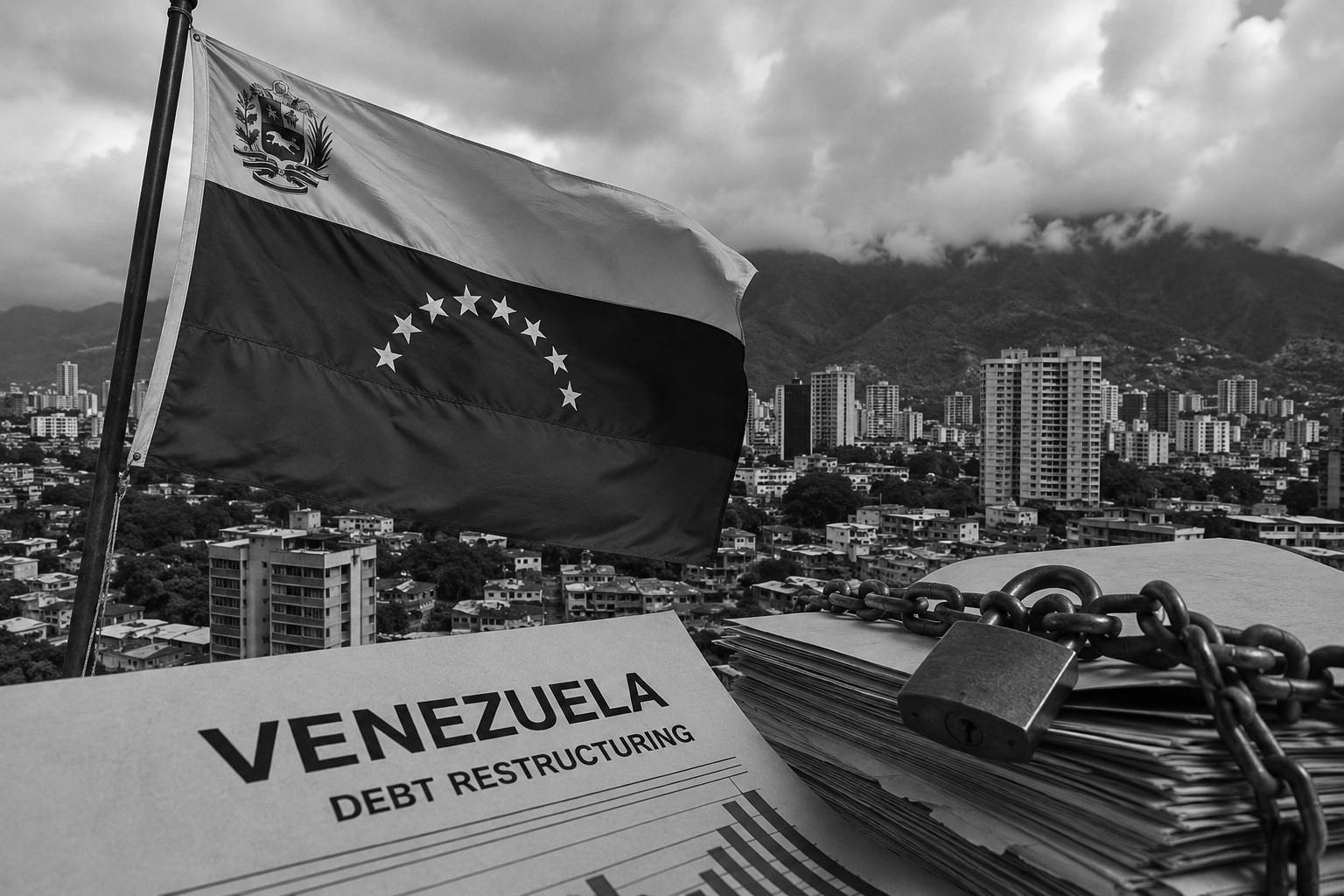
Venezuela has moved to launch one of the largest sovereign debt restructurings in modern emerging-market history, as its US-backed administration says it will act with “celerity” and transparency to address years of defaulted obligations. The process covers sovereign debt and liabilities linked to state oil company PDVSA, with total claims estimated at more than $150 billion when bonds, accrued interest, arbitration awards and other obligations are included.
A return to financial markets
Venezuela has been in default since 2017, leaving the country largely excluded from international capital markets. The restructuring is intended to normalise relations with creditors, restore financial credibility and reopen access to international financing after years of economic isolation.
The administration has appointed Centerview Partners as financial adviser and is preparing a macroeconomic framework and debt sustainability analysis expected in June. These documents will be central to determining how much debt relief Venezuela seeks and what repayment capacity creditors may accept.

US licence opens the door
The process follows a recent US Treasury licence allowing legal, financial advisory and consulting services connected to a possible Venezuelan debt restructuring. However, the licence does not yet authorise a final settlement or direct restructuring negotiations with creditors. That means the current phase is preparatory, rather than a full market negotiation.
For bondholders, the US position remains critical. Many Venezuelan and PDVSA bonds are affected by sanctions, making any eventual restructuring dependent on further regulatory permissions from Washington.
Creditors watching closely
Investor reaction has been cautiously positive, with Venezuelan and PDVSA bonds rallying after the announcement. Creditors appear to view the move as a necessary first step after years of legal uncertainty, sanctions and non-payment.
However, major challenges remain. Venezuela must clarify how it will treat sovereign bonds, PDVSA obligations, arbitration claims and bilateral debts owed to countries such as China, Brazil and Japan. The scale and complexity of the liabilities mean the process could take years, even if political support continues.
Economic stakes are high
A successful restructuring could help Venezuela regain access to international finance, attract investment and stabilise parts of its economy. Officials have argued that debt relief is necessary to support public services, infrastructure, electricity, water, healthcare and broader economic recovery.
Yet credibility will depend on transparency, policy consistency and the country’s ability to present a realistic growth and fiscal programme. Without a clear macroeconomic anchor, investors may remain sceptical about Venezuela’s long-term repayment capacity.
A major test for emerging-market debt
The restructuring will be closely watched across global financial markets because it combines sovereign default, oil-linked state debt, sanctions, geopolitics and creditor litigation. Its outcome could influence how other complex emerging-market debt cases are approached.
For Venezuela, the announcement marks the beginning of a possible return from financial isolation. The difficult part will be turning political momentum into a credible agreement that satisfies creditors while giving the country room to rebuild.
Newshub Editorial in South America – 17 May 2026

If you have an account with ChatGPT you get deeper explanations,
background and context related to what you are reading.
Open an account:
Open an account
Recent Comments