

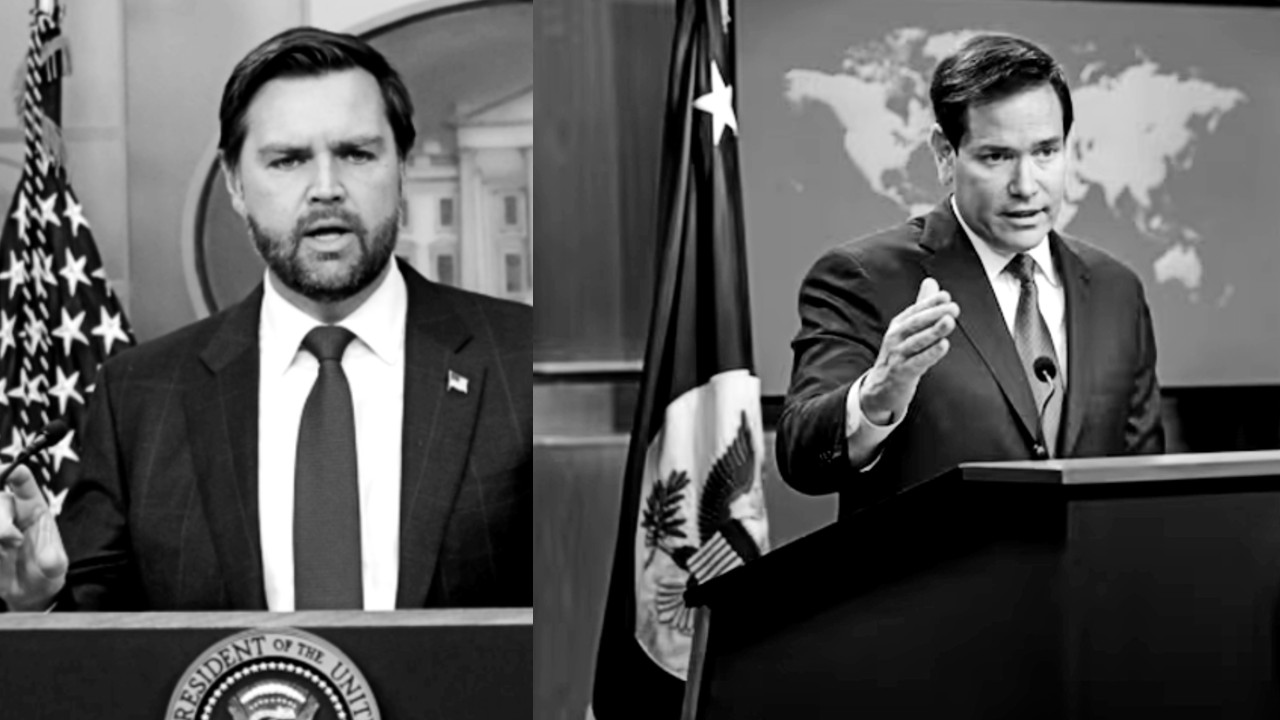
As the United States’ military campaign against Iran stretches into its second month, two of the most prominent political figures in the administration—Vice President JD Vance and Secretary of State Marco Rubio—have become notably less visible in public discourse, despite earlier support for the intervention.
Early backing gives way to reduced visibility
At the outset of the conflict, both JD Vance and Marco Rubio publicly endorsed President Donald Trump’s decision to initiate military action, framing it as necessary to counter Iran’s strategic and nuclear ambitions.
However, as the war has progressed, their public engagement has diminished. Analysts note that while both figures remain involved behind the scenes—particularly in diplomatic channels—their reduced media presence contrasts with the early, more vocal phase of the campaign.

Political positioning ahead of 2028
The relative silence has drawn attention in Washington, particularly given that both Vance and Rubio are widely viewed as potential contenders in the 2028 presidential election cycle.
For Vance, the situation is especially complex. Historically associated with a more restrained, “America First” foreign policy approach, his support for military action represents a departure from earlier scepticism toward overseas conflicts.
Rubio, by contrast, has long maintained a more interventionist stance, aligning more naturally with the decision to engage militarily. Yet even he has faced political pressure, as the war’s objectives and long-term strategy remain subject to debate within both parties.
Strategic ambiguity and communication control
One explanation for their lower visibility lies in the centralisation of messaging within the White House. President Trump has maintained a dominant role in shaping the public narrative around the conflict, frequently issuing direct statements and updates.
This approach has effectively limited the public roles of other senior officials, concentrating both credit and accountability at the presidential level. At the same time, conflicting claims—particularly around the existence of negotiations with Iran—have added to the complexity of public communication.
Behind-the-scenes involvement continues
Despite their quieter public profiles, both Vance and Rubio are still understood to be engaged in policy discussions and potential diplomatic efforts. Reports indicate that senior officials, including both men, have been referenced as participants in ongoing or potential negotiation frameworks, even as Iran has disputed the existence of formal talks.
In Vance’s case, there are indications he may play a role in any eventual diplomatic “off-ramp,” reflecting perceptions that he could be more inclined toward concluding the conflict.
A war shaping political futures
The evolving dynamics highlight the political risks associated with prolonged military engagement. Public opinion in the United States has shown significant scepticism toward the war, with a majority favouring a swift resolution.
For both Rubio and Vance, the current phase represents a delicate balancing act: maintaining alignment with the administration while managing their own political positioning ahead of a future electoral cycle.
As the conflict continues, their visibility—or continued restraint—may prove as consequential as their earlier support, shaping both policy outcomes and political trajectories in the years ahead.
Newshub Editorial in North America – March 26, 2026

If you have an account with ChatGPT you get deeper explanations,
background and context related to what you are reading.
Open an account:
Open an account
Recent Comments