
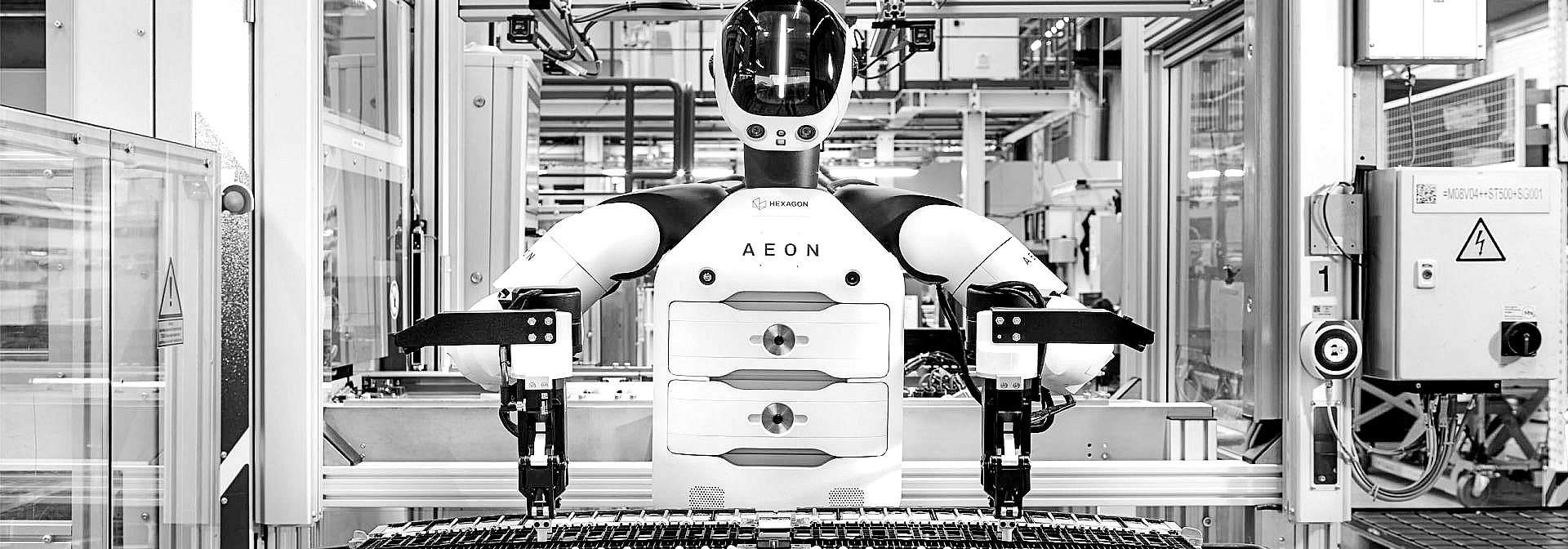
BMW has begun deploying humanoid robots inside one of its German manufacturing facilities, marking a significant step toward the integration of advanced robotics into Europe’s industrial production lines. The pilot project, which places human-shaped robots alongside workers on the factory floor, is being closely watched by manufacturers across Europe as companies search for solutions to labour shortages and rising production costs.
Humanoid robots enter the production environment
The initiative forms part of BMW’s broader strategy to modernise its manufacturing operations using automation, artificial intelligence and robotics.
Unlike traditional industrial robots, which are typically fixed in place and designed for specific repetitive tasks, humanoid robots are built to operate in environments designed for human workers. Their ability to walk, grasp objects and adapt to changing tasks could make them more flexible within complex manufacturing processes.

In BMW’s pilot programme, the robots are being tested in logistics and assembly support roles, including handling parts, transporting materials and assisting with repetitive tasks.
Engineers say the technology could eventually allow factories to automate tasks that previously required human mobility and adaptability.
European manufacturers studying the experiment
The automotive industry has long been a pioneer in industrial automation, but humanoid robotics represents a new frontier.
European manufacturers are closely observing BMW’s experiment to evaluate whether such machines can deliver productivity gains without disrupting existing production systems.
Companies across the continent face growing pressure from labour shortages, particularly in skilled manufacturing roles. At the same time, European factories must remain competitive with highly automated facilities in Asia and North America.
Humanoid robots could potentially bridge that gap by working within existing factory layouts rather than requiring completely redesigned production lines.
Balancing automation and workforce concerns
Despite the technological excitement surrounding humanoid robotics, labour unions and workforce representatives are watching developments carefully.
BMW has emphasised that the robots are intended to assist workers rather than replace them. Company executives say the machines could handle physically demanding or repetitive tasks, allowing human employees to focus on more complex activities.
Industrial analysts note that Europe’s manufacturing sector faces a delicate balance: increasing automation while maintaining strong labour protections and employment levels.
The introduction of humanoid robots may therefore proceed gradually, beginning with pilot programmes before expanding to wider deployment.
The next phase of industrial automation
The development highlights how artificial intelligence and advanced robotics are reshaping global manufacturing.
Technology firms and robotics startups have been racing to develop machines capable of performing a broader range of tasks than traditional factory robots. Advances in sensors, machine vision and AI have significantly improved robots’ ability to navigate dynamic environments.
If humanoid robots prove reliable and cost-effective, they could transform how factories operate over the next decade.
Europe’s factories prepare for a technological shift
For now, BMW’s pilot programme represents an early glimpse of a possible future for European manufacturing.
Other automotive companies, industrial groups and robotics developers are likely to monitor the results closely before making similar investments.
As global competition intensifies and automation technologies mature, humanoid robots may soon become a familiar sight on factory floors across Europe.
Newshub Editorial in Europe — March 14, 2026

If you have an account with ChatGPT you get deeper explanations,
background and context related to what you are reading.
Open an account:
Open an account
Recent Comments