
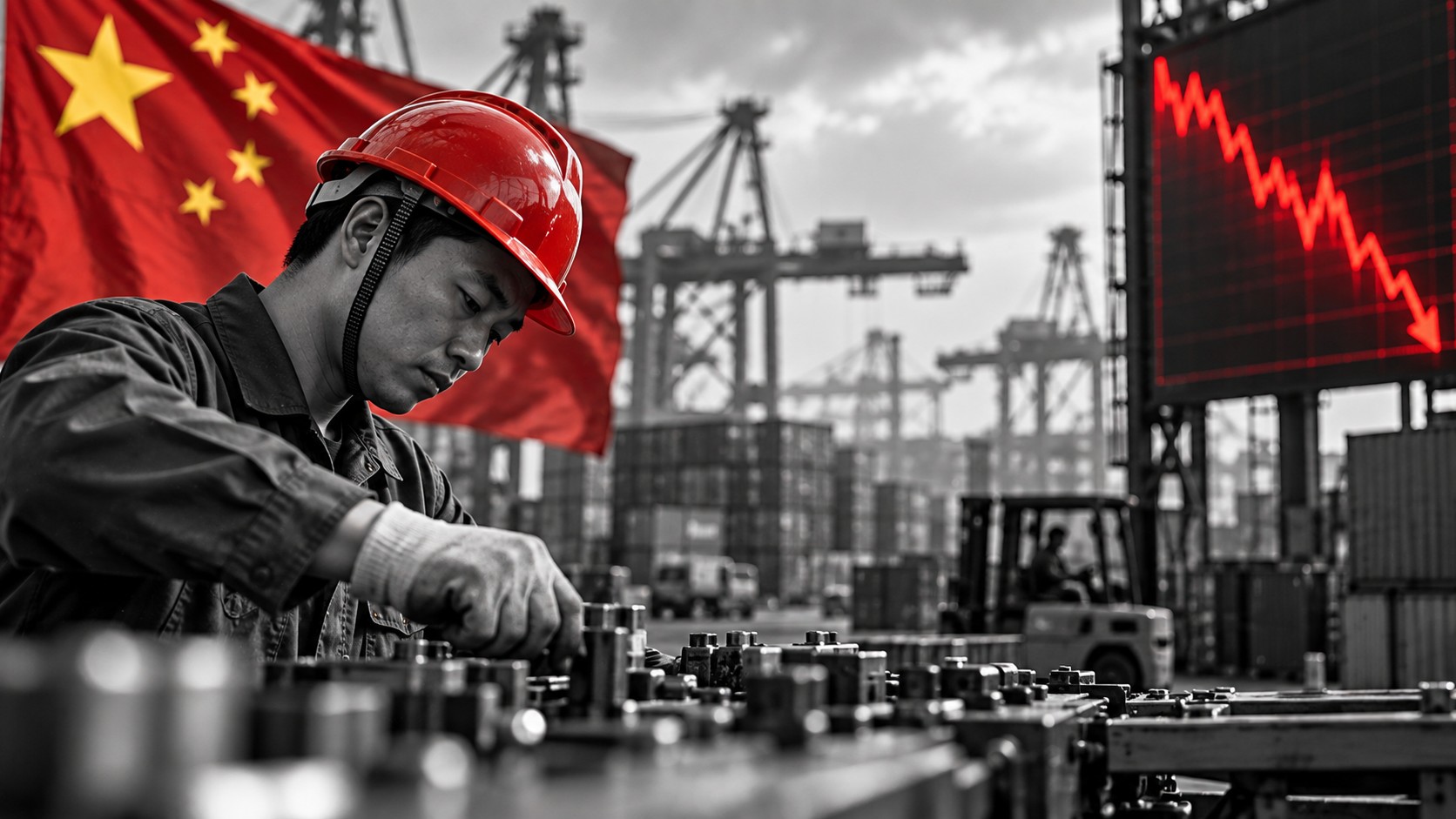
China’s manufacturing sector unexpectedly contracted in October, with weakening domestic demand and declining export orders adding pressure on Beijing to introduce further economic stimulus as the world’s second-largest economy struggles to maintain momentum.
BEIJING, 31 October 2026 – China’s manufacturing activity contracted at its fastest pace in three months during October, according to official figures released on Saturday, raising renewed concerns about the country’s economic recovery and the sustainability of industrial growth.
The National Bureau of Statistics reported that the manufacturing Purchasing Managers’ Index (PMI) fell to 49.3 in October from 50.1 in September, missing economists’ expectations of 50.0.


A reading below 50 indicates contraction, making October the third month of declining manufacturing activity in four months.
Domestic demand remains a major weakness
The latest figures indicate that Chinese manufacturers continue to struggle with insufficient domestic demand, despite government efforts to encourage consumer spending and investment.
The manufacturing production index declined to 49.8, while new orders fell to 49.4, suggesting that both factory output and demand weakened.
Smaller businesses experienced particularly difficult conditions. The PMI for small manufacturers dropped to 47.5, compared with 50.2 for larger enterprises.
The figures highlight an increasingly uneven recovery between major industrial groups and smaller companies.
Export orders provide little relief
China’s export sector, traditionally a major driver of economic growth, also showed signs of weakening.
New export orders remained in contraction as manufacturers faced uncertain overseas demand and continuing international trade tensions.
Economists suggested that shipments brought forward ahead of the Christmas season may have contributed to October’s slowdown.
Technology industries defy wider downturn
Despite the broader industrial weakness, China’s advanced manufacturing industries continued expanding.
High-technology manufacturing recorded a PMI of 51.3, while equipment manufacturing reached 50.6.
The contrasting figures illustrate how investment in artificial intelligence, electronics and advanced industrial production is creating growth opportunities even as traditional manufacturing faces difficult conditions.
Pressure mounts on Beijing
The non-manufacturing PMI, covering services and construction, also declined to 49.7 from 50.2 in September.
The deterioration places additional pressure on Chinese policymakers to support consumption, strengthen business confidence and stabilise the property market.
Beijing has already introduced measures involving interest rates, mortgage support and additional financing for local governments.
China is targeting economic growth of approximately 4.5% to 5% this year, following third-quarter expansion of 4.5%.
However, the October figures suggest that maintaining growth into 2027 could require further intervention.
For global financial markets, China’s economic performance remains crucial, influencing international trade, commodity demand and investment across Asia and beyond.
NewsHub Finance | China Economy | 31 October 2026
China's manufacturing sector unexpectedly contracted in October, with weakening domestic demand and declining export orders adding pressure on Beijing to introduce further economic stimulus as the world's second-largest economy struggles to maintain momentum.

Recent Comments