
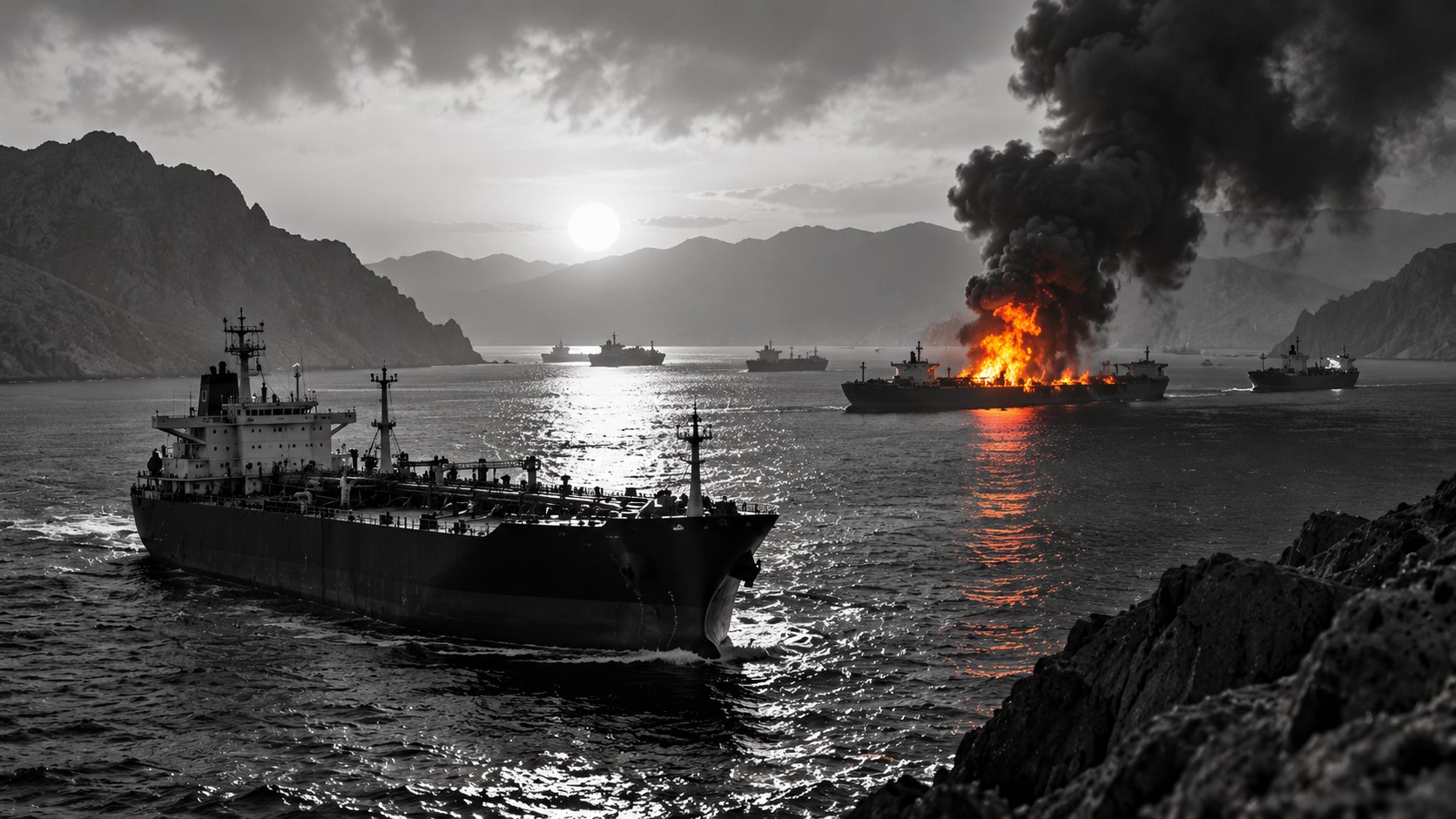
Reports of tanker attacks and slowing maritime traffic through one of the world’s most important energy corridors have sent oil prices sharply higher, raising concerns that a prolonged disruption could trigger inflation, higher transport costs and renewed pressure on global economic growth.
LONDON, 31 October 2026 – Escalating tensions in the Strait of Hormuz are threatening to destabilise global energy markets after reports of attacks on commercial tankers raised fears of serious disruption to oil and natural gas shipments from the Persian Gulf.
Iran’s Revolutionary Guard Navy claimed that four tankers had caught fire or struck mines, although Reuters has not independently verified those allegations.


Separately, the UK Maritime Trade Operations agency reported that a tanker was struck by an unidentified projectile while leaving the strait. Its crew was reported safe.
It remains unclear whether the various reports concern separate incidents.
Oil prices already reflect growing uncertainty
Brent crude for December delivery closed Friday at $117.64 per barrel, gaining 2.4%, while the more actively traded January contract settled at $113.43.
Brent increased 13.6% during October, reflecting mounting geopolitical uncertainty and concerns about possible supply restrictions.
However, higher prices do not necessarily indicate an actual shortage. Traders also incorporate geopolitical risk premiums into their valuations.
A critical artery for global energy
The Strait of Hormuz represents one of the world’s most strategically important shipping routes.
According to the US Energy Information Administration, approximately 20.9 million barrels of oil and petroleum products passed through the waterway daily during the first half of 2025.
Alternative pipelines through Saudi Arabia and the United Arab Emirates could accommodate only part of those volumes.
A sustained interruption could therefore have consequences extending far beyond the Middle East.
Inflation and financial markets face renewed pressure
Higher energy prices increase costs for shipping companies, airlines, manufacturers and households.
If elevated prices persist, businesses may pass additional expenses to consumers, complicating efforts by central banks to contain inflation and reduce interest rates.
Energy-importing economies across Asia and Europe would be particularly vulnerable, while oil exporters could face reduced revenues if physical shipments were interrupted.
Natural gas supplies also exposed
The International Energy Agency estimates that LNG shipments through Hormuz normally account for almost one-fifth of global supply.
Disruptions could intensify competition for natural gas between Asian and European buyers, affecting electricity generation, fertiliser production and industrial costs.
The duration of disruption will determine the damage
Financial markets will now monitor shipping movements, insurance premiums, freight rates and actual export volumes.
Although the immediate outlook suggests continued volatility, the economic consequences will depend primarily on whether maritime disruption becomes prolonged.
The greatest danger is not simply another increase in oil prices, but a sustained energy shock capable of spreading through international trade, inflation and economic growth.
NewsHub Finance | Global Economy | 31 October 2026
Reports of tanker attacks and slowing maritime traffic through one of the world's most important energy corridors have sent oil prices sharply higher, raising concerns that a prolonged disruption could trigger inflation, higher transport costs and renewed pressure on global economic growth.

Recent Comments