
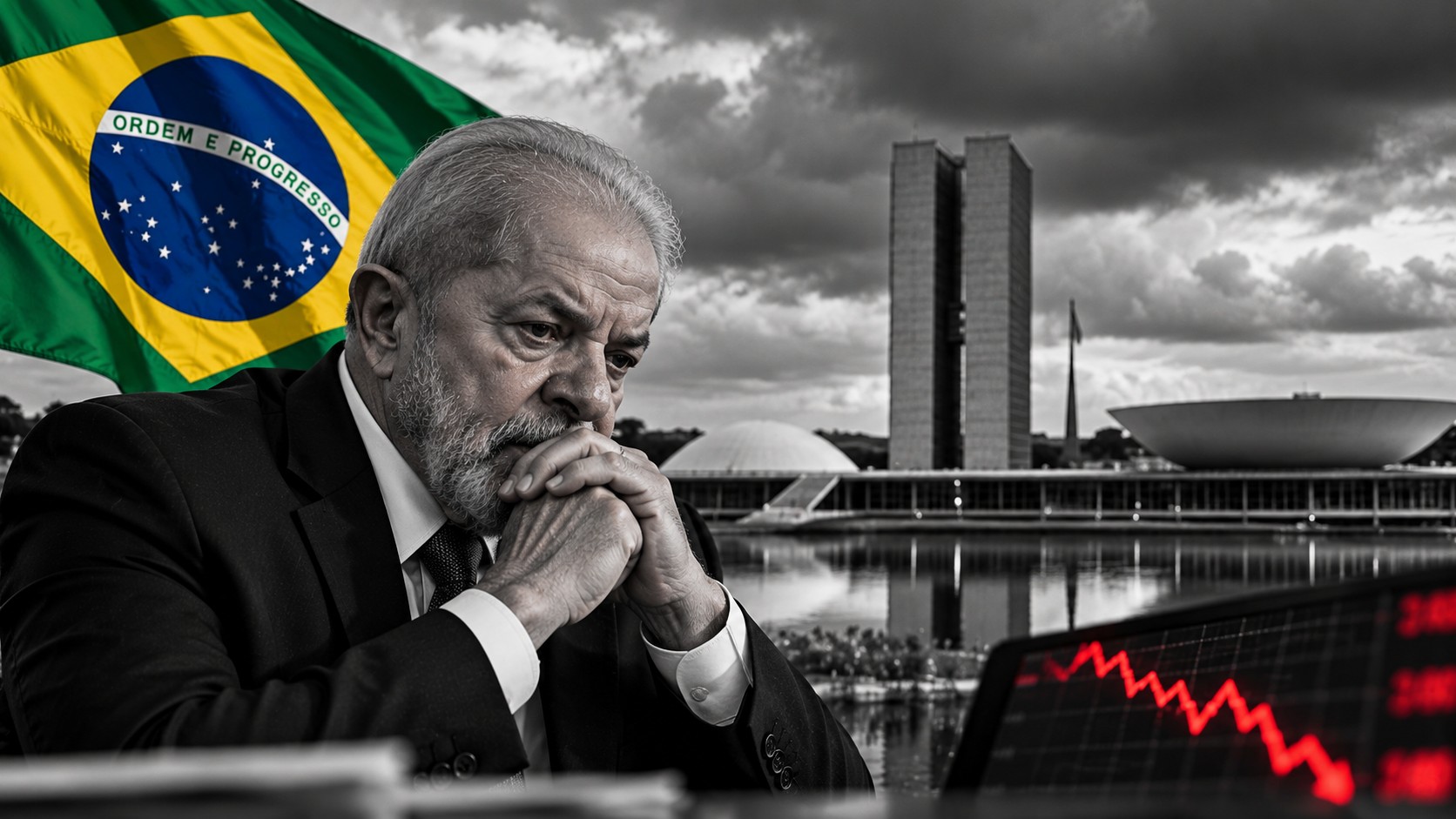
Less than a week after securing a historic fourth presidential term, Luiz Inácio Lula da Silva faces growing resistance within his own government over spending cuts, as Brazil’s public debt reaches 82.9% of GDP and investors question the country’s financial stability.
BRASÍLIA, 31 October 2026 – Brazil’s newly re-elected president, Luiz Inácio Lula da Silva, is confronting an immediate economic challenge as disagreements within his governing coalition threaten efforts to control public expenditure and stabilise Latin America’s largest economy.
Lula’s election victory on 25 October has intensified concerns among financial markets about whether his administration can reconcile ambitious social programmes with mounting public debt and borrowing costs.


Debt reaches worrying levels
Brazil’s gross public debt has climbed to 82.9% of gross domestic product, increasing by more than 11 percentage points since Lula returned to office in 2023.
Central bank figures released on Thursday showed that interest payments reached 8.99% of GDP during the twelve months to September, their highest level since January 2016.
The country’s total fiscal deficit, including interest payments, reached 9.51% of GDP.
These figures underscore the financial pressure facing a government seeking to maintain social expenditure while reassuring creditors.
Government divided over spending cuts
Senior figures within Lula’s Workers’ Party have publicly resisted proposals for tougher fiscal restrictions.
Presidential Secretary-General Guilherme Boulos argued that adjustments should focus on congressional budget allocations and tax exemptions rather than reductions affecting poorer households.
Institutional Relations Minister José Guimarães also dismissed suggestions that broad fiscal adjustments were under discussion within the governing coalition.
The disagreements highlight the political difficulties facing Lula as he prepares his administration’s economic agenda.
Markets question Brazil’s direction
Investor confidence has weakened following the election, with Brazilian shares and the real coming under pressure.
Higher perceived fiscal risk can increase government borrowing costs, creating a cycle in which growing interest payments make public debt increasingly difficult to stabilise.
The government’s economic team is considering a primary budget surplus equivalent to 0.5% of GDP next year, although achieving that objective may require difficult political compromises.
A decisive test for Lula’s fourth term
Brazil remains one of the world’s largest agricultural exporters and an important destination for international investment.
However, continuing fiscal uncertainty could discourage investment, weaken the currency and complicate efforts to reduce financing costs for households and businesses.
For Lula, the immediate challenge is balancing his commitment to social development with the need to demonstrate credible fiscal discipline.
His fourth presidency may ultimately be judged as much by Brazil’s economic stability as by the political victory that returned him to power.
NewsHub Finance | Latin America | 31 October 2026
Less than a week after securing a historic fourth presidential term, Luiz Inácio Lula da Silva faces growing resistance within his own government over spending cuts, as Brazil’s public debt reaches 82.9% of GDP and investors question the country’s financial stability.

Recent Comments