
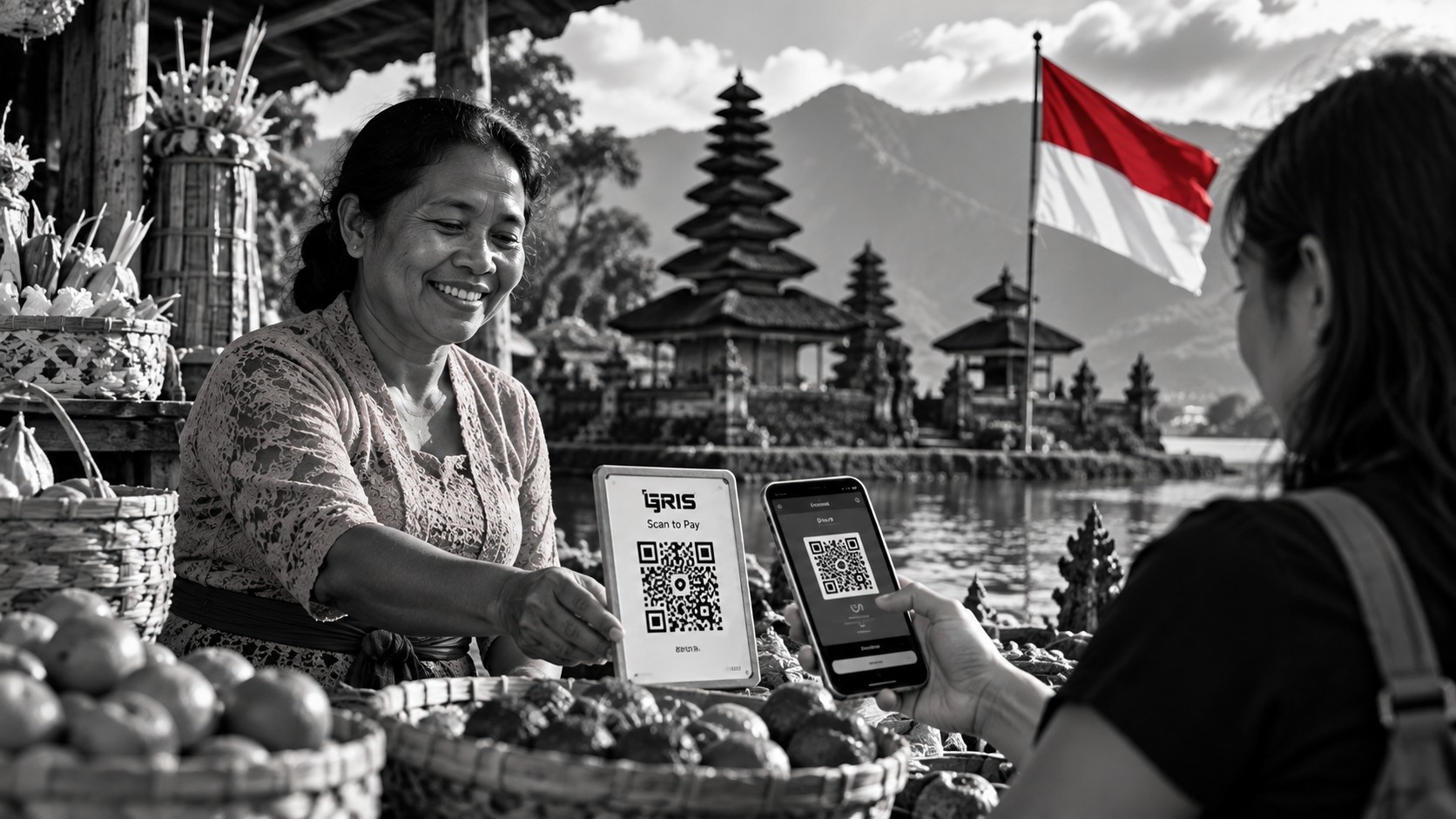
Indonesia has taken a significant step towards strengthening financial inclusion with the establishment of a National Council for Financial Well-being, signalling a shift from simply providing access to banking services towards improving household financial security. The initiative, launched by President Prabowo Subianto on 22 October, comes as financial inclusion reaches a record 93.61%, highlighting the country’s growing ambition to build a more accessible and sustainable financial system.
A new direction for financial inclusion
The newly established National Council for Financial Well-being replaces the previous National Council for Financial Inclusion, broadening the government’s objectives beyond bank account ownership.
Under Government Regulation Number 42 of 2026, policymakers will increasingly focus on household financial resilience, savings, financial education and access to appropriate financial services.


Coordinating Minister for Economic Affairs Airlangga Hartarto explained that the new approach recognises families as the fundamental economic units of Indonesian society.
Sekretariat Kabinet Republik Indonesia+1
Financial inclusion exceeds national targets
Indonesia’s 2026 National Survey of Financial Literacy and Inclusion revealed that 93.61% of the population uses formal financial services, compared with 92.74% in 2025.
Financial literacy also improved, reaching 69.57%, exceeding the government’s original 2029 target.
However, important inequalities remain.
Financial inclusion in urban communities reached 95.47%, compared with 90.39% in rural areas, underlining the challenges of delivering financial services across Indonesia’s vast archipelago.
ojk.go.id+1
Microfinance and digital technology gain importance
Indonesia’s financial transformation increasingly depends on connecting traditional financial institutions with digital payment platforms, microfinance providers and mobile banking technology.
On 13 October, the International Labour Organization launched the third phase of its Promise to Impact initiative, working alongside Indonesian authorities to improve access to financial services for micro, small and medium-sized enterprises.
These businesses remain essential to employment, entrepreneurship and economic development, particularly outside major urban centres.
International Labour Organization+1
Financial education remains a major challenge
Despite impressive inclusion figures, millions of Indonesians still lack adequate knowledge of financial products, consumer protection and savings mechanisms.
Authorities are therefore expanding financial education initiatives alongside digital infrastructure and banking accessibility.
The distinction between having access to financial services and using them effectively is becoming increasingly important.
A model for emerging economies
Indonesia’s latest initiative reflects a broader transformation across emerging markets, where financial inclusion is increasingly viewed as an instrument of economic development rather than simply a banking objective.
For Southeast Asia’s largest economy, the challenge is now to translate widespread financial access into stronger household finances, sustainable entrepreneurship and long-term prosperity.
NewsHub Finance | Financial Inclusion | 28 October 2026
Indonesia has taken a significant step towards strengthening financial inclusion with the establishment of a National Council for Financial Well-being, signalling a shift from simply providing access to banking services towards improving household financial security. The initiative, launched by President Prabowo Subianto on 22 October, comes as financial inclusion reaches a record 93.61%, highlighting the country's growing ambition to build a more accessible and sustainable financial system.
Recent Comments