
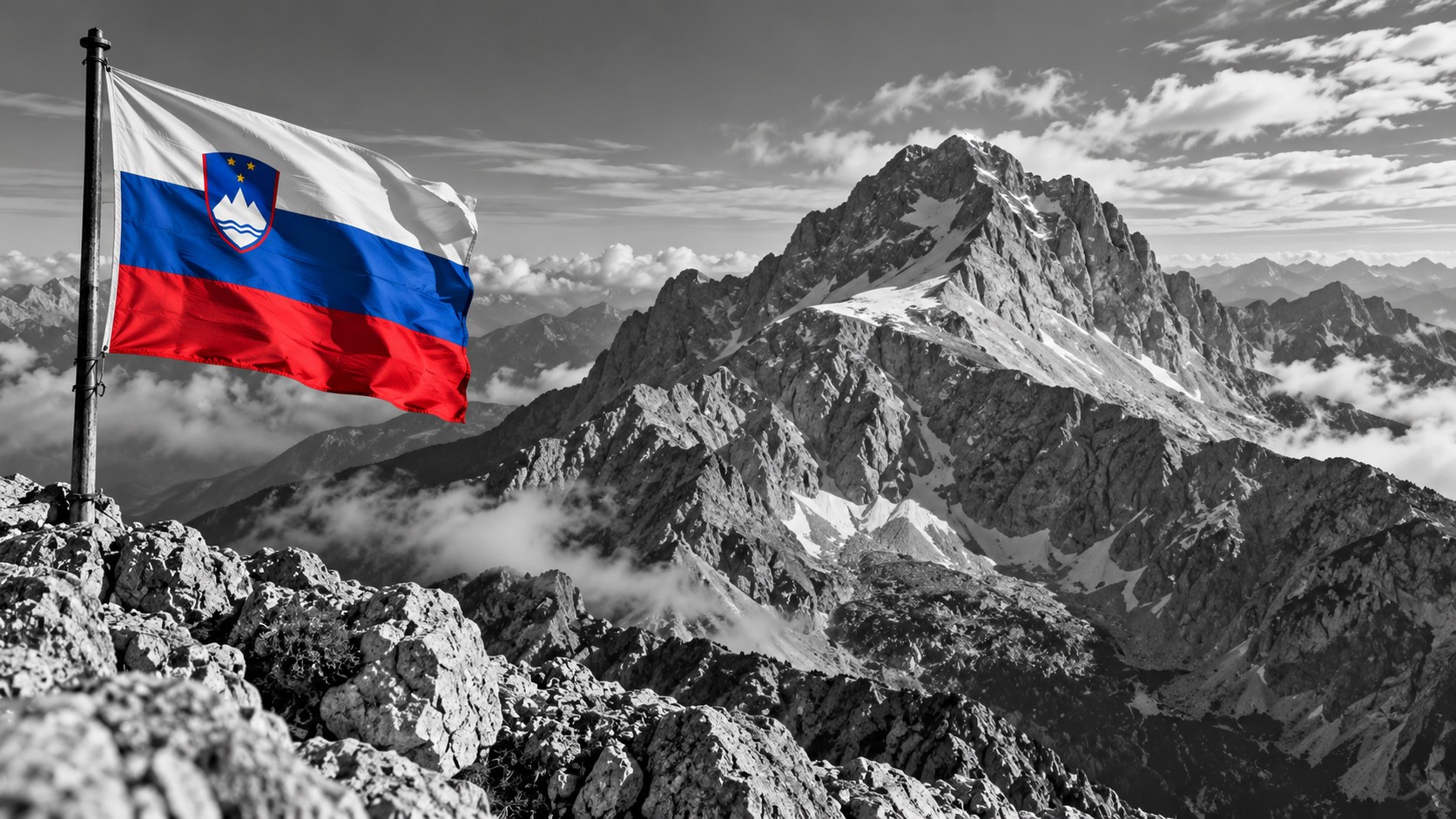
Slovenia has lost one of its most treasured natural landmarks after the last remaining ice of the Triglav glacier disappeared following an exceptionally hot European summer. The glacier, situated beneath the country’s highest mountain and regarded as part of Slovenia’s national identity, has finally succumbed to decades of rising temperatures, leaving scientists and mountain communities confronting the irreversible consequences of climate change.
A glacier disappears after centuries
Mount Triglav, rising 2,864 metres above sea level in the Julian Alps, has long been a symbol of Slovenian national pride.


Historical records indicate that its glacier covered approximately 40 hectares during the mid-19th century. By 1946, that area had fallen to just 14 hectares.
Between 1983 and 2003, the glacier lost an astonishing 93% of its surface area, yet small remnants survived for another two decades.
Photographs taken in October 2026 have now confirmed that the final exposed ice patches have disappeared.
Extreme temperatures accelerate the melting
Scientists attribute the glacier’s disappearance to sustained atmospheric warming, increasingly severe summer heatwaves and declining winter snowfall.
During the 2025–2026 winter, snow accumulation at the nearby Kredarica weather station reached just 220 centimetres, considerably below the historical average of 374 centimetres.
The unusually thin snow cover melted early, leaving the remaining ice directly exposed to summer temperatures.
Researchers at Slovenia’s Anton Melik Geographical Institute describe the rapid transformation of the mountain landscape as particularly alarming.
A profound national loss
Triglav occupies an extraordinary position in Slovenian culture. The mountain appears on the national flag, and climbing its summit is considered a traditional expression of national identity.
The glacier’s disappearance therefore represents considerably more than an environmental change.
For generations of Slovenes, its presence formed part of the familiar Alpine landscape.
Scientists have also lost an important natural archive capable of revealing historical climate conditions through preserved ice.
Europe’s glaciers face an uncertain future
The disappearance of Triglav reflects a broader crisis across the European Alps, where temperatures are increasing substantially faster than the global average.
Slovenia’s remaining glacier, situated beneath Mount Skuta, is also shrinking, although its more sheltered position may allow it to survive somewhat longer.
Across Europe, retreating glaciers threaten mountain ecosystems, freshwater availability and tourism-dependent communities.
For Slovenia, the disappearance of Triglav’s glacier is a powerful reminder that climate change is no longer simply a prediction about the future.
It is already permanently transforming some of Europe’s most recognisable landscapes.
NewsHub Finance | Climate & Environment | 28 October 2026
Slovenia has lost one of its most treasured natural landmarks after the last remaining ice of the Triglav glacier disappeared following an exceptionally hot European summer. The glacier, situated beneath the country's highest mountain and regarded as part of Slovenia's national identity, has finally succumbed to decades of rising temperatures, leaving scientists and mountain communities confronting the irreversible consequences of climate change.
Recent Comments