
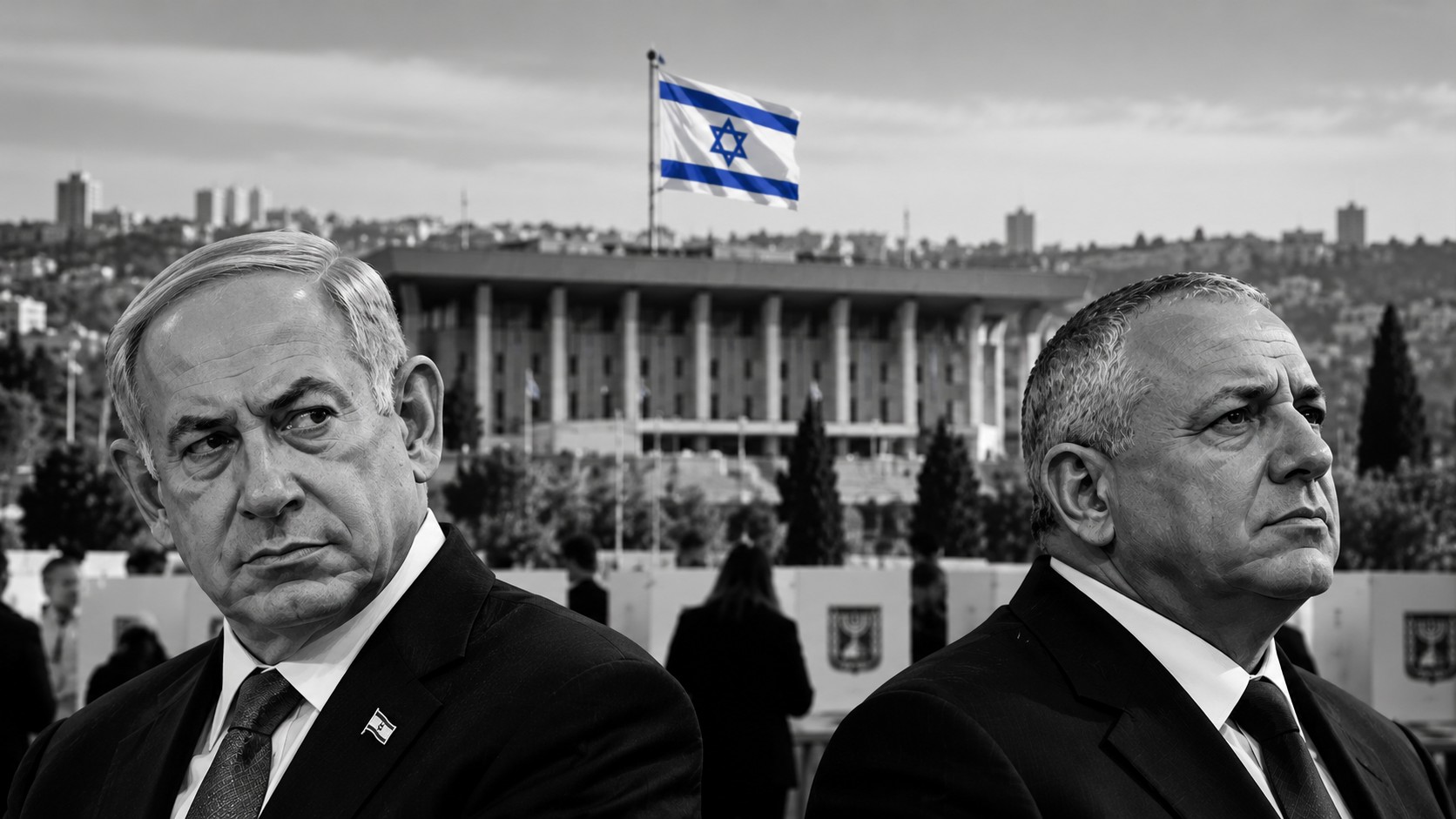
Israel faces a period of political uncertainty on Wednesday morning after revised exit polls from Tuesday’s parliamentary election showed Prime Minister Benjamin Netanyahu’s governing bloc and the opposition led by Gadi Eisenkot virtually tied. With neither side securing the 61 seats required for a majority in the 120-member Knesset, the country could face prolonged coalition negotiations or another election.
Exit polls reveal a deeply divided electorate
As Israelis awoke on Wednesday, revised projections from broadcasters Kan 11 and Channel 13 placed both political blocs on 51 parliamentary seats.


Channel 12 suggested Netanyahu’s coalition could secure 52 seats, leaving the outcome uncertain.
Earlier projections had given Eisenkot’s opposition a narrow advantage, but subsequent revisions reduced that lead.
Israeli exit polls have historically proved unreliable in close elections, with final results sometimes differing by several parliamentary seats.
aa.com.tr+1
Netanyahu and Eisenkot both claim victory
Despite the inconclusive figures, both political leaders presented the election as a mandate from voters.
Netanyahu emphasised that his Likud party appeared likely to remain the largest individual party in parliament and called for a strong right-wing government.
Eisenkot, a former military chief of staff who leads the Yashar party, argued that voters had rejected Netanyahu’s leadership and demanded political change.
The election was widely regarded as a referendum on Netanyahu’s handling of national security, the Gaza war and Israel’s international standing.
AFP+1
Arab parties could determine the outcome
One of the election’s most significant developments was the projected increase in representation for Arab-led parties.
Together, they could secure approximately 18 seats, potentially giving them considerable influence over attempts to form a new government.
However, political differences and longstanding opposition to cooperation between certain parties could complicate coalition negotiations.
Record turnout reflects national tensions
Voter participation exceeded 77%, marking the highest turnout in decades.
The exceptionally strong participation reflected the importance of an election taking place amid continuing regional tensions and deep divisions over Israel’s future direction.
Al Jazeera+1
Uncertainty could continue for weeks
Official vote counting continued on Wednesday, with final results expected later in the week.
President Isaac Herzog will subsequently consult parliamentary parties before selecting the candidate considered most capable of forming a government.
Without a viable coalition, Netanyahu could remain caretaker prime minister while negotiations continue.
For now, Israel’s electorate has delivered a divided verdict, leaving the country’s political future unresolved.
AP News+1
NewsHub Finance | World News | 28 October 2026
Israel faces a period of political uncertainty on Wednesday morning after revised exit polls from Tuesday's parliamentary election showed Prime Minister Benjamin Netanyahu's governing bloc and the opposition led by Gadi Eisenkot virtually tied. With neither side securing the 61 seats required for a majority in the 120-member Knesset, the country could face prolonged coalition negotiations or another election.
Recent Comments