
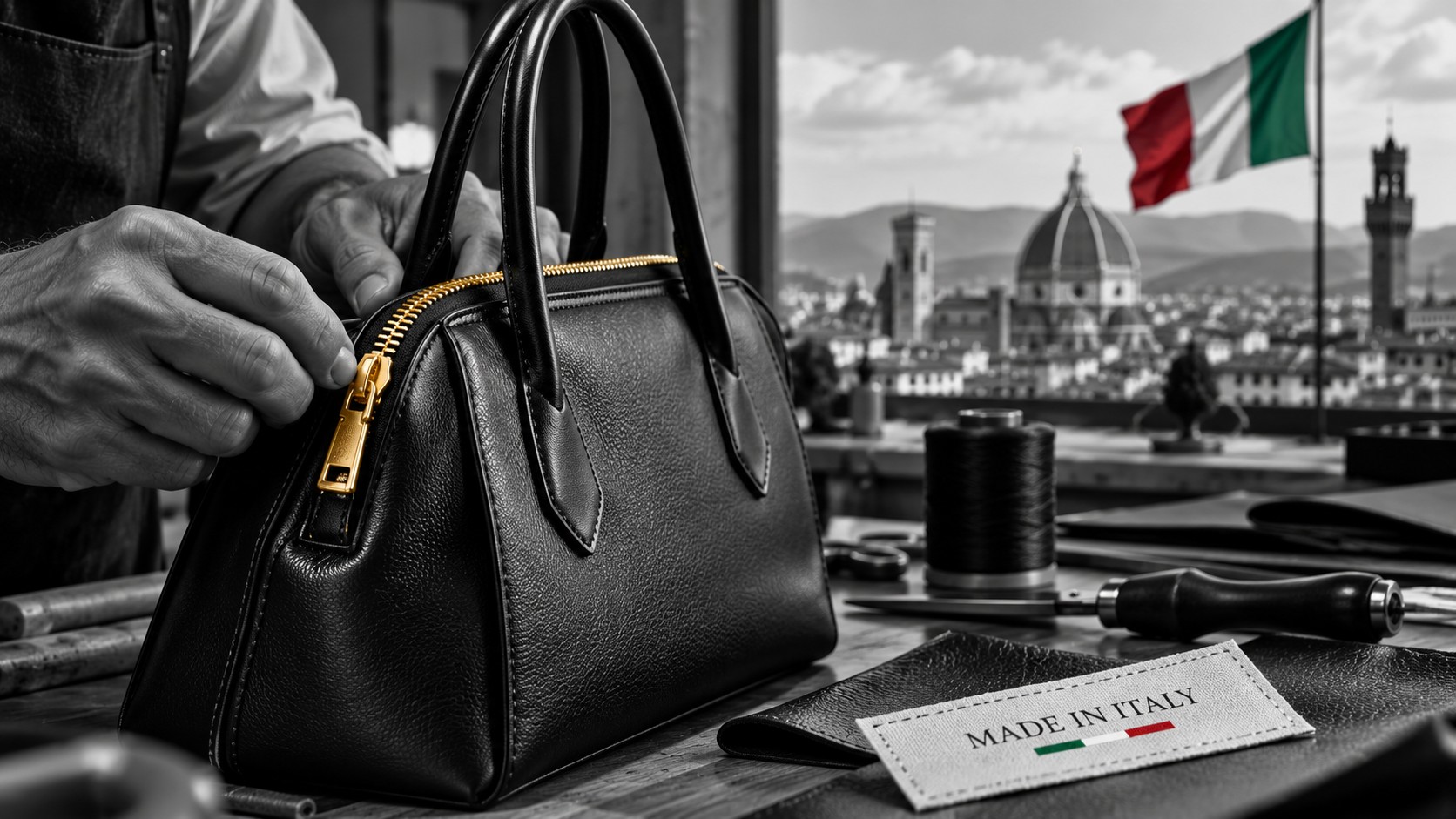
A viral video questioning the origins of luxury handbags has sparked a wider debate about what the prestigious “Made in Italy” label actually guarantees. At the centre of the controversy is a deceptively simple question: can a handbag manufactured largely outside Italy legally acquire Italian origin through a final production operation, such as attaching a zipper?
The rules behind the label
Under European Union customs legislation, products manufactured in several countries generally acquire their origin where the last substantial and economically justified processing takes place.
The work must create a new product or represent an important stage of manufacturing.


Crucially, the legislation does not establish a universal rule allowing a handbag to become Italian simply because a zipper is attached there.
Whether a particular operation qualifies depends on the manufacturing process and the applicable origin requirements.
A viral video reaches the courtroom
The controversy escalated when luxury group Kering and two Bottega Veneta companies pursued legal action against Meta over a video published on Instagram and Facebook.
The companies argued that the video contained misleading allegations concerning product origins and maintained that the handbag shown was counterfeit.
On 9 July 2026, the Paris Judicial Court annulled their legal summons because procedural requirements under French law had not been satisfied.
The decision did not establish whether the video’s allegations were accurate, whether the handbag was counterfeit or whether any Bottega Veneta products had been incorrectly labelled.
Luxury branding versus manufacturing reality
For consumers, “Made in Italy” often suggests Italian craftsmanship, domestic production and generations of manufacturing expertise.
However, luxury supply chains frequently cross international borders. Leather, hardware, textiles and other components may originate in different countries before final production.
A legally valid country-of-origin designation does not necessarily mean every component or manufacturing stage comes from that country.
Transparency becomes the real question
The dispute illustrates a growing challenge for the global luxury industry: consumers increasingly want to know not only where a product legally originates, but where it was actually manufactured.
For brands commanding premium prices, transparency about sourcing, production and labour practices may become as important as craftsmanship itself.
The zipper question therefore reaches far beyond handbags. It asks whether a legally correct label always communicates what consumers believe they are purchasing.
NewsHub Finance | Luxury Industry & International Trade | 26 October 2026
A viral video questioning the origins of luxury handbags has sparked a wider debate about what the prestigious “Made in Italy” label actually guarantees. At the centre of the controversy is a deceptively simple question: can a handbag manufactured largely outside Italy legally acquire Italian origin through a final production operation, such as attaching a zipper?
Recent Comments