
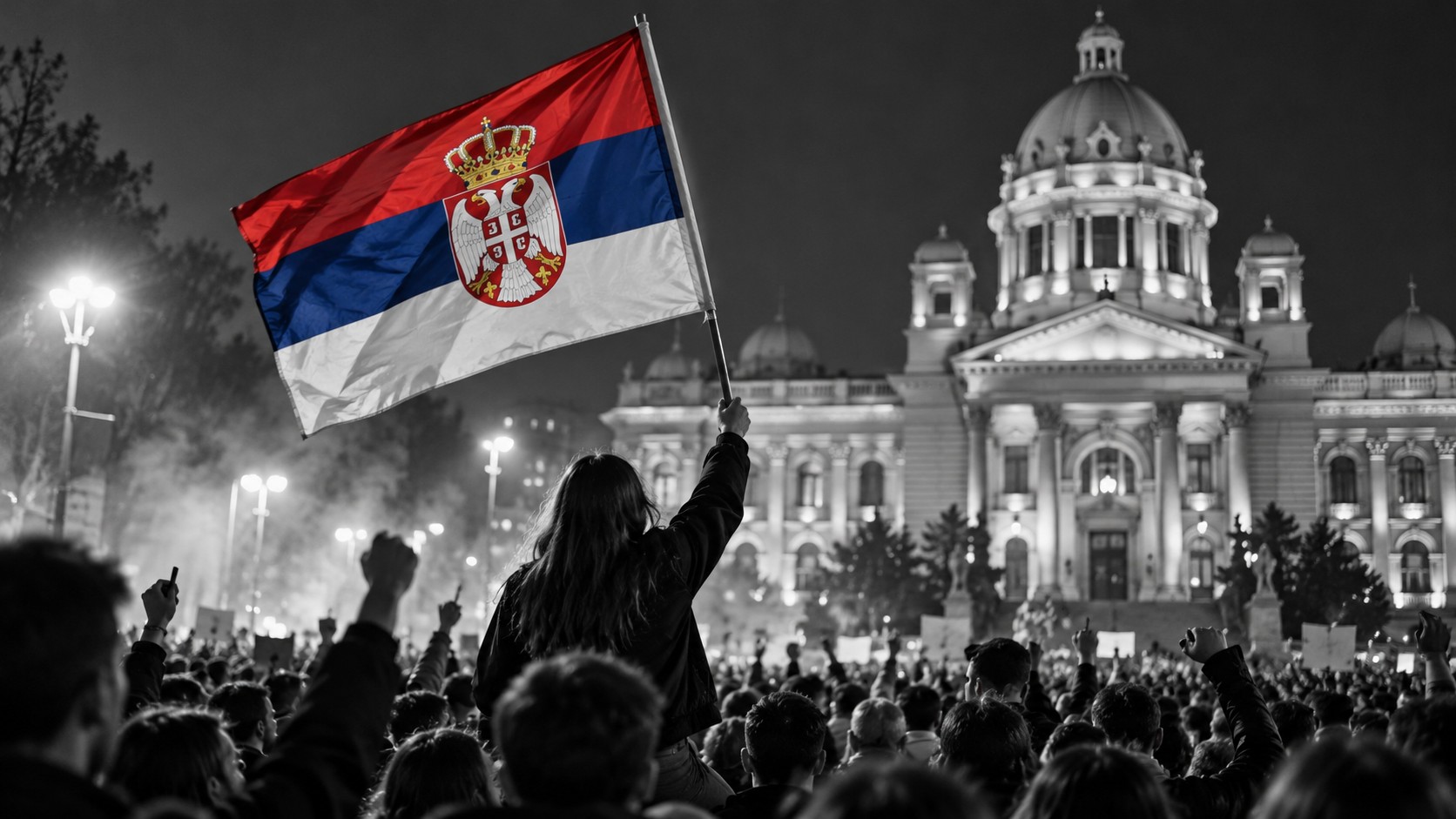
Serbia’s student revolution ends Vučić’s grip on power in historic election
Serbia has entered a new political era after a student-led opposition movement secured a remarkable victory in Sunday’s parliamentary election, ending more than a decade of political dominance by Aleksandar Vučić and his Serbian Progressive Party. The result, announced on 25 October 2026, represents one of the most significant political upheavals in the Balkans in recent decades.
A decisive victory for the student movement
Preliminary projections indicate that the Student List secured approximately 52% of the vote, compared with around 39% for Vučić’s governing coalition.


The opposition is expected to win between 135 and 140 seats in Serbia’s 250-member parliament, giving it a clear majority.
Vučić acknowledged defeat on Sunday evening, recognising that the student-backed movement had won the election.
Voter turnout approached 70%, one of the highest levels recorded since the break-up of Yugoslavia.
Thousands of people celebrated in Belgrade and other Serbian cities as the results became clear.
From tragedy to political revolution
The movement emerged following the collapse of a railway station canopy in Novi Sad in November 2024, which killed 16 people.
The disaster sparked widespread accusations of corruption, inadequate oversight and political interference in public infrastructure projects.
University students organised demonstrations demanding accountability and institutional reform.
What began as protests against corruption gradually developed into a nationwide movement challenging the country’s political establishment.
Nearly two years later, that movement has translated public dissatisfaction into electoral victory.
The end of an era
Vučić has dominated Serbian politics since becoming prime minister in 2014 and subsequently president in 2017.
His administration has been criticised by opponents and international observers over media freedom, democratic institutions and the concentration of political power.
The election result represents a substantial setback for the Serbian Progressive Party, which has controlled much of the country’s political agenda since 2012.
Europe watches Serbia’s next move
The political transition carries significant implications for Serbia’s relationships with the European Union, Russia and China.
Serbia remains an EU membership candidate while maintaining close economic and diplomatic relationships with Moscow and Beijing.
The incoming parliamentary majority will face difficult decisions concerning judicial reform, foreign investment, energy security and relations with Kosovo.
Investors will also be watching whether political change improves institutional transparency and the business environment.
A new generation faces its greatest test
Although the preliminary results point to a parliamentary majority, the final allocation of seats remains subject to official confirmation.
The student movement must now transform its electoral success into an effective governing administration.
For Serbia, the historic vote represents an opportunity for democratic renewal, but also introduces considerable political uncertainty.
The movement that began on university campuses has changed the country’s political landscape. Its next challenge will be governing it.
NewsHub Finance | Europe & Politics | 26 October 2026
Serbia's student revolution ends Vučić's grip on power in historic election
Recent Comments