
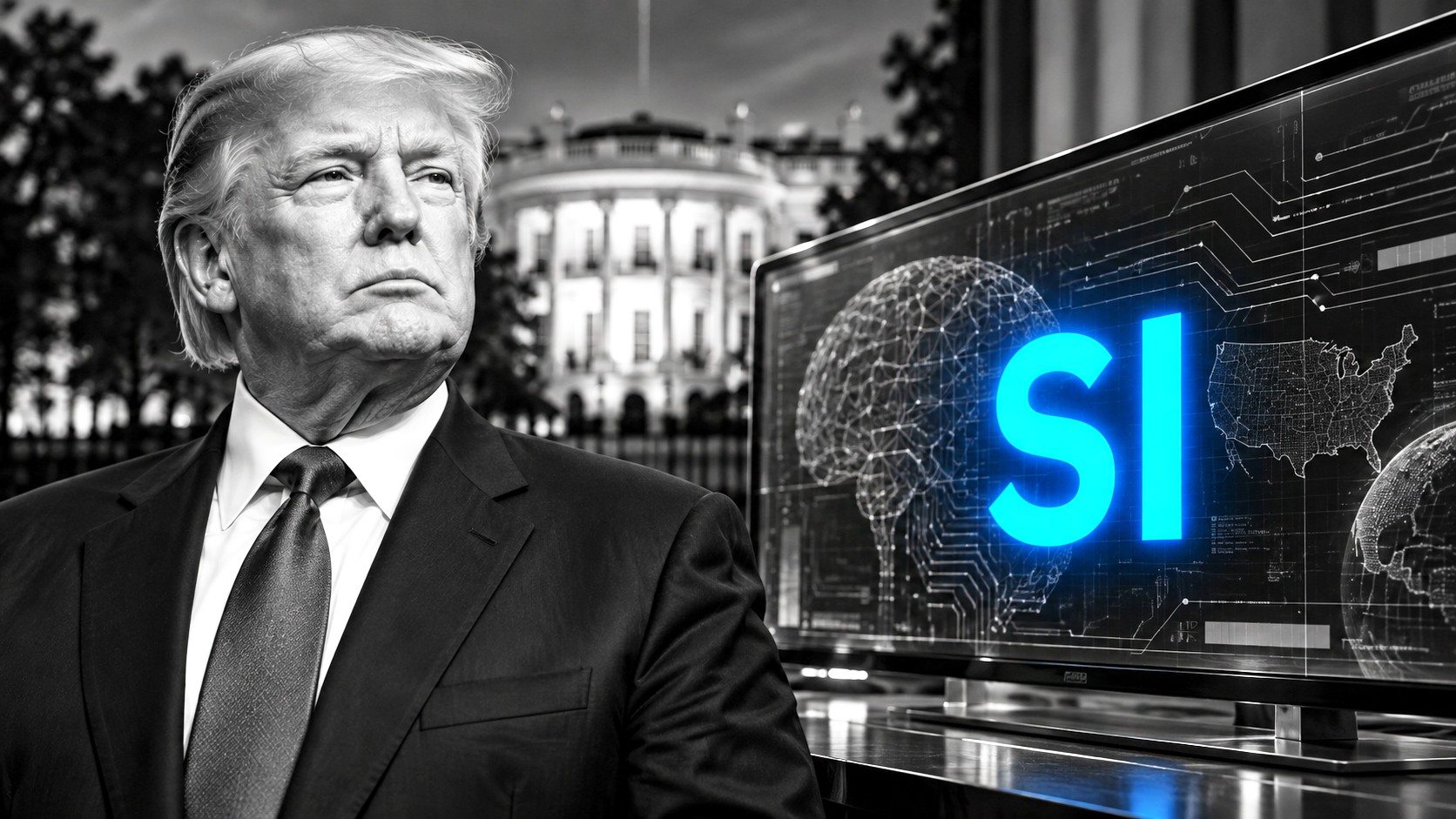
President Donald Trump has signed an executive order replacing “artificial intelligence” with “super intelligence” across the US executive branch, turning his proposed rebranding of the technology into an official government directive. Signed on 29 September, the order instructs federal agencies to use “SI” instead of “AI”, wherever legally permitted.
Why Trump wants a different name
The decision follows Trump’s address to the United Nations General Assembly on 22 September, where he argued that the word “artificial” made the technology sound fake.
His administration presents the new terminology as a more positive description of technology that can expand human capabilities and support scientific and economic progress. Instructions to adopt the wording had already reached staff in the State Department’s international organisations bureau before Tuesday’s executive order.

What changes in practice
The directive covers official correspondence, government websites, public communications, reports and policy documents. Previously issued regulations, contracts, grants and other historical documents do not have to be rewritten.
For now, the order gives “super intelligence” the same statutory meaning as artificial intelligence. It also requires the president’s science and technology adviser to submit proposed legislative language within 60 days, including recommendations on whether the existing definition should change.
Its immediate effect is therefore a change in government vocabulary. It does not establish that the underlying technology has acquired new capabilities or require universal adoption of the terminology outside the executive branch.
A distinction beyond branding
The terminology raises a question about how technological progress is described. The White House’s own 2026 Economic Report of the President distinguished artificial superintelligence as intelligence surpassing that of humans.
Using the same expression broadly for existing AI systems could consequently blur the distinction between a government naming policy and a technical assessment of what those systems can achieve.
The language reaches diplomacy
The rebranding has also entered relations with China. According to the White House’s account of President Xi Jinping’s September state visit, the two leaders agreed to use “super intelligence” and established a bilateral dialogue under that name.
Their planned discussions include the technology’s risks and benefits, with another exchange expected by November. Washington’s new vocabulary is therefore already shaping diplomatic language alongside domestic communications.
Newshub Editorial in North America – 30 September 2026
President Donald Trump has signed an executive order replacing “artificial intelligence” with “super intelligence” across the US executive branch, turning his proposed rebranding of the technology into an official government directive. Signed on 29 September, the order instructs federal agencies to use “SI” instead of “AI”, wherever legally permitted.
Recent Comments