
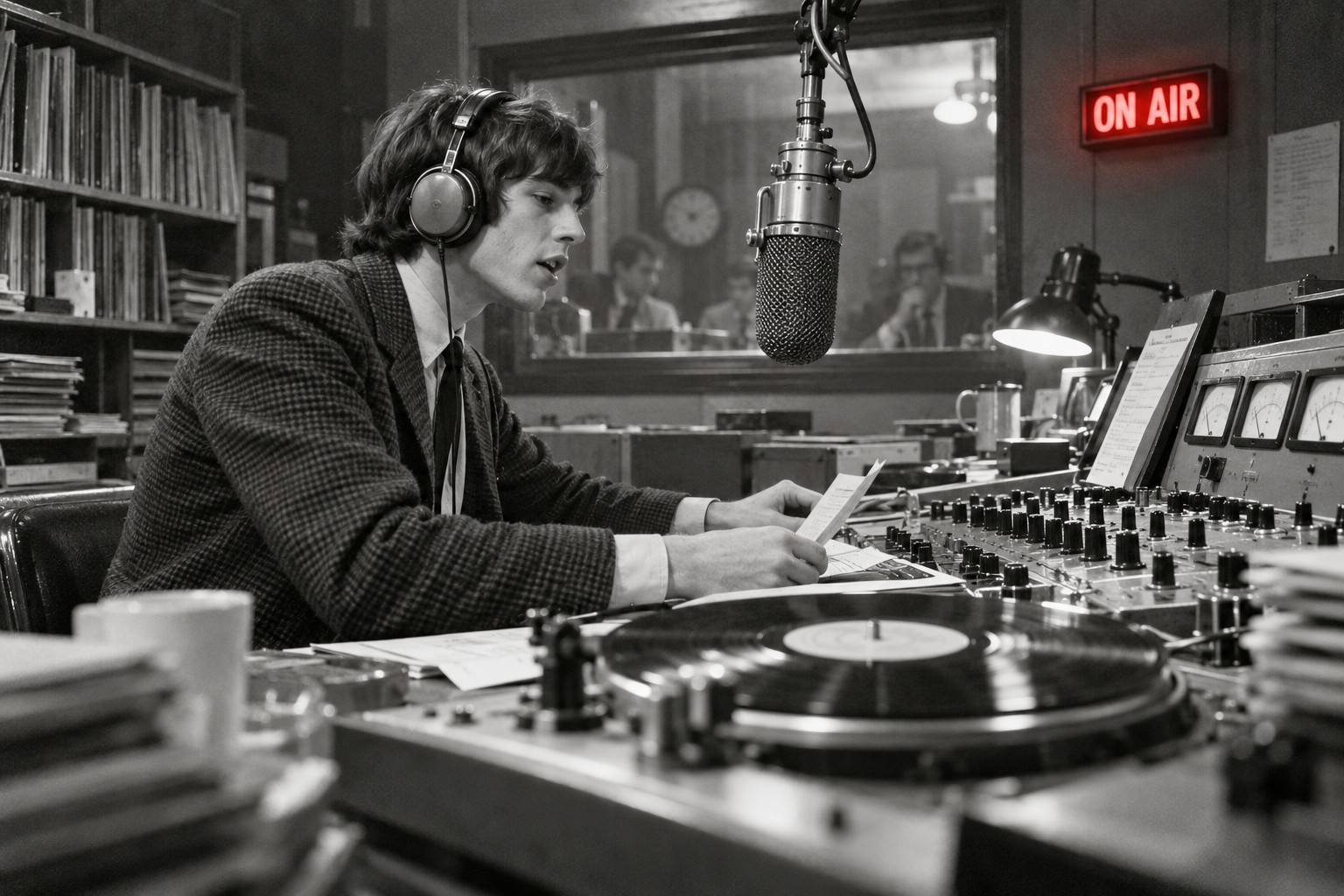
On 30 September 1967, BBC Radio 1 began broadcasting, bringing Britain’s appetite for pop music into the heart of the national broadcaster. Fifty-nine years ago today, its launch marked a turning point in radio, following an offshore broadcasting revolution that had exposed how poorly established institutions were serving younger listeners.
At 7am, Tony Blackburn opened the station’s first breakfast programme. The first complete record he played was Flowers in the Rain by The Move — a choice that placed contemporary pop at the centre of the new service.
For a generation growing up with the Beatles, the Rolling Stones and an expanding youth culture, the BBC was responding to a change already under way.

The pirates who changed the market
During the mid-1960s, offshore stations including Radio Caroline and Radio London had attracted audiences with energetic presenters and extensive pop programming.
Broadcasting from ships outside British territorial waters, they offered an alternative to the BBC’s more restricted provision of popular music. Their success demonstrated demand for a different relationship between radio, performers and listeners.
Legislation introduced in August 1967 made it harder for the offshore stations to operate by restricting British support for their activities. Many closed, although Radio Caroline continued broadcasting.
Radio 1 arrived just weeks later, recruiting several presenters who had developed their style on pirate radio.
A new sound within an old institution
The launch formed part of a wider reorganisation that established the familiar BBC Radio 1, 2, 3 and 4 network identities.
However, the new pop station was not immediately a continuous service of contemporary hits. It shared substantial programming with Radio 2, reflecting the practical constraints and broadcasting traditions within which it operated.
Its importance lay in giving popular music a dedicated national BBC identity, with presenters including Blackburn, John Peel and Kenny Everett helping shape its early character.
An audience that could no longer be ignored
The story also illustrates how established organisations respond when outsiders identify an underserved audience.
Pirate broadcasters had demonstrated the appeal of a more immediate, personality-led format. The BBC absorbed elements of that approach into public-service broadcasting, creating a lasting platform for music and discovery.
That September morning did not begin Britain’s pop revolution. It marked the moment the national broadcaster gave it a new institutional home.
Newshub Editorial in Europe – 30 September 2026

Ask NF GPT
If you have an account with ChatGPT you get deeper explanations,
background and context related to what you are reading.
On 30 September 1967, BBC Radio 1 began broadcasting, bringing Britain’s appetite for pop music into the heart of the national broadcaster. Fifty-nine years ago today, its launch marked a turning point in radio, following an offshore broadcasting revolution that had exposed how poorly established institutions were serving younger listeners.
Recent Comments