
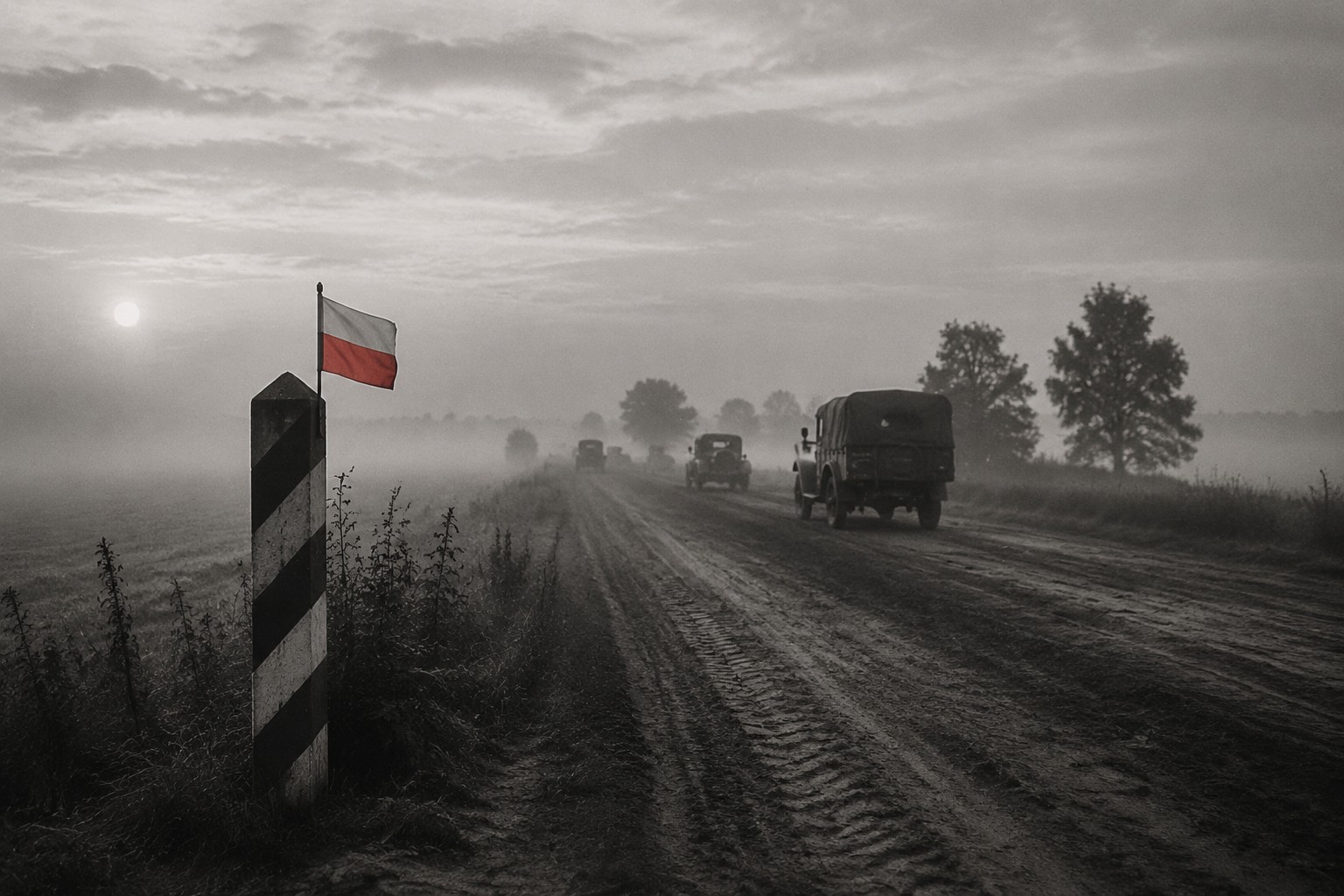
On this day in 1939, Nazi Germany invaded Poland, beginning a conflict that would develop into the deadliest war in human history. The attack marked the start of the Second World War in Europe and changed the political landscape of the continent for generations.
The invasion begins
In the early hours of 1 September 1939, German forces crossed the Polish border from several directions. The German battleship Schleswig-Holstein opened fire on the Polish garrison at Westerplatte near Danzig, while German aircraft attacked military and civilian targets.

The invasion combined rapid movements by tanks, motorised troops and aircraft. This approach later became widely known as Blitzkrieg, or “lightning war”, although the campaign also involved fierce resistance and intense conventional fighting.
Nazi Germany claimed that Poland had provoked the attack. In reality, German operatives had staged incidents, including the Gleiwitz radio station attack, to create a false justification for an invasion that Adolf Hitler had already planned.
Britain and France enter the war
Britain and France had guaranteed Poland’s independence and demanded that Germany withdraw its forces. When Hitler refused, both countries declared war on Germany on 3 September 1939.
The Soviet Union invaded eastern Poland on 17 September under the secret arrangements of the Molotov–Ribbentrop Pact. Poland was divided between Nazi Germany and the Soviet Union, while its government and military forces continued their struggle from exile.
A country subjected to occupation
The organised Polish campaign ended in early October, but resistance continued throughout the war. Poland suffered one of the highest proportions of population loss of any country during the conflict.
The invasion opened six years of occupation, persecution and mass murder. It also began a global war that would eventually involve dozens of countries and claim tens of millions of lives.
Newshub Editorial in Europe – 1 September 2026

Ask NF GPT
If you have an account with ChatGPT you get deeper explanations,
background and context related to what you are reading.
Recent Comments