
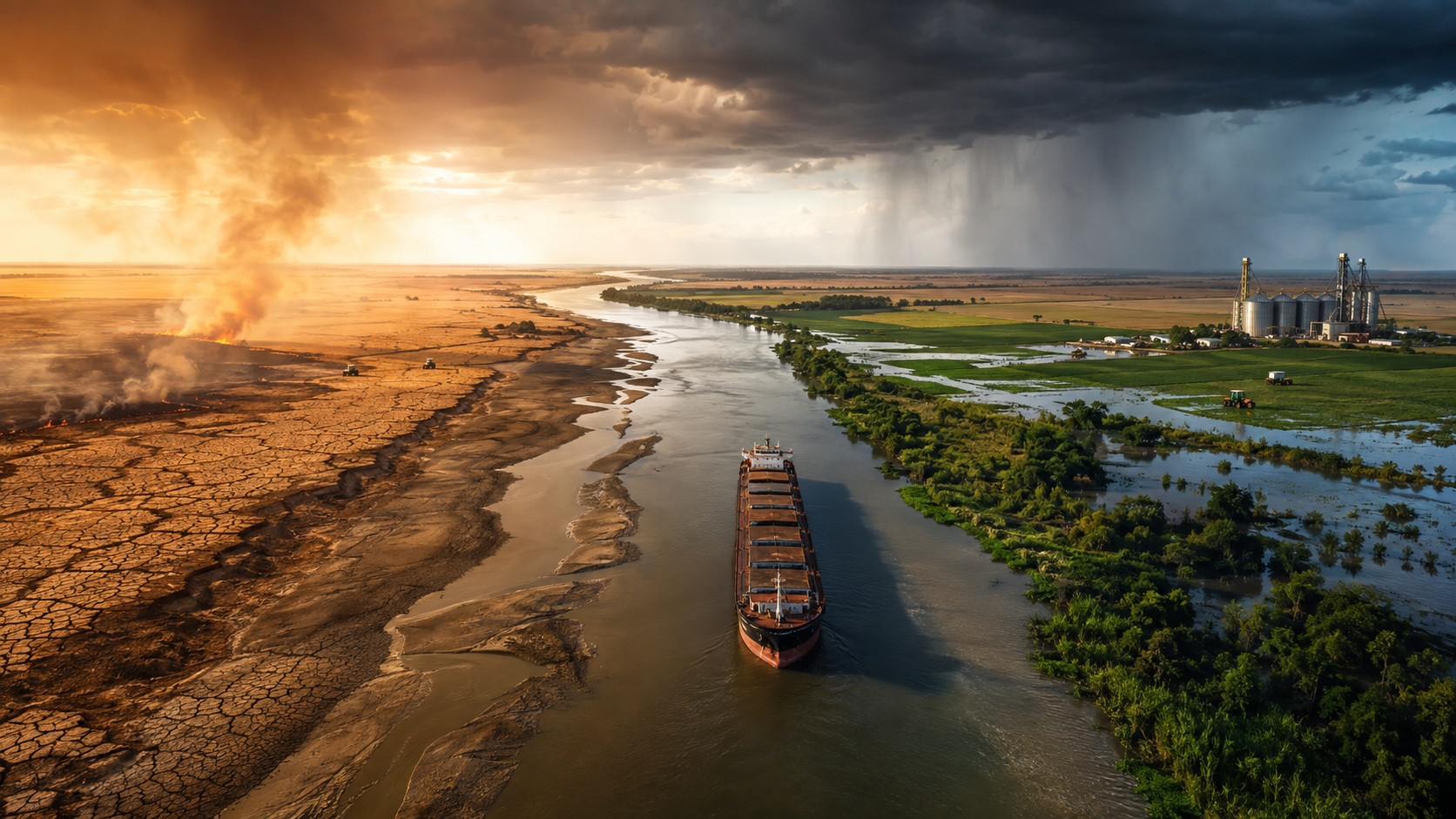
A strengthening El Niño, intensified by the higher temperatures created by climate change, threatens agriculture, fishing, energy production and vital transport routes across several of Latin America’s largest emerging economies.
Latin America is preparing for an unusually powerful El Niño that could expose the region’s food-exporting economies to drought, floods, extreme heat and rising transport costs.
El Niño is a naturally occurring warming of the central and eastern tropical Pacific Ocean. However, scientists warn that human-driven climate change is raising the temperature from which the weather system begins, increasing the potential intensity of heatwaves, droughts, rainfall and related disasters.


The World Meteorological Organization expects the current El Niño to strengthen between August and October. Some forecasts suggest it could become one of the most severe events recorded since 1950.
Agricultural impact will vary sharply
The effects will not be uniform. Argentina, Paraguay, Uruguay and southern Brazil are expected to receive above-average rainfall, potentially improving soil moisture for soybean, maize and wheat production.
That could benefit farmers after previous periods of drought. Higher crop output would also support export revenues and help moderate global food prices.
Excessive rain nevertheless creates its own risks. Flooded farmland, fungal diseases and the loss of fertiliser nutrients could damage crops. Poor rural roads may become impassable, preventing farmers from reaching fields or transporting harvests to ports.
Paraguay has already placed military units and civilian engineering teams on alert for possible flooding and transport disruption.
Further north, the outlook is considerably drier. Northern Brazil, Colombia and Venezuela face an increasing threat of drought, extreme heat and wildfires, putting crops, livestock and rural communities under pressure.
Fishing and river transport face disruption
Warmer Pacific waters are pushing commercially valuable fish into deeper or cooler areas, reducing the availability of species traditionally caught near the coast.
Peru’s fishing activity fell by 31 per cent during the first five months of 2026. A prolonged change in sea temperatures could further damage an industry that provides export income, employment and raw materials for animal-feed production.
Drought in northern Brazil also threatens the Amazon basin’s extensive river network. The rivers are important transport routes for agricultural commodities, including soybeans produced by the world’s largest exporter.
Falling water levels can prevent fully loaded barges from navigating parts of the system, increasing freight costs and delaying shipments.
Panama Canal becomes another pressure point
The Panama Canal Authority is tightening restrictions on vessel drafts to preserve the freshwater required to operate its locks.
Lower draft limits force ships to carry less cargo, raising the cost of moving commodities and manufactured goods between the Atlantic and Pacific oceans. The restrictions could become more severe if rainfall falls to levels recorded during the 2023–2024 El Niño.
The canal authorities have not indicated that daily transit numbers will be reduced unless necessary. However, competition for available passages is already increasing, with some last-minute transit slots attracting bids worth millions of dollars.
Climate change raises emerging-market vulnerability
Latin America’s exposure demonstrates why climate change represents an economic as well as an environmental crisis for emerging markets. Agriculture, fishing, hydropower and commodity transport remain particularly dependent on predictable weather and water supplies.
The United Nations Food and Agriculture Organization has urged governments to invest in flood protection, resilient seeds, early harvesting and stronger transport infrastructure. It estimates that every dollar spent on preparation can produce a return of about seven dollars, compared with three dollars for measures taken after a disaster.
El Niño will eventually fade, as every natural climate cycle does. The warmer global conditions amplifying its effects will not, leaving Latin American economies with an increasingly urgent need to strengthen their climate resilience.
REFH – Newshub, Latin America, 20 August 2026

Ask NF GPT
If you have an account with ChatGPT you get deeper explanations,
background and context related to what you are reading.
A strengthening El Niño, intensified by the higher temperatures created by climate change, threatens agriculture, fishing, energy production and vital transport routes across several of Latin America’s largest emerging economies.
Recent Comments