
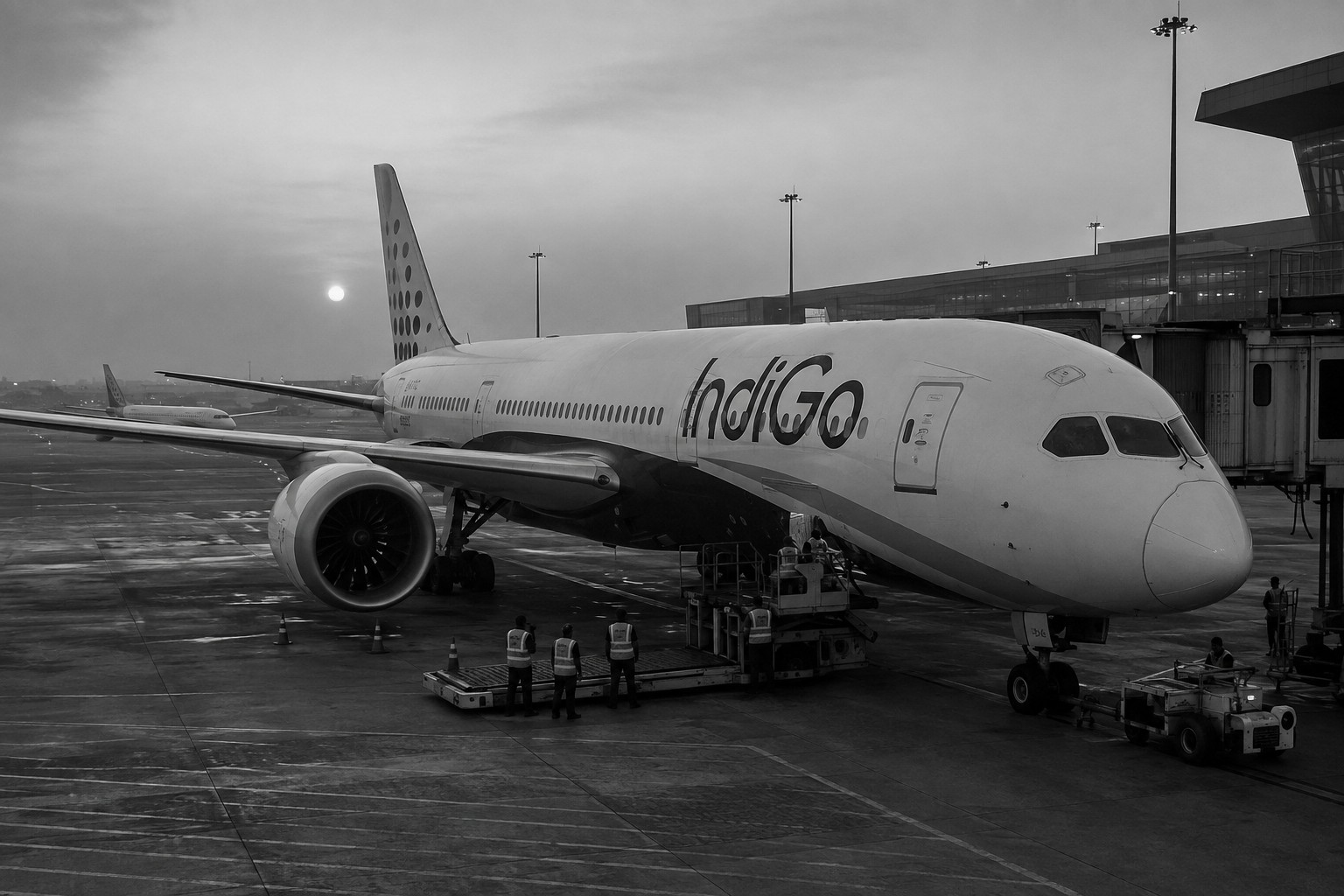
India’s largest airline, IndiGo, will end its leased Boeing 787 operations in October, temporarily retreating from wide-body flying as geopolitical tensions, expensive fuel and airspace restrictions undermine the economics of its emerging long-haul network.
The airline will discontinue wide-body services from 25 October 2026 and conclude its damp-lease agreement with Norway’s Norse Atlantic Airways by the end of the month.
IndiGo entered the arrangement in early 2025 to operate six Boeing 787-9 Dreamliners. Under the agreement, Norse supplied the aircraft, pilots and maintenance services, while IndiGo provided cabin crew and marketed the flights under its own commercial network.

The aircraft allowed IndiGo to enter European long-haul markets before receiving its own fleet of Airbus A350-900 jets. The programme was intended to help the airline develop experience in international network planning, revenue management, maintenance, airport handling and premium passenger services.
Operating environment becomes increasingly difficult
IndiGo said the decision followed a deterioration in operating conditions caused by continuing geopolitical tensions. Restrictions on available airspace have forced Indian carriers to use longer routes on some international services, increasing journey times and fuel consumption.
Higher oil prices have added further pressure. Aviation fuel represents one of the largest expenses for Indian airlines, while the weakening rupee raises the local-currency cost of fuel, aircraft leases, maintenance and other services generally priced in dollars.
These pressures have made it harder for IndiGo to offer competitive long-haul fares while maintaining acceptable margins. The carrier has traditionally built its success around a tightly controlled low-cost model using single-aisle aircraft on domestic and regional routes.
Operating twin-aisle aircraft across much longer distances requires a more complex commercial and operational structure.
Amsterdam service moves to smaller aircraft
IndiGo’s route between Mumbai and Amsterdam will continue but will transfer to the Airbus A321XLR from 25 October. The long-range single-aisle aircraft can serve selected European destinations with lower operating costs than a Boeing 787, although it carries fewer passengers.
Services to London Heathrow will be temporarily suspended until IndiGo’s own Airbus A350-900 aircraft arrive. Customers affected by the changes will be offered alternative travel arrangements or refunds.
The withdrawal could leave Air India as the only Indian airline operating wide-body passenger aircraft for a period, strengthening its position on direct routes between India, Europe and North America.
It may also benefit Gulf carriers, which transport large numbers of Indian travellers through hubs including Dubai, Doha and Abu Dhabi.
Long-term international strategy remains intact
IndiGo insists that the end of the Norse Atlantic agreement does not represent an abandonment of its international ambitions. Instead, it describes the decision as a recalibration before the arrival of aircraft better suited to its long-term strategy.
The carrier plans to expand its European network with the A321XLR while preparing for the eventual introduction of its A350 fleet. Experience gained from the leased Dreamliners could still prove valuable when IndiGo begins operating its own wide-body aircraft.
The retreat nevertheless demonstrates the financial risks facing Indian aviation. Passenger demand remains strong, but fuel volatility, currency movements and restricted airspace can rapidly weaken the economics of international expansion.
IndiGo’s challenge will be to preserve its low-cost discipline while developing the more complex network and service required to compete for long-haul passengers.
Newshub Editorial in Asia – 5 August 2026

Ask NF GPT
If you have an account with ChatGPT you get deeper explanations,
background and context related to what you are reading.
Recent Comments