
How Hitler’s purge cemented Nazi power
On the night of 30 June 1934, Adolf Hitler launched one of the most significant political purges in modern history. Known as the Night of the Long Knives, the operation eliminated perceived rivals within the Nazi movement, strengthened Hitler’s personal authority and reassured Germany’s military leadership that his regime would protect their interests. The events marked a decisive turning point in the consolidation of Nazi dictatorship.
Background

By mid-1934, Hitler had been Chancellor of Germany for more than a year, but his grip on power was not yet absolute. A major source of concern was the Nazi Party’s paramilitary organisation, the SA (Sturmabteilung), led by Ernst Röhm. The SA had played a crucial role in Hitler’s rise, but its rapidly growing membership and Röhm’s ambition to merge the SA with the German Army alarmed military leaders, industrialists and conservative politicians.
The German Army remained one of the country’s most powerful institutions and viewed the SA as an undisciplined political militia. Senior officers made it clear that continued support for Hitler depended on curbing Röhm’s influence.
The purge begins
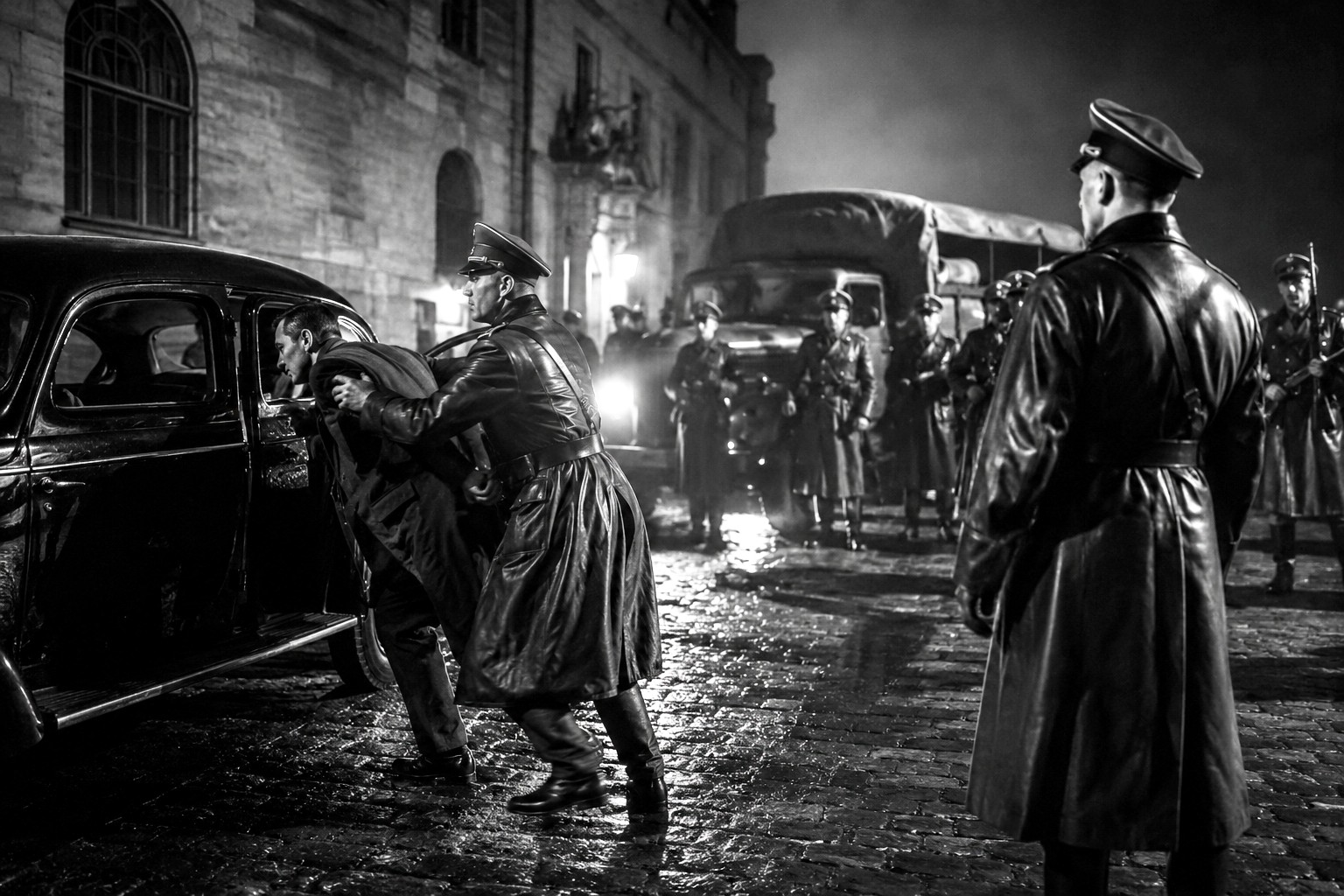
In the early hours of 30 June 1934, Hitler personally travelled to Bavaria, where Röhm and several senior SA leaders were gathered. Röhm was arrested without resistance, while many other SA officials were detained across Germany.
Over the following days, SS units and the Gestapo carried out coordinated executions. The purge quickly expanded beyond the SA leadership. Political opponents, former allies and individuals with little connection to Röhm were also killed.
Among the victims were former Chancellor Kurt von Schleicher and prominent conservative figures, as well as Gregor Strasser, an early Nazi leader who had fallen out with Hitler. Röhm himself was executed on 1 July after refusing to commit suicide.
Consolidating absolute power
Although the official death toll was around 85 people, historians generally believe that between 150 and more than 200 individuals were killed, while hundreds more were arrested. The exact number remains uncertain because many deaths were never formally recorded.
The German public was informed that Hitler had acted to prevent an imminent coup. On 13 July 1934, he defended the purge before the Reichstag, declaring himself “the supreme judge of the German people.” The Nazi-controlled press portrayed the killings as necessary to preserve national stability.
The operation dramatically strengthened Hitler’s position. The Army leadership welcomed the destruction of the SA’s political ambitions, and when President Paul von Hindenburg died only weeks later, on 2 August 1934, the military pledged its personal oath of loyalty directly to Hitler rather than to the German constitution or the state.
Historical significance
The Night of the Long Knives demonstrated that political violence had become an accepted instrument of government under the Nazi regime. It eliminated internal opposition, elevated the SS under Heinrich Himmler into one of the regime’s most powerful institutions, and signalled that no individual, regardless of status or loyalty, was beyond Hitler’s reach.
Today, historians regard the purge as one of the defining moments in the establishment of Nazi Germany’s totalitarian state. It illustrated how legal institutions were subordinated to political violence and how Hitler transformed his position from party leader into an unchallenged dictator, paving the way for the aggressive policies and atrocities that would follow in the years leading to the Second World War.
Newshub Editorial in Europe – 30 June 2026

If you have an account with ChatGPT you get deeper explanations,
background and context related to what you are reading.
Open an account:
Open an account
Recent Comments