
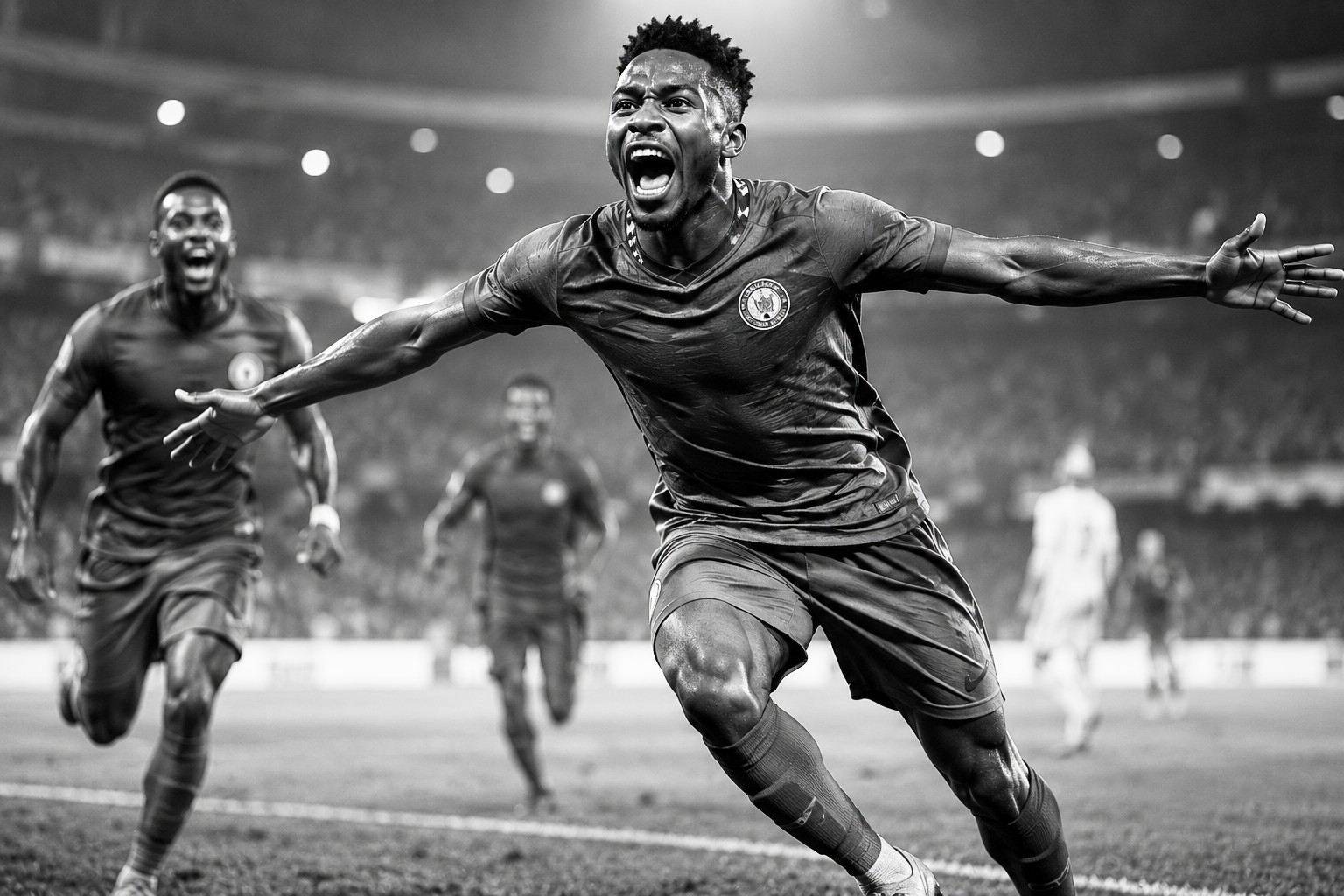
African footballers are again shaping the World Cup, but not always in African shirts. Across the tournament, players with African roots have delivered decisive performances for both African nations and European sides, renewing debate over why some elite talent chooses foreign flags over the federations of their heritage.
A global African footprint
The 2026 World Cup has underlined the scale of Africa’s football influence. A record 10 African nations qualified for the tournament, and nine reached the knockout stage, far beyond the continent’s previous best. Morocco, South Africa, Senegal, Ivory Coast, Ghana, Cape Verde, Egypt, DR Congo and Algeria all advanced to the round of 32.


Morocco then deepened the story by eliminating the Netherlands on penalties after a 1-1 draw, with Issa Diop scoring late before Ismael Saibari converted the decisive spot-kick.
Not just for Africa
Yet African brilliance is not confined to African teams. As Sean Andah argues, many players with African heritage continue to represent European or other national sides, often pointing to stronger organisation, clearer development pathways, better facilities and more professional treatment.
France remains the clearest example of this wider pattern. Its squads have long reflected deep African heritage, with players whose family roots stretch across West, Central and North Africa. For many families, migration, dual nationality and football opportunity have created identities that are personal rather than purely administrative.
The federation question
The uncomfortable issue for African football is not whether players are patriotic. It is whether African federations consistently offer the structure required to keep elite dual-national talent. Disputes over bonuses, travel, medical support, coaching stability and administrative professionalism have all damaged trust in several countries over the years.
For a young player raised in Europe, choosing a national team can become a career decision as much as an emotional one. A federation with elite logistics, stable planning and clear tournament preparation may appear more reliable than one where internal politics can overshadow performance.
A changing picture
Still, the balance may be shifting. Morocco’s sustained success since reaching the 2022 semi-finals has shown what long-term planning, diaspora recruitment and federation investment can achieve. Cape Verde’s rise has also demonstrated that smaller nations can compete when organisation and identity are aligned.
The success of African sides in 2026 strengthens the argument that the continent’s football ceiling is far higher than past World Cup records suggested. But it also exposes the cost of lost talent. Every African-origin player starring elsewhere is both a symbol of global influence and a reminder of institutional gaps still to be closed.
The bigger lesson
African football no longer lacks players, quality or global respect. Its challenge is governance, continuity and trust. The next phase will not be decided only on the pitch, but in federation offices, youth academies and player relations.
The World Cup is showing that African footballers can shine anywhere. The question now is whether more of them will feel that their best future lies with Africa itself.
Newshub Editorial in Africa – 30 June 2026

If you have an account with ChatGPT you get deeper explanations,
background and context related to what you are reading.
Open an account:
Open an accountAfrican footballers are again shaping the World Cup, but not always in African shirts. Across the tournament, players with African roots have delivered decisive performances for both African nations and European sides, renewing debate over why some elite talent chooses foreign flags over the federations of their heritage.
Recent Comments