
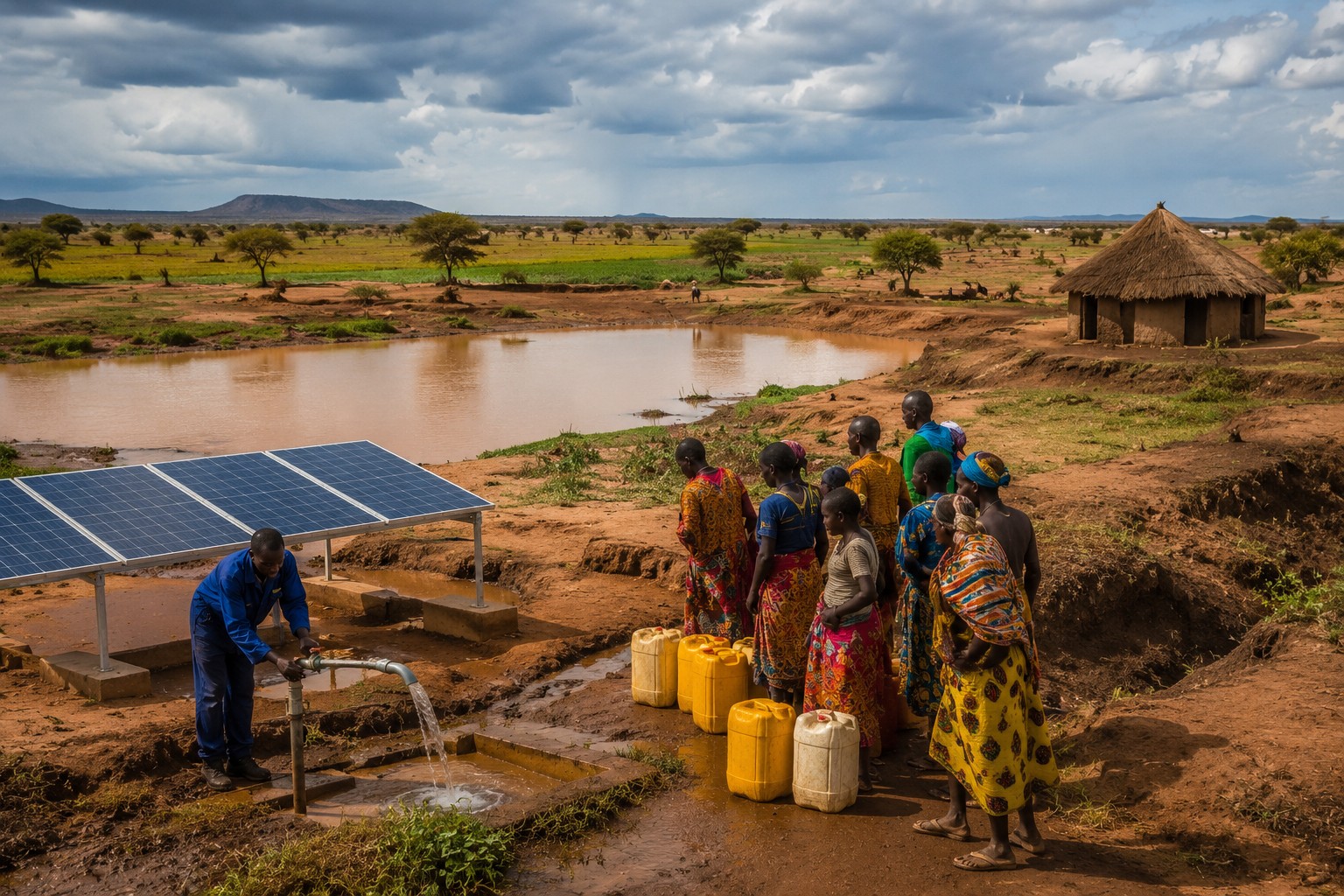
African governments and international development agencies are increasingly integrating climate adaptation into peacebuilding strategies as competition over land, water and natural resources intensifies across the continent. With climate change exacerbating droughts, floods and food insecurity, policymakers are recognising that resilience measures are essential not only for environmental sustainability but also for reducing the risk of conflict.
Climate and security challenges converge
Across many parts of Africa, rising temperatures, changing rainfall patterns and more frequent extreme weather events are placing growing pressure on already limited natural resources. Communities that depend on agriculture, livestock and fishing are finding it increasingly difficult to sustain their livelihoods, often leading to disputes over access to grazing land, water supplies and fertile farmland.
These pressures are particularly acute in regions where governance remains fragile and economic opportunities are limited, creating conditions that can fuel local tensions and displacement.

Adaptation moves beyond environmental policy
Governments are now viewing climate adaptation as a broader security issue rather than solely an environmental challenge. Programmes that improve water management, expand irrigation systems, restore degraded land and strengthen food security are increasingly being designed to reduce the likelihood of conflict while improving economic resilience.
Development agencies are supporting projects that combine climate resilience with local peacebuilding initiatives, recognising that sustainable resource management can help reduce competition between neighbouring communities.
This integrated approach is gaining momentum as policymakers seek long-term solutions that address both environmental and social vulnerabilities simultaneously.
Technology supports better resource management
Digital technologies are also playing a growing role in adaptation efforts. Satellite monitoring, geographic information systems, weather forecasting and mobile information platforms allow governments and local authorities to identify emerging risks more quickly and allocate resources more efficiently.
Farmers and pastoralists are increasingly using climate information services to make informed decisions about planting seasons, livestock movements and water availability. These tools not only improve productivity but can also reduce disputes by providing more transparent information about environmental conditions.
International financial institutions have also expanded investment in climate resilience infrastructure, recognising that prevention is often significantly less costly than responding to humanitarian crises after conflict has erupted.
Regional cooperation becomes increasingly important
Many of Africa’s major rivers, lakes and grazing areas cross national borders, making regional cooperation essential for effective resource management. Organisations including the African Union and several regional economic communities have encouraged greater collaboration on water governance, environmental protection and disaster preparedness.
Joint initiatives help neighbouring countries coordinate responses to droughts, flooding and migration while strengthening diplomatic cooperation over shared natural resources.
Such collaboration is becoming increasingly important as climate impacts extend across entire regions rather than individual national boundaries.
Building resilience for long-term stability
Experts argue that climate adaptation alone cannot eliminate conflict, but it can significantly reduce many of the underlying pressures that contribute to instability. Investments in sustainable agriculture, renewable energy, resilient infrastructure and stronger local institutions are expected to play an increasingly important role in promoting long-term development.
As Africa continues to experience rapid population growth alongside accelerating climate change, integrating environmental resilience with economic development and peacebuilding is becoming a strategic priority. By addressing resource scarcity before it develops into broader instability, governments hope to create stronger, more resilient communities capable of adapting to an increasingly unpredictable climate while supporting sustainable economic growth.
Newshub Editorial in Africa – 16 June 2026

If you have an account with ChatGPT you get deeper explanations,
background and context related to what you are reading.
Open an account:
Open an account
Recent Comments