
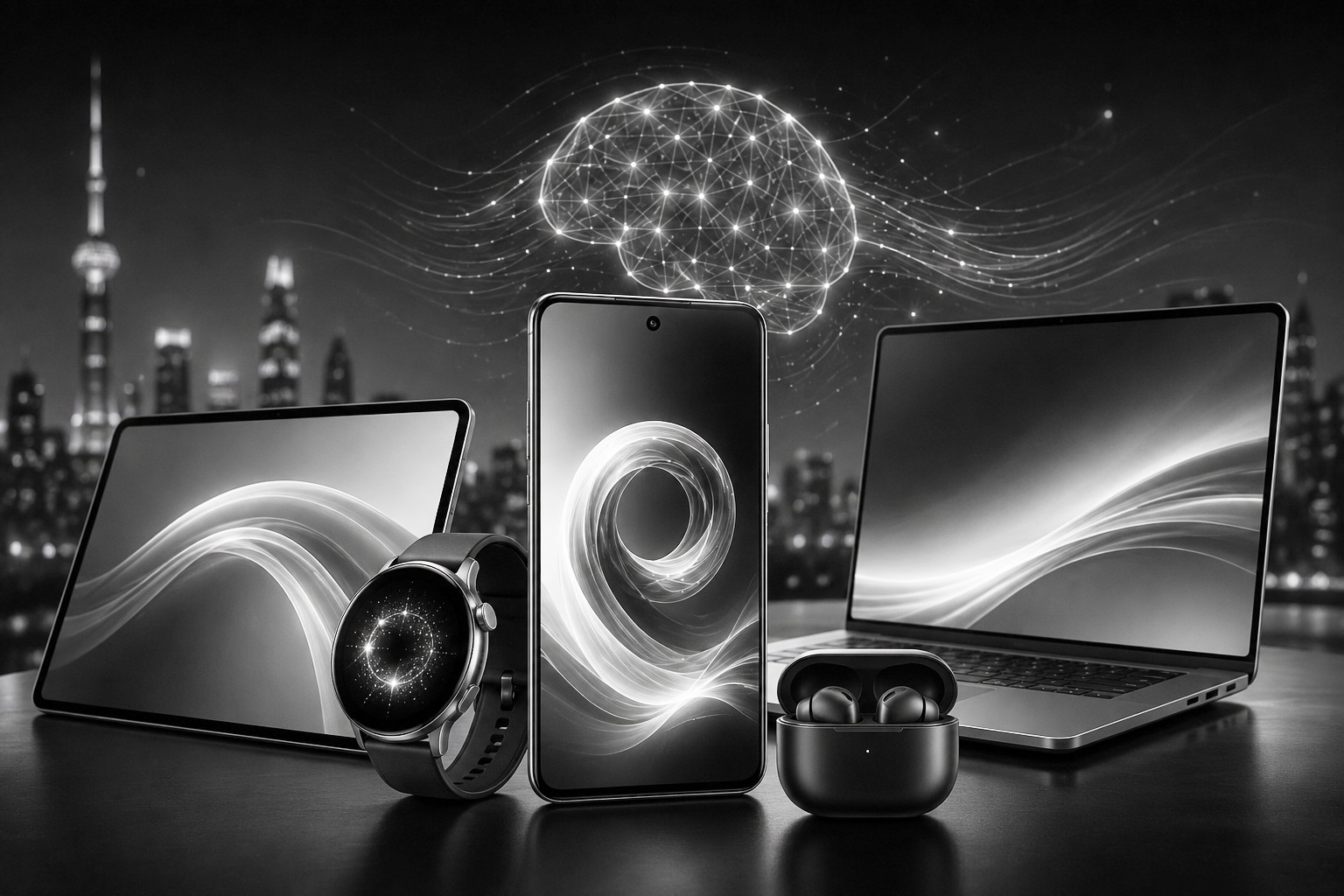
Huawei has unveiled HarmonyOS 7, the latest version of its operating system, positioning it as a major artificial intelligence platform designed specifically for the Chinese market. As Apple continues to face regulatory and technical challenges in bringing its full AI capabilities to China, Huawei is moving aggressively to fill the gap with a domestically developed ecosystem integrated across smartphones, tablets, wearables and connected devices.
Huawei strengthens its AI strategy
HarmonyOS 7 introduces a significantly expanded suite of artificial intelligence features, including an upgraded voice assistant, AI-powered productivity tools, intelligent content generation and deeper integration between devices. The platform is designed to leverage Huawei’s own cloud infrastructure and AI models while complying with China’s regulatory framework for generative AI.
Executives described the release as a major step towards creating a fully interconnected operating system in which AI becomes the primary interface between users and their digital devices.

Apple faces a challenging landscape
Apple has encountered increasing difficulties in deploying its latest AI services in China. Regulatory approval requirements, restrictions on foreign AI models and the need to partner with domestic technology companies have delayed the rollout of several features already available in North America and other international markets.
These limitations have created an opportunity for Chinese competitors to expand their market share by offering locally developed AI solutions that fully comply with national regulations.
For Huawei, the timing is particularly significant as the company continues its recovery following years of US export restrictions that reshaped its smartphone business.
An expanding domestic ecosystem
Unlike conventional mobile operating systems, HarmonyOS 7 is designed to operate across a wide range of devices beyond smartphones. Smart home products, connected vehicles, industrial equipment and wearable devices can all communicate through the same operating platform, with AI services operating seamlessly across the ecosystem.
This integrated approach aims to strengthen customer loyalty while encouraging developers to build applications that take advantage of cross-device functionality rather than serving individual products alone.
The strategy also supports China’s broader ambition to reduce dependence on foreign technology platforms by strengthening domestic software ecosystems.
Competition intensifies in AI
China’s artificial intelligence market has become increasingly competitive, with major technology companies rapidly expanding their own large language models and AI-powered consumer services. Huawei’s latest operating system enters this environment alongside offerings from companies such as Alibaba, Tencent and Baidu, each seeking to establish leadership in AI-enabled consumer technology.
Rather than competing solely on hardware specifications, manufacturers are increasingly differentiating themselves through intelligent software, personalised assistants and integrated AI services.
A new phase for China’s technology sector
The launch of HarmonyOS 7 illustrates how artificial intelligence is becoming central to the next generation of consumer electronics. While Apple remains one of the world’s strongest premium smartphone brands, delays in introducing comparable AI functionality within China have opened a window of opportunity for domestic competitors.
As Chinese consumers increasingly prioritise AI capabilities alongside hardware performance, Huawei hopes HarmonyOS 7 will reinforce its position as one of the country’s leading technology innovators. Whether the platform can translate its domestic success into broader international adoption remains uncertain, but within China it represents one of the most significant software launches of the year.
Newshub Editorial in Asia – 16 June 2026

If you have an account with ChatGPT you get deeper explanations,
background and context related to what you are reading.
Open an account:
Open an account
Recent Comments