
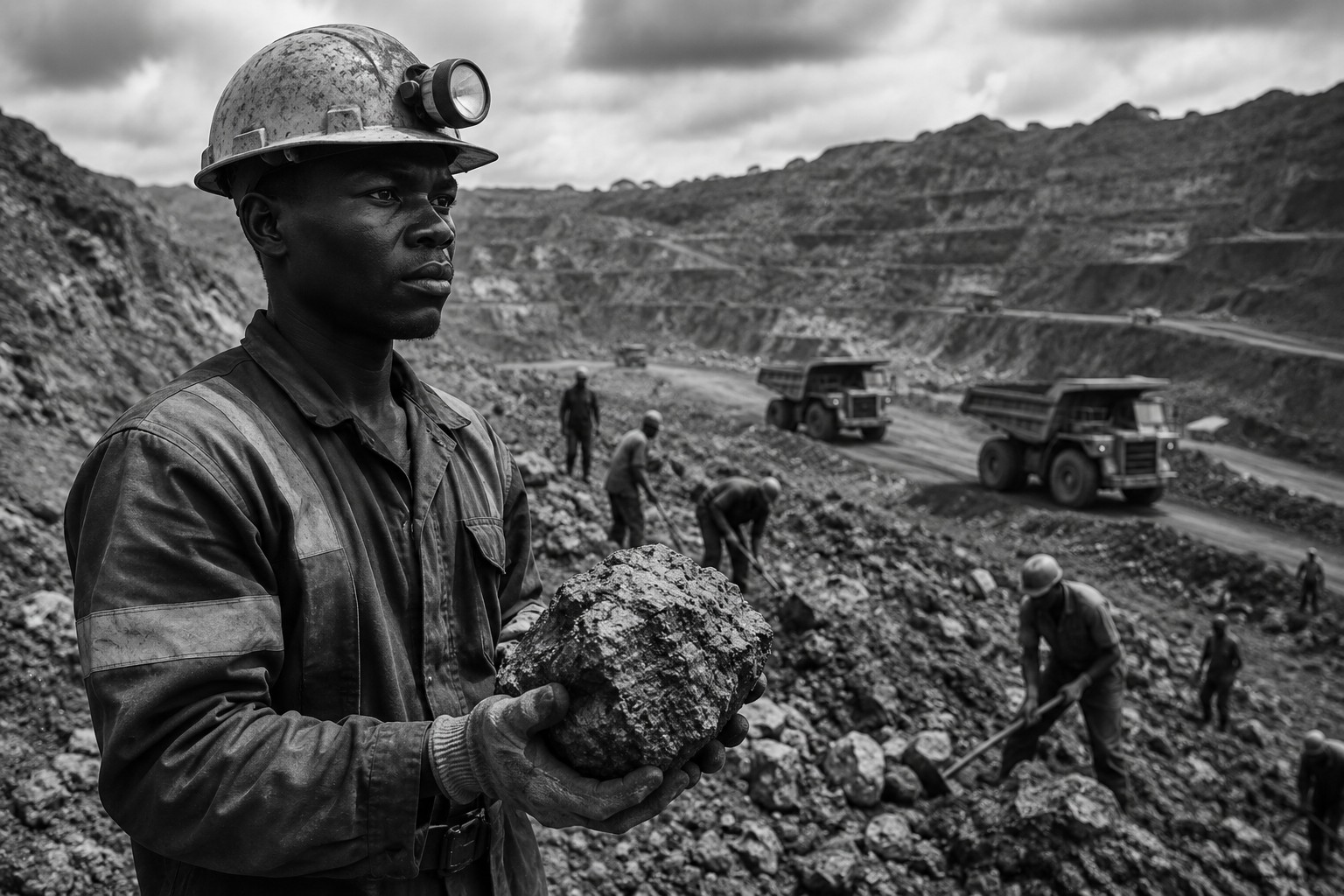
The Democratic Republic of the Congo (DRC) is preparing a comprehensive reform of its mining sector as global demand for critical minerals continues to accelerate. The government aims to strengthen transparency, modernise regulation and improve opportunities for both artisanal miners and large-scale producers, positioning the country to capture greater value from its vast mineral wealth.
Critical minerals move to the forefront
The DRC possesses some of the world’s largest reserves of cobalt, copper, lithium, tin and tantalum—minerals that have become essential components in electric vehicles, renewable energy systems and advanced electronics. As governments and manufacturers race to secure reliable supply chains for the global energy transition, the country’s strategic importance has grown significantly.
Officials believe the current mining framework must evolve to meet increasing international expectations surrounding governance, traceability and responsible sourcing while ensuring greater economic benefits remain within the country.

Digitalisation aims to improve transparency
A central element of the planned reforms is the digitalisation of mining administration. Authorities intend to introduce modern digital systems for licensing, production reporting and mineral traceability, allowing regulators, investors and buyers to monitor the movement of minerals more effectively.
The initiative is expected to reduce administrative inefficiencies, combat illegal mining activities and strengthen confidence among international investors seeking transparent and verifiable supply chains. Improved digital records could also enhance government revenue collection by reducing opportunities for tax evasion and unreported production.
Supporting artisanal miners
The reform programme places particular emphasis on the country’s vast artisanal mining sector, which provides employment for hundreds of thousands of Congolese workers. While artisanal mining remains an important source of income for many communities, it often operates with limited access to financing, modern equipment and formal markets.
Government officials plan to encourage greater formalisation by simplifying licensing procedures, expanding technical support and improving access to digital payment systems. These measures are intended to increase productivity while promoting safer working conditions and better environmental standards.
By integrating artisanal miners more fully into the formal economy, policymakers hope to improve incomes while reducing the influence of illegal trading networks.
Major producers welcome greater certainty
International mining companies operating in the DRC have broadly supported efforts to improve regulatory clarity and strengthen governance. Investors increasingly prioritise stable legal frameworks, transparent permitting processes and internationally recognised environmental, social and governance (ESG) standards when making long-term capital commitments.
A more predictable investment environment could encourage additional exploration and mine development, particularly as demand for battery metals is projected to rise sharply over the coming decade.
Strategic opportunity for economic growth
Mining remains the backbone of the Congolese economy, accounting for a substantial share of exports, government revenues and foreign investment. Successfully implementing these reforms could enable the country to move beyond simply exporting raw materials towards developing more value-added industries, including mineral processing and battery supply chains.
As the global transition towards cleaner energy gathers pace, the DRC finds itself at the centre of one of the world’s fastest-growing strategic industries. If transparency, digitalisation and responsible resource management can be effectively implemented, the reforms may strengthen the country’s position as a critical partner in the future global economy while delivering broader economic benefits for its citizens.
Newshub Editorial in Africa – 16 June 2026

If you have an account with ChatGPT you get deeper explanations,
background and context related to what you are reading.
Open an account:
Open an account
Recent Comments