
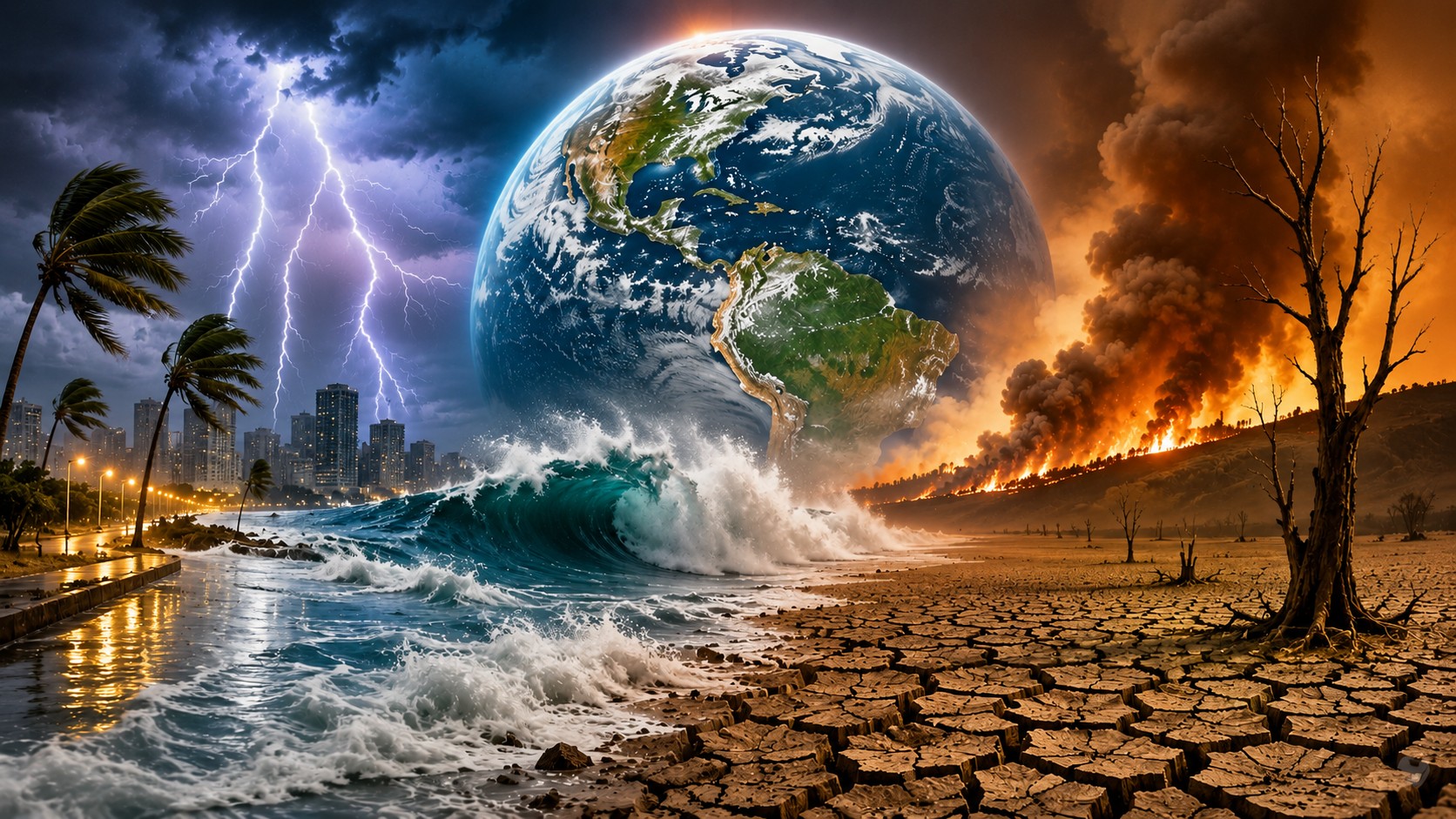
Scientists have confirmed that El Niño has officially returned, with forecasts indicating there is a strong possibility the climate pattern could develop into one of the most powerful events in decades. While the term “Super El Niño” is widely used in media, meteorological agencies caution that it is not an official scientific classification. Nevertheless, experts agree that the developing event could significantly intensify heatwaves, floods, droughts and wildfires around the world.
A powerful climate phenomenon
El Niño is the warm phase of the El Niño–Southern Oscillation (ENSO), a naturally occurring climate cycle driven by unusually warm sea surface temperatures across the central and eastern tropical Pacific Ocean.

The latest assessments from the World Meteorological Organization indicate there is an 80% probability that El Niño conditions will persist through the Northern Hemisphere summer and more than a 90% chance they will continue into late 2026. Forecast models suggest the event is likely to become at least moderate in strength and could become exceptionally strong later this year.
Higher temperatures likely worldwide
One of the most immediate consequences is expected to be a further increase in global temperatures.
El Niño naturally transfers heat from the Pacific Ocean into the atmosphere. Combined with long-term human-induced climate change, scientists warn this could make 2027 one of the hottest years ever recorded, pushing global average temperatures even higher than recent record-breaking years.
Heatwaves are expected to become more frequent and more intense across many regions, increasing pressure on electricity grids, public health systems and agriculture.
Floods, droughts and storms
Although every El Niño develops differently, historical patterns provide important guidance.
Scientists expect heavier rainfall and increased flood risks across parts of western South America, East Africa, the southern United States and portions of central Asia. At the same time, countries including Australia, Indonesia, parts of Southeast Asia, Central America and northeastern Brazil may experience severe drought, raising the risk of crop failures and wildfires.
The phenomenon is also likely to suppress hurricane activity in the Atlantic while increasing cyclone activity across parts of the Pacific Ocean.
Economic consequences extend worldwide
Beyond weather, El Niño frequently affects food production, energy markets and global supply chains.
Reduced agricultural yields, disruptions to water supplies and increased insurance losses could place additional strain on economies already adapting to climate change. Commodity prices, particularly for agricultural products, may become more volatile if prolonged drought or flooding damages harvests in key producing regions.
Governments and humanitarian agencies are already using seasonal forecasts to prepare emergency response plans and strengthen early-warning systems in vulnerable regions.
Preparing for an uncertain future
While scientists stress that individual regional impacts cannot yet be predicted with complete certainty, they agree that preparations should begin immediately.
With warmer oceans providing additional energy to Earth’s climate system, the developing El Niño is expected to amplify many existing climate risks rather than create entirely new ones. As monitoring continues throughout the year, governments, businesses and communities are being encouraged to prepare for an increased likelihood of extreme weather events across much of the globe.
Newshub Editorial in Global – 12 June 2026

If you have an account with ChatGPT you get deeper explanations,
background and context related to what you are reading.
Open an account:
Open an account
Recent Comments