
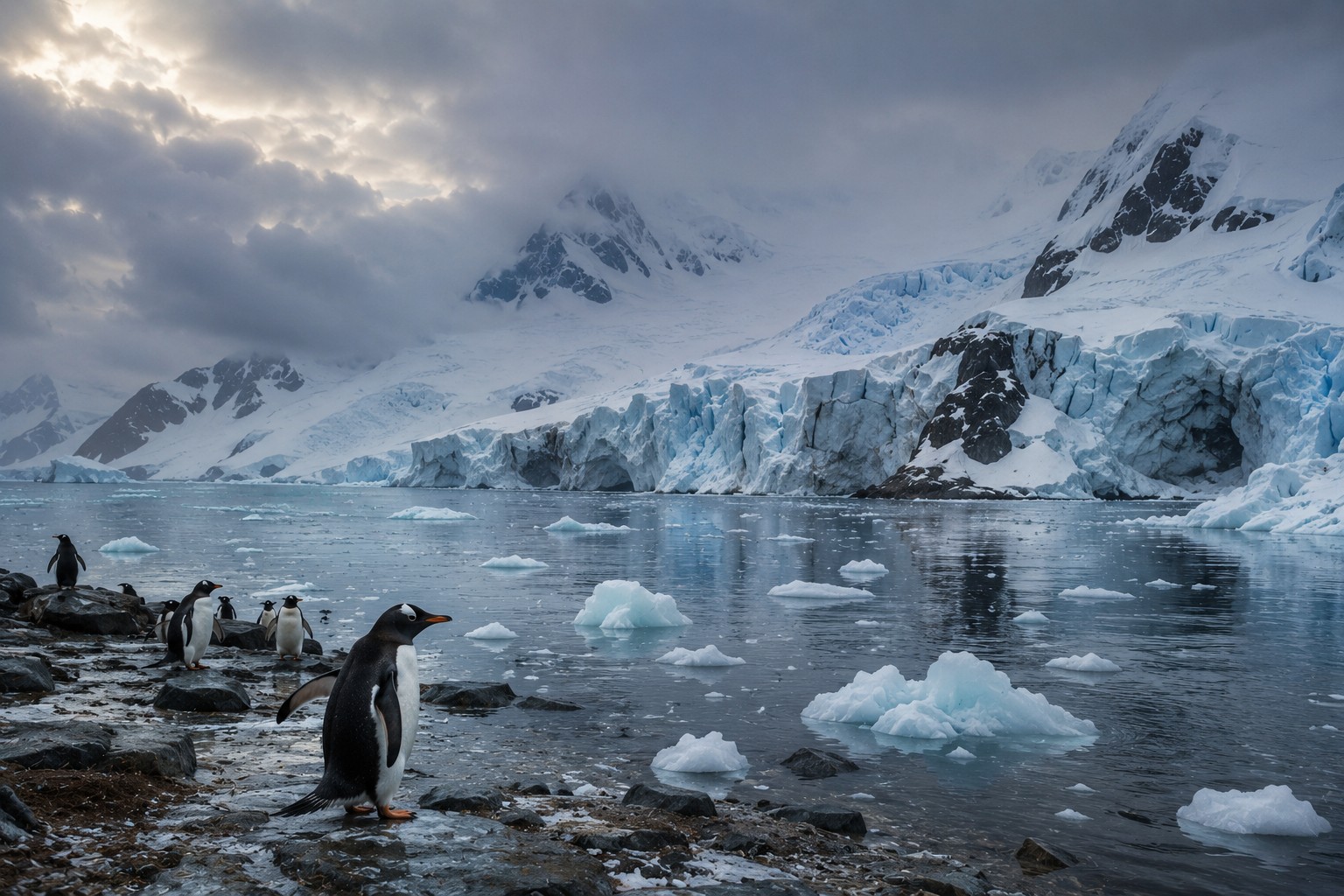
Scientists are expressing growing concern after parts of Antarctica experienced exceptionally high winter temperatures, with some locations reportedly recording temperatures above 15°C in a region that is normally locked in ice and darkness at this time of year. The unusual warmth has triggered melting snow, rainfall on glaciers, and renewed warnings about the pace of global climate change.
An extraordinary winter event
Antarctica is one of the coldest places on Earth, particularly during the Southern Hemisphere winter when temperatures typically remain well below freezing. The recent warmth has therefore surprised climate researchers, many of whom described the conditions as highly unusual.
In some areas, precipitation fell as rain rather than snow, while surface melting was observed in locations that are normally frozen throughout the season. Scientists say such events were once considered extremely rare but are becoming increasingly frequent as global temperatures rise.

A warning from the planet’s coldest continent
Researchers view Antarctica as one of the most important indicators of long-term climate trends. Changes occurring on the continent can have significant implications for sea levels, weather patterns, and global ecosystems.
The concern is not solely about a single warm event but rather the broader pattern emerging over recent decades. Rising ocean temperatures, shrinking sea ice, and increased atmospheric warming are placing growing pressure on Antarctic ice systems.
Scientists warn that even temporary warming episodes can contribute to long-term instability in ice shelves and glaciers, potentially accelerating ice loss over time.
Implications for sea-level rise
Antarctica contains enough ice to significantly affect global sea levels if large portions were to melt. While a single weather event will not dramatically change sea levels, researchers say persistent warming trends increase the risk of future ice-sheet destabilisation.
Coastal communities around the world are closely watching developments in Antarctica, as long-term sea-level rise poses risks to infrastructure, agriculture, freshwater supplies, and population centres.
The continent’s ice also plays a critical role in regulating Earth’s climate system by reflecting solar radiation back into space.
Climate models face growing scrutiny
The latest temperature anomalies are likely to intensify debate over whether climate change is progressing faster than many models previously projected. Some researchers believe that extreme events occurring in polar regions may provide early indications of broader environmental shifts.
At the same time, scientists caution that individual weather events should be evaluated within the context of long-term climate data rather than viewed in isolation.
A global signal
The unusual Antarctic winter temperatures serve as another reminder that climate change is affecting even the most remote regions of the planet. As researchers continue to monitor conditions across the continent, many believe the latest event underscores the urgency of addressing greenhouse gas emissions and strengthening climate resilience worldwide.
What happens in Antarctica may seem distant, but scientists warn that its consequences are increasingly global.
Newshub Editorial in Antarctica – 11 June 2026

If you have an account with ChatGPT you get deeper explanations,
background and context related to what you are reading.
Open an account:
Open an account
Recent Comments